


UV protection in optical lenses means the lens blocks harmful ultraviolet radiation before it reaches the eye. Many buyers search this topic because they want a clear answer to one practical question: what should a good lens actually protect against, and how do you verify it before you buy?
The confusion starts when UV protection gets mixed with tint, polarization, blue light filtering, and general “premium” claims. That confusion creates weak product briefs, vague retail language, and sourcing mistakes. The National Eye Institute and the FDA both advise buyers to look for lenses that are clearly marked as 99% to 100% UVA/UVB protection or UV400, because darkness alone does not tell you how much UV protection a lens provides. ()
In this guide, you will learn what UV protection in optical lenses really means, how it works across different materials and lens designs, how it differs from polarization and blue light filtering, and what buyers should ask a supplier before approving a lens program. For a broader view of our manufacturing scope, lens categories, and OEM/ODM positioning, see Vena Optics and our blog. ()
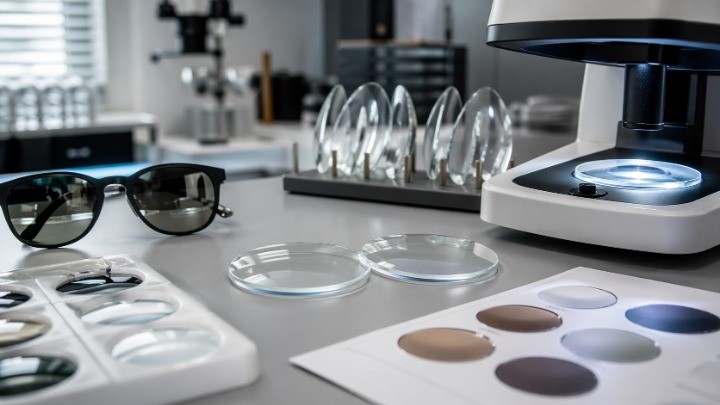 UV Protection in Optical Lenses: The Quick Answer
UV protection in optical lenses means the lens is designed to block harmful ultraviolet radiation, especially UVA and UVB, before that radiation reaches the eye. In buying language, the clearest shorthand is still UV400 or 99% to 100% UVA/UVB protection. NEI and FDA both use that language because it is specific, measurable, and easier to verify than vague phrases such as “sun lens” or “protective tint.”
That protection matters in sunglasses, but it also matters in clear prescription eyewear. WHO estimates that up to 10% of cataracts may be caused by overexposure to UV radiation, which is one reason UV protection should be treated as a core specification rather than an optional add-on.
A practical rule helps here. Tint controls visible brightness. Polarization controls reflected glare. UV protection controls ultraviolet exposure. One product can combine all three, but buyers should never treat them as the same feature. NEI, FDA, and EPA all support that distinction in slightly different ways through their guidance on UV labels, glare, and reflective environments.
Common Questions Buyers Have About UV Protection in Optical Lenses
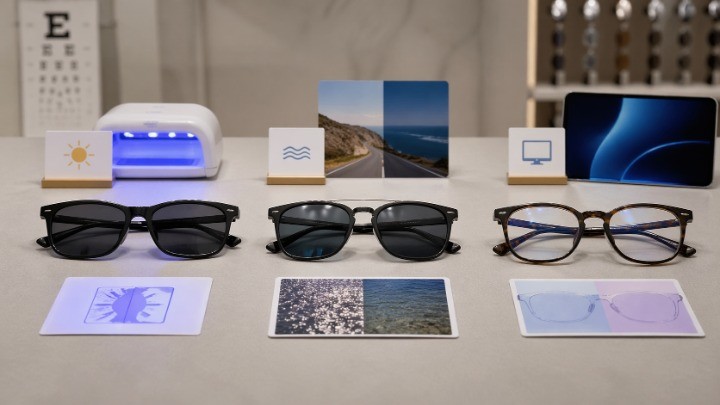 The most common buyer question is not “Is UV important?” but “How do I separate real protection from confusing product language?” That is the right question, because many lens claims sound protective without actually saying what the lens blocks. FDA warns buyers not to assume that dark-tinted lenses have UV protection, and NEI says buyers should not assume expensive sunglasses protect better than lower-cost products if the labeling is the same.
Another common question is whether polarization equals UV protection. It does not. NEI recommends polarized lenses for reducing glare from snow and water, but it still tells buyers to verify actual UVA/UVB protection separately. That distinction matters for driving, sports, and outdoor product planning because glare comfort and UV safety are related, but not identical.
Buyers also ask whether blue light filtering replaces UV protection. It does not. Blue light is part of the visible spectrum, while UV sits outside visible light. A scientific evidence summary from the Royal Society of New Zealand places visible light at roughly 380 to 780 nm and describes blue light as a shorter-wavelength portion of that visible range, while UV is discussed separately in EPA and WHO materials. A blue-light claim is not a UV claim.
| Feature | Main purpose | What it does not guarantee |
|---|---|---|
| UV protection | Blocks harmful UVA and UVB exposure | Less glare or darker appearance |
| Polarization | Reduces reflected glare | UV blocking unless stated |
| Blue light filtering | Filters part of visible short-wavelength light | UV protection |
What UV Radiation Does to the Eyes
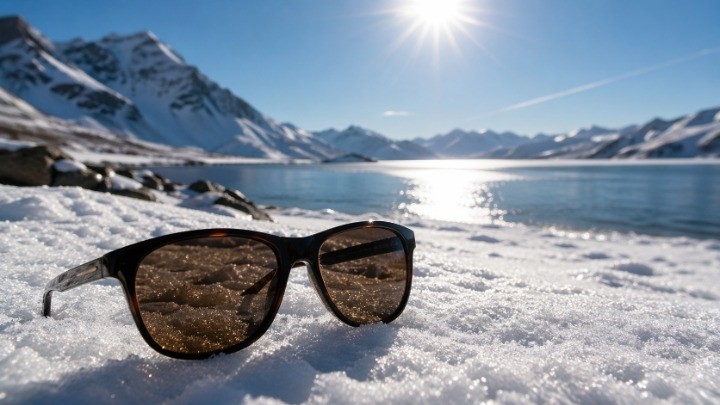 UV radiation can harm the eye in the short term and over time. EPA explains that most UVA reaches the Earth’s surface and contributes to eye damage, while UVB is linked to sunburn and snow blindness, which is essentially a sunburn of the cornea. ()
That is why UV protection should not be framed as a style feature. WHO reports that every year about 16 million people worldwide suffer blindness due to cataract, and it estimates that up to 10% of cataracts may be caused by overexposure to UV radiation. The lesson for buyers is straightforward: repeated UV exposure matters, even when the wearer is not standing on a beach or wearing a fashion sunglass.
The risk also changes with the environment. EPA advises extra caution near water, snow, and sand because those surfaces reflect damaging rays. NEI similarly recommends activity-based lens choices and notes that polarized lenses help with glare on snow or water. In real product planning, that means lens performance depends on use case, not only on base color or coating name.
How UV Protection Works in Optical Lenses
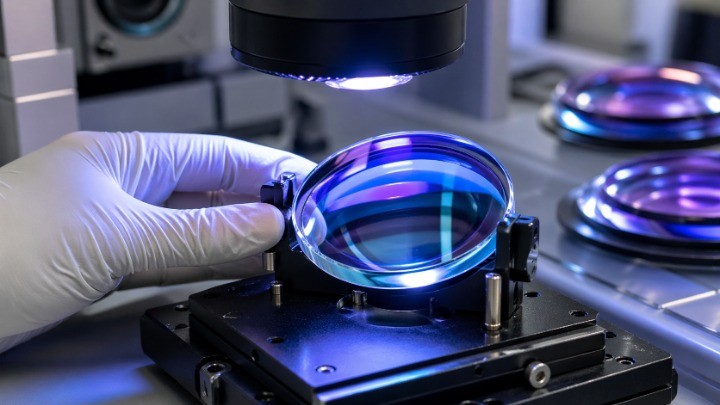 Optical lenses manage UV in two main ways: through the lens material itself and through added UV-absorbing treatments or coatings. That distinction is central to both technical performance and supplier communication.
Some materials naturally absorb more UV. A peer-reviewed review in the NIH-hosted PMC archive states that polycarbonate absorbs all ultraviolet radiation below 380 nm, while crown glass and CR-39 need treatment to provide UV protection. That does not mean treated materials are automatically weak. It means buyers need to know whether the UV claim comes from the substrate, from absorbers, from coating design, or from a combination of all three. ()
This is where many product pages stay too shallow. They say “UV protection included,” but they do not explain how the lens achieves it, whether the claim is uniform across all indexes, or whether the protection stays consistent across coating variations. A serious optical buyer should ask how the UV function is built, not just whether it exists.
Is UV Protection Built Into the Lens or Added Later?
The answer depends on the material and the lens build. In some lens programs, UV performance is largely material-based. In others, it depends more heavily on UV absorbers, treatments, or coating design.
Polycarbonate is the clearest material-level example. The spectacle-lens materials review notes that polycarbonate naturally absorbs UV below 380 nm. That helps explain why polycarbonate remains important in safety, sports, and children’s eyewear, especially when impact resistance is also a priority. NIOSH specifically recommends polycarbonate or Trivex for prescription safety glasses because of impact performance.
Standard plastic lenses can still provide good UV protection, but buyers should not assume the path is identical. CR-39 and similar materials may require treatment or formulation support to reach the target claim. From a sourcing view, that difference affects durability language, QC expectations, and how the supplier should document performance. The better buying question is not “Does this lens have UV?” but “How is the UV claim achieved and controlled?”
UV400 Explained: What It Means and Why It Matters
UV400 means the lens blocks ultraviolet radiation up to 400 nanometers. In practical eyewear buying, that is one of the clearest and safest labels to look for. NEI tells buyers to choose lenses that provide 99% to 100% UVA and UVB protection or are marked UV400, and FDA says sunglasses with a UV400 rating or “100% UV protection” provide the most protection against UV rays.
This matters because vague labels create weak decisions. “Sun lens,” “comfort tint,” and “fashion tint” may describe appearance, but they do not prove UV blocking. FDA also warns that light-colored lenses can offer the same UV protection as very dark lenses, which is another reason the claim should be based on measured protection rather than visual impression.
For everyday prescription eyewear, UV400 is useful because it gives procurement teams and retailers a simple standard to communicate. It also reduces confusion between clear UV-protective lenses and dark sunwear lenses. A clearer claim usually creates a clearer sales story.
Do Clear Optical Lenses Need UV Protection?
Yes. Clear optical lenses can and often should include UV protection. Limiting UV protection to sunglasses is too narrow for modern lens programs.
NEI and FDA both frame UV protection as a protective property rather than a tint property. That logic matters because many wearers spend time outdoors in clear prescription lenses, move in and out of bright environments, or use clear eyewear as their only pair. WHO’s cataract estimate reinforces the same point: cumulative exposure matters over time, not only in obvious high-sun situations.
This is one reason clear UV-protective lenses make commercial sense for everyday wear, children’s eyewear, and occupational eyewear. They let brands position UV protection as a standard-care feature, not as a premium extra reserved for sunglasses alone. On the Vena Optics site, our current product overview also positions photochromic, blue light, bifocal, and coating systems alongside mainstream clear lens programs, which fits that broader product logic.
UV Protection vs Polarized Lenses vs Blue Light Filtering
These are different functions, and buyers should evaluate them separately. Combining them in marketing copy may sound convenient, but it usually weakens technical clarity.
Polarized lenses are mainly about glare. NEI recommends them for glare from water and snow. That is useful for drivers, outdoor users, and sports categories, but it does not replace a UV specification. A product can reduce glare well and still need a separate UV claim.
Blue light filtering is a different category again. The Royal Society evidence summary describes blue light as part of the visible spectrum, with blue wavelengths at the shorter, higher-energy end of visible light. UV sits outside that visible range, so a blue-light filter and a UV-protective lens solve different problems. If a product page uses blue light language to imply UV protection, the copy is incomplete.
For a practical buyer brief, keep the rule simple:
• Use UV protection for ultraviolet safety. • Use polarization for reflected glare control. • Use blue light filtering when visible-light management is part of the product strategy.
UV Protection by Lens Material
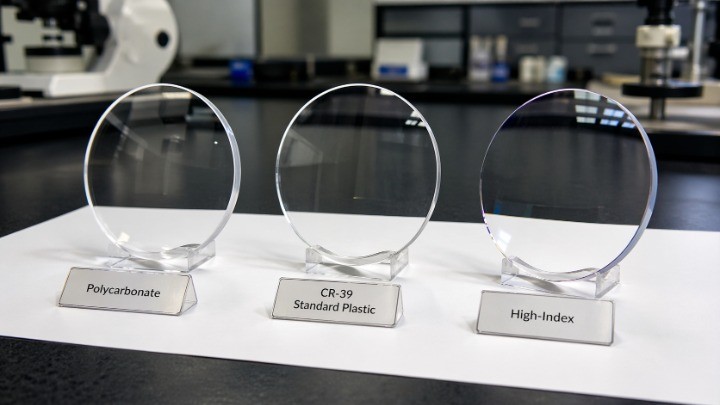 Lens material changes how UV protection is built, how it is sold, and how it should be checked. Buyers who ignore the material often end up with vague specifications and poor product differentiation.
A simplified comparison looks like this:
| Lens material | UV behavior | Buying implication |
|---|---|---|
| Polycarbonate | Strong built-in UV absorption below 380 nm | Useful for safety, sport, children’s eyewear, and impact-focused ranges |
| Standard plastic / CR-39 | Often needs treatment to provide UV protection | UV claim should be verified explicitly |
| High-index plastics | Performance varies by formulation and design | Ask for exact UV data by index |
This table reflects a real sourcing point, not just a textbook difference. Polycarbonate brings both UV and impact value, which is why NIOSH recommends polycarbonate or Trivex for prescription safety glasses. Standard plastics and higher-index materials may still work very well, but buyers should request the exact UV specification for the material and index they plan to order.
Vena Optics currently presents multiple refractive indices, coating options, and lens families on its site, including single vision, progressive, photochromic, bifocal, and premium coatings. That means the most commercially useful question is not “Do you offer UV lenses?” but “Which UV claim applies to which material, which index, and which coating system?”
UV Protection Across Different Lens Designs
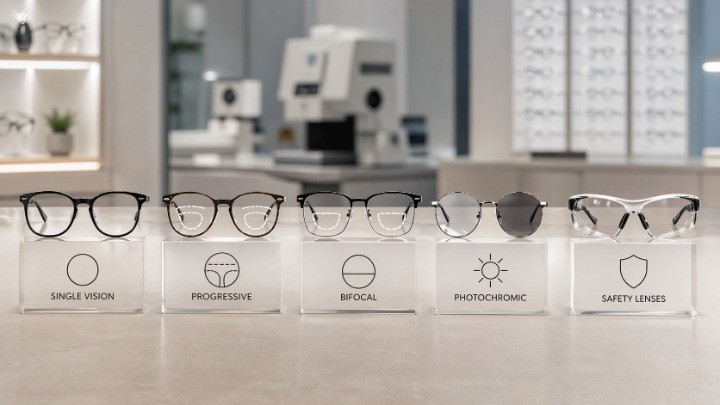 UV protection is relevant across single vision, progressive, bifocal, photochromic, and safety lens programs. Lens design changes the application and the selling angle, but it does not remove the need for UV control.
Single vision programs are often the easiest place to standardize UV protection because the product story is simpler. Progressive and bifocal programs add more variables, including corridor design, index choice, thickness targets, and coating stacks. In those categories, UV can get buried under discussions about adaptation, width of view, and cosmetic thickness unless the supplier and buyer define it clearly from the start.
Photochromic lenses deserve separate attention. They can provide real convenience and UV-related performance outdoors, but buyers should not confuse adaptive darkening with every other outdoor need. For a related comparison of adaptive versus fixed-shade options, see our blog guide on Photochromic vs Tinted Lenses.
Safety and occupational lenses should be handled as full-system products. NIOSH recommends ANSI Z87.1-compliant protection and points buyers toward polycarbonate or Trivex where impact resistance matters. In those programs, UV, impact resistance, surface hardness, and fit should be evaluated together.
Common Misunderstandings Buyers and Wearers Often Have
Most UV mistakes come from bad assumptions, not bad intent. The first is that darker tint means better UV protection. FDA directly says the darkness of the lens does not indicate how well it shields the eyes from UV rays. It also notes that many light-colored lenses can offer the same UV protection as darker ones.
The second mistake is assuming that higher price means higher protection. NEI warns buyers not to assume designer sunglasses protect better than lower-cost options if both are labeled the same for UVA/UVB or UV400. That matters because many procurement errors start with visual impression or price positioning rather than specification control.
The third mistake is assuming only sunglasses need UV protection. WHO’s cataract estimate, EPA’s UV exposure guidance, and NEI’s buying advice all point toward a broader conclusion: UV protection is not only a sunwear issue; it is an eyewear performance issue.
How to Evaluate UV Protection Claims Before Buying
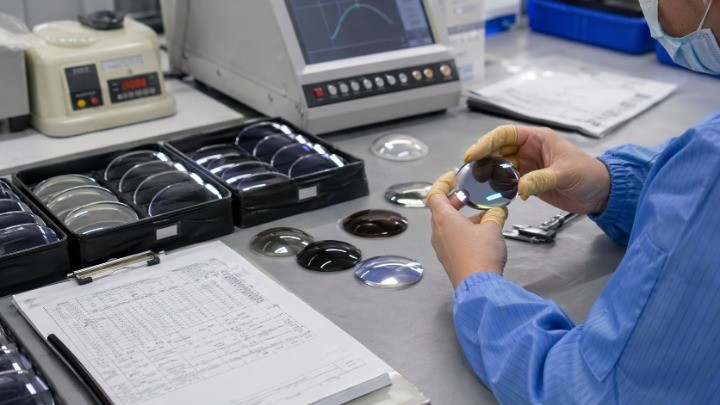 A good UV claim should be specific, measurable, and easy to verify. If the wording is vague, the claim is weak.
The clearest labels remain UV400 and 99% to 100% UVA/UVB protection. NEI also notes that many optical shops have a photometer that can test whether lenses block UV. That detail matters because it shows UV protection is not just a brochure phrase. It is something buyers and retailers can verify in practice.
For wholesale, OEM, or private-label projects, do not stop at packaging language. Ask for:
• The exact UV claim used on the label • Confirmation that the claim applies to the target material and index • Any available transmission or test support • QC discipline for lot-to-lot consistency • Clarification on whether the UV performance is material-based, coating-based, or both
This is also where brand communication matters. Vena Optics currently presents a blog, a product overview, and a quote pathway on its site, which makes it easier to align education, product messaging, and sourcing discussion in one place. ()
How to Verify UV Protection Performance in Real Supply Projects
The safest buying method is to verify UV performance at the project level, not only at the catalog level. A general sales promise does not protect a large order from inconsistency.
Start by tying the UV claim to the exact material, index, coating, and lens design you plan to order. Then move to samples. If the supplier cannot explain whether the UV function is built into the substrate or supported by treatment, that is already a warning sign. If the supplier can explain it, the next step is to test the exact build you want, not just a similar one.
A practical verification flow looks like this:
-
Approve the UV claim in writing.
-
Confirm whether the protection is material-based, coating-based, or both.
-
Check samples from the exact specification you plan to buy.
-
Ask how the supplier controls consistency across coating runs and lots.
-
Keep the approved claim tied to order documentation.
This matters most when the project includes high-index materials, private-label packaging, multiple coating stacks, or safety applications. In those cases, small specification gaps create expensive downstream problems.
What wholesale Buyers Should Ask an Optical Lens Supplier
procurement teams should treat UV protection as a controlled technical requirement, not a catalog checkbox. The right questions usually reveal whether a supplier is managing performance or merely repeating marketing language.
Ask first whether the UV protection is material-based, coating-based, or both. Ask next whether the answer stays the same across all indexes and all lens families. Polycarbonate may behave differently from standard plastic. A single vision lens may not follow the same process as a photochromic or safety program. That is normal. What matters is whether the supplier explains the difference clearly.
Then ask about proof. Useful questions include:
• What exact UV claim do you use: UV400, 99% UVA/UVB, or another standard? • Does that claim apply to every index in this program? • What testing or transmission data supports the claim? • How do you manage batch consistency and traceability? • What documentation can you provide for OEM or private-label orders? • If the lens is for safety or sunwear, what impact-resistance support is available?
On the Vena Optics site, we currently describe OEM/ODM capability, batch traceability, quality-control positioning, quote pathways, and multiple lens categories, which fits the kind of supplier conversation professional buyers usually need. For related reading, our blog also includes articles on optical quality control and manufacturer selection.
How UV Protection Fits Into Product Development and Market Strategy
UV protection is not only a health feature. It is also a product-planning feature. It helps define what is standard, what is premium, and what your sales team can defend with confidence.
At entry level, UV protection often functions as a baseline expectation. In mid-range programs, it can sit alongside AR performance, thinner materials, or photochromic behavior. In premium programs, it can support a broader value story around comfort, technology, durability, and verified specification. That approach works better than treating UV as a small add-on because it lets brands explain why one lens family deserves a higher position than another.
This is especially useful for wholesalers, retailers, and private-label buyers. A clear UV claim supports:
• Better differentiation between lens tiers • Stronger trust in technical documentation • Easier retail explanations • Fewer misunderstandings at the point of sale
Vena Optics already frames its range around optical retail chains, distributors, e-commerce retailers, and custom manufacturing projects. That market-based structure is a good fit for UV positioning because the same UV feature can support different value stories in different channels. ()
When UV Protection Alone Is Not Enough
A lens can block UV well and still perform poorly in real outdoor use if fit, coverage, and glare control are weak. That is why NEI and EPA both discuss reflective conditions and application context, not only labels.
NEI recommends wraparound sunglasses or goggles for certain high-exposure situations. EPA advises extra caution near water, snow, and sand because those surfaces reflect harmful rays. In practice, this means UV protection should be specified together with coverage, tint strategy, and glare control when the product is intended for driving, sport, or long outdoor use.
This is why dedicated prescription sunwear still matters. A clear UV-protective lens may be the best everyday answer, but it may not be the best full outdoor answer. The best system is often UV protection plus the right lens design for the actual environment.
How Long UV Protection Lasts and What Affects Performance
UV protection does not age the same way in every lens. Durability depends on how the protection is built and what other surface systems the lens uses.
If the UV behavior is strongly material-based, the protection is usually more stable as long as the lens itself remains intact. If the UV performance depends more on coating or treatment, buyers should think more carefully about abrasion resistance, scratch management, surface durability, and consistency after cleaning and use. The same lens-material review that discusses polycarbonate’s natural UV absorption also notes the role of UV absorbers in preventing weathering and brittleness, which shows that UV management can be part of the material-performance story, not only the surface story.
The safer buyer message is simple: do not assume all UV claims age the same way. Ask the supplier how the lens achieves the claim and what evidence supports long-term consistency for that exact product family.
How to Choose the Right UV-Protective Lens for Different Applications
 The right UV-protective lens depends on routine, exposure level, and category. One answer does not fit every wearer or every program.
For everyday prescription wear, clear UV-protective lenses often make sense. For strong outdoor use, tinted or dedicated sunwear designs may work better. For children, impact resistance and durable protection matter more. For safety eyewear, UV should be evaluated together with ANSI-compliant protection and impact performance. NIOSH’s guidance on polycarbonate and Trivex reinforces that combined approach.
A simple application guide helps:
| Use case | Best starting lens strategy |
|---|---|
| Everyday prescription wear | Clear UV-protective lens |
| Children’s eyewear | Durable UV-protective lens with impact-conscious material choice |
| Driving and long outdoor use | UV400 plus suitable tint and glare strategy |
| Safety eyewear | UV protection plus impact-resistant compliant design |
| Wholesale and private-label programs | UV claim tied to material, QC, and documentation |
If you want related reading for adjacent product decisions, our blog already includes guides on Photochromic vs Tinted Lenses, What Is a Polycarbonate Lens?, and How to Choose an Optical Lens Manufacturer? ()
Final Buying Checklist for Readers and Procurement Teams
Before you approve a UV-protective optical lens, verify three things: the claim, the build method, and the proof. That means confirming the exact UV label, understanding whether the protection is material-based or coating-based, and checking that the supplier can support the claim with documentation or testing logic. NEI’s reference to photometer testing and FDA’s emphasis on clear UV labeling both support that approach.
If you compare suppliers only by tint, price, or generic premium language, you will miss the real difference. A good UV lens program is measurable, repeatable, and easy to explain. That is the standard buyers should use when they source, specify, and sell optical lenses.
Conclusion
UV protection in optical lenses should be treated as a core lens specification, not an optional extra. WHO’s cataract estimate, EPA’s UV exposure guidance, NEI’s labeling advice, FDA’s warning against judging protection by tint darkness, and NIOSH’s safety-lens recommendations all point in the same direction: ultraviolet exposure is real, cumulative, and worth controlling with properly specified eyewear. ()
For buyers, the takeaway is straightforward. Specify the UV claim clearly, match it to the exact lens build, and verify it before scale-up. That approach improves sourcing quality, product trust, and long-term brand credibility.
If you are building a lens range for retail, wholesale, OEM, or private-label programs, explore Vena Optics and our blog for related guidance on materials, lens categories, and sourcing decisions. Our current site highlights single vision, progressive, photochromic, bifocal, and coating systems, along with quote pathways for business inquiries. ()
If you want to compare UV options by material, lens design, coating stack, and documentation support, contact our team through Vena Optics and use the quote channel to start a specification discussion. (