


multi coated lens is an optical lens with several functional coating layers applied to improve clarity, durability, comfort, and daily wearing performance.
Many buyers see terms like multi coated, HMC, SHMC, anti-reflective coating, UV coating, and hard coating on lens quotations. However, these terms do not always mean the same thing. This confusion can lead to poor product comparison, unstable quality, and higher after-sales risk.
This guide explains what a multi coated lens is, how it works, what coating layers it may include, and how professional optical buyers can judge coating quality before placing bulk orders.
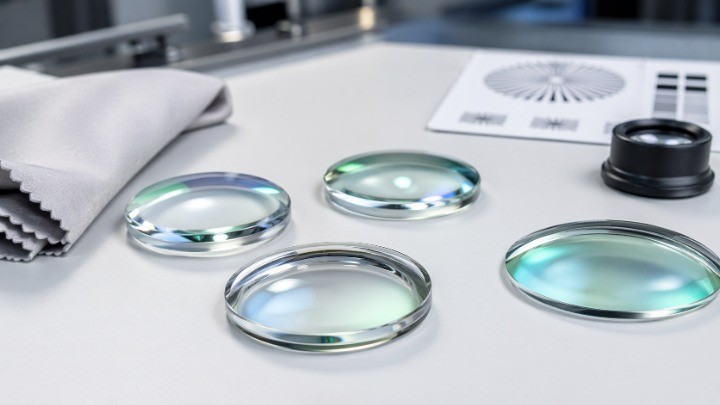 Multi Coated Lens: Quick Answer
A multi coated lens is a spectacle lens treated with multiple surface layers. These layers usually include hard coating, anti-reflective coating, water-repellent coating, oil-repellent coating, and sometimes UV or blue-light-related functions.
These layers help the lens reduce glare, resist scratches, stay cleaner, and look more transparent. For optical retailers, wholesalers, and eyewear brands, multi coated lenses also help improve product value and reduce after-sales complaints.
In simple terms, multi coating turns a basic optical lens into a clearer, more durable, and more market-ready lens product.
What Is a Multi Coated Lens?
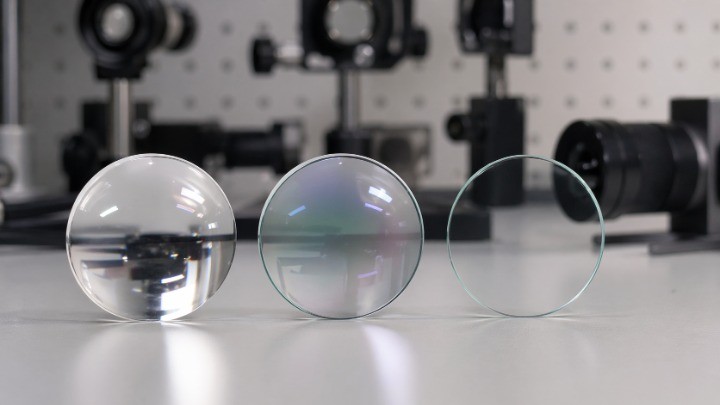 A multi coated lens is a lens that receives more than one coating layer after the base lens has been produced. These layers work together to improve how the lens performs in real use.
The base lens provides optical power. The coating system improves the lens surface. That surface performance affects glare, cleaning, scratch resistance, appearance, and long-term user satisfaction.
For professional buyers, the coating should not be treated as a small add-on. The coating often determines how customers judge the final lens experience.
Simple Definition of a Multi Coated Lens
A multi coated lens is an optical lens with several thin treatment layers applied to one or both surfaces. Each layer has a specific role.
A basic coating may only improve scratch resistance. A multi coating system may combine several functions, such as anti-reflection, water resistance, oil resistance, and UV-related protection.
This layered structure allows one lens to solve several common problems at the same time. It can improve vision clarity, reduce reflections, make the lens easier to clean, and support better product positioning in retail or wholesale markets.
Multi Coated, Multicoated, and Multi-Coated: Are They the Same?
The terms multi coated, multicoated, and multi-coated usually refer to the same general idea. They all describe a lens with multiple coating layers.
However, buyers should not judge coating quality by the word alone. Different factories and markets may use these terms differently.
One supplier may use “multi coated” for a basic hard multi coating. Another may use it for HMC or SHMC lenses. A third supplier may include hydrophobic and oleophobic top layers in the same term.
That is why buyers should always confirm the actual coating structure, not only the product name.
Why Optical Lenses Need More Than One Coating Layer
Optical lenses face several surface-related problems in daily use. A single coating layer cannot solve all of them well.
For example, one layer may improve scratch resistance but may not reduce glare. Another layer may reduce reflections but may not make the lens easy to clean.
A multi-layer coating system allows manufacturers to combine functions. This is especially important for modern eyewear, where users expect clear vision, clean appearance, comfort, and durability from one product.
Multi Coated Lens vs Regular Coated Lens
A regular coated lens may have only a simple hard coating or a basic surface treatment. A multi coated lens uses several layers to improve broader performance.
| Lens Type | Main Surface Treatment | Typical Performance | Best Use |
|---|---|---|---|
| Uncoated lens | No advanced coating | More reflections, easier surface wear | Low-cost basic use |
| Hard coated lens | Scratch-resistant layer | Better surface protection | Entry-level prescription lenses |
| Multi coated lens | Several functional layers | Better clarity, glare control, cleaning, and durability | Daily eyewear and professional optical sales |
| Premium SHMC lens | Advanced multi-layer coating system | Better surface smoothness and easier maintenance | Higher-value retail and private-label products |
For buyers, this comparison matters because customers often notice coating quality more quickly than they notice many technical lens specifications.
How Does a Multi Coated Lens Work?
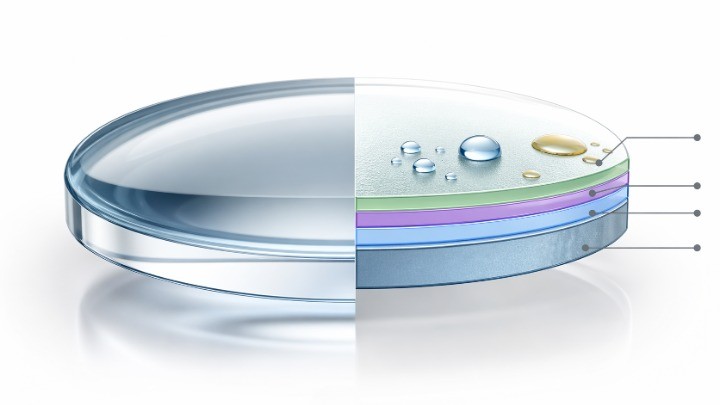 A multi coated lens works by using several ultra-thin layers to control reflection, protect the surface, and improve daily handling.
The coating system sits on the lens surface. It does not replace the prescription power, lens index, or lens design. Instead, it improves how light interacts with the lens and how the surface responds to scratches, water, oil, and cleaning.
A good coating system should support both optical performance and practical use.
The Role of Multiple Thin Coating Layers
Each coating layer has a specific function. Some layers bond the coating to the lens surface. Some layers reduce reflection. Some layers make the surface smoother and easier to clean.
The structure usually starts with a hard coating. Then the lens may receive anti-reflective layers. Finally, the lens may receive top layers for water resistance, oil resistance, and easier maintenance.
This structure may vary by material, index, and product grade. A 1.56 resin lens, 1.60 high-index lens, 1.67 lens, photochromic lens, or progressive lens may require different coating settings.
How Anti-Reflective Coating Improves Light Transmission
Anti-reflective coating reduces surface reflections, so more useful light can pass through the lens. This improves lens transparency and reduces distracting glare.
This matters for night driving, digital screens, indoor lighting, and face-to-face communication. The notes that prescription eyeglass lenses with anti-reflection coating can help minimize reflections from dashboard lights, streetlights, and headlights during night driving. ()
In retail, this benefit is easy to explain. Customers can see the difference when lenses look clearer and show fewer reflections.
Why Coating Quality Affects Clarity, Comfort, and Lens Life
Coating quality affects the lens from the first day of use to long-term wear. A poor coating may look acceptable at first, but it can fail after cleaning, edging, humidity exposure, or daily handling.
specifies optical and non-optical requirements, including durability and test methods, for anti-reflective coatings on spectacle lenses. This shows why coating should be treated as a measurable performance factor, not only a marketing description. ()
A professional buyer should ask how the supplier checks coating durability, not only what coating name appears on the quotation.
Common Coating Layers Used in Multi Coated Lenses
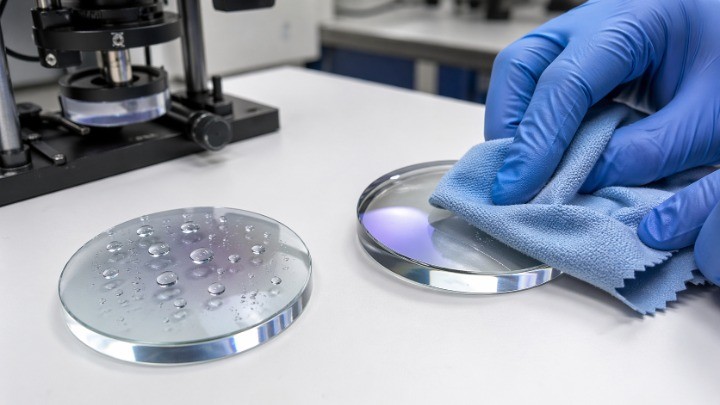 A multi coated lens may include several coating layers, depending on the product grade and supplier specification.
The most common layers include hard coating, anti-reflective coating, hydrophobic coating, oleophobic coating, UV-related treatment, and optional blue-light or EMI-related functions.
Not every multi coated lens includes all layers. Buyers should confirm the exact coating package before comparing prices.
Hard Coating for Scratch Resistance
Hard coating improves scratch resistance on resin and plastic lenses. Resin lenses are lighter and widely used, but their surfaces need protection during daily wear and cleaning.
A hard coat creates a stronger surface foundation for the next coating layers. It also helps reduce minor surface damage caused by wiping, storage, and handling.
specifies the requirement and test method for spectacle lens surfaces that claim a basic level of abrasion resistance, including coated surfaces. For bulk buyers, abrasion resistance matters because visible scratches can lead to returns, complaints, and lower customer confidence. ()
Anti-Reflective Coating for Glare Reduction
Anti-reflective coating, often called AR coating, reduces reflections from the front and back lens surfaces.
This coating improves lens transparency. It also makes the wearer’s eyes more visible, which improves the cosmetic appearance of the eyewear.
For office users, drivers, and retail customers, AR coating often provides one of the most noticeable benefits of multi coated lenses.
Hydrophobic Coating for Water Resistance
Hydrophobic coating helps water slide off the lens surface more easily. This does not make the lens impossible to wet, but it improves daily usability.
This layer matters in humid climates, rainy environments, and markets where customers often clean their lenses frequently.
For wholesalers and optical stores, hydrophobic performance can help position the lens as easier to maintain and more comfortable for daily wear.
Oleophobic Coating for Easier Cleaning
Oleophobic coating helps reduce oil and fingerprint attachment. This layer makes the lens easier to wipe clean.
This is important because many customers judge lens quality by how easily they can clean fingerprints, facial oil, and dust.
A lens that smudges quickly may feel “low quality” even when its prescription power is correct. That is why surface smoothness and cleaning performance matter in product selection.
UV Protection Coating for Eye Safety
UV protection helps reduce ultraviolet exposure to the eyes. The explains that the sun’s UV rays can damage the eyes, which makes UV protection an important part of eyewear selection. ()
For clear prescription lenses, buyers should confirm whether UV protection comes from the lens material, coating, or both.
specifies requirements for the transmittance properties of finished spectacle lenses, including attenuation of solar radiation. This makes UV performance a specification issue, not only a marketing claim. ()
Optional Blue Light or EMI Coating for Functional Lens Designs
Some multi coated lenses include blue-light-related or EMI-related coating designs. These options usually target computer use, office eyewear, or specific retail market needs.
Buyers should handle these claims carefully. They should ask for clear product specifications, transmittance curves, reflection color, and market positioning.
For sales, these functions can create product differentiation, but they should match the target customer’s real use case.
Key Benefits of Multi Coated Lenses
 Multi coated lenses provide better clarity, comfort, durability, appearance, and daily maintenance compared with basic lenses.
These benefits are not only technical. They also affect customer satisfaction, product positioning, and long-term repeat orders.
For professional buyers, the real value of multi coating is the combination of optical performance and lower after-sales risk.
Better Visual Clarity
Multi coated lenses reduce unwanted reflections. This allows users to see through the lens more comfortably.
Clearer lenses also improve the look of the frame. The wearer’s eyes appear more visible, and the eyewear looks cleaner in photos, video calls, and face-to-face contact.
This is especially important for premium prescription eyewear, office lenses, progressive lenses, and private-label collections.
Reduced Glare from Screens, Headlights, and Indoor Lighting
Glare can come from many sources, including computer screens, LED lighting, car headlights, streetlights, and glass surfaces.
Anti-reflective coating helps reduce distracting reflections. This can improve comfort in common daily scenarios, especially for users who work indoors or drive at night.
However, buyers should not overpromise. AR coating helps reduce reflections, but it does not eliminate every visual discomfort problem.
Improved Lens Durability
A well-designed multi coating system can improve surface durability. The hard coating supports scratch resistance, while the top layers support cleaning and handling.
This matters in wholesale and chain-store environments. When lenses move through storage, edging, mounting, shipping, and retail handling, weak coatings may show problems quickly.
Durability also affects customer trust. A lens that keeps a clean surface longer will usually create a better ownership experience.
Cleaner Lens Appearance
Multi coated lenses often look more transparent than uncoated lenses. They show fewer surface reflections and make the eyewear look more refined.
This benefit matters in retail displays. Customers often compare lenses by appearance before they understand technical details.
For eyewear brands, cleaner lens appearance can support higher product value and better customer perception.
Easier Daily Maintenance
Hydrophobic and oleophobic layers can make lenses easier to clean. Users can remove water marks, dust, and fingerprints more easily.
This daily benefit is simple but powerful. Customers interact with lens surfaces every day, so cleaning experience becomes part of the product experience.
For optical stores, easier cleaning can also reduce complaints about “dirty lenses” or “hard-to-clean coatings.”
Higher Product Value for Optical Retail and Wholesale Channels
Multi coated lenses help retailers and wholesalers sell a clearer value story. The benefit is not only “better coating.” The benefit is comfort, appearance, durability, and easier care.
This makes multi coated lenses suitable for:
• Daily prescription eyewear • Progressive lenses • Photochromic lenses • Blue light protection lenses • High-index lenses • Private-label optical programs • Retail upgrade packages
When buyers build product lines, coating quality helps separate entry-level, standard, and premium options.
Multi Coated Lens vs Uncoated Lens: What Is the Difference?
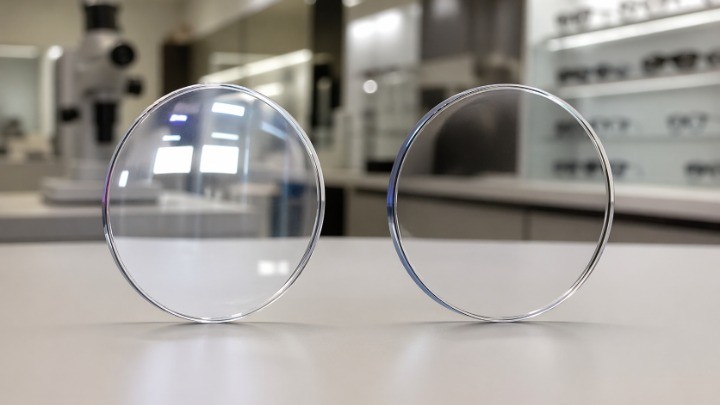 A multi coated lens has several functional surface layers, while an uncoated lens has little or no advanced surface treatment.
The difference appears in reflection, clarity, comfort, durability, and customer experience. The base prescription may be the same, but the finished product feels different in daily use.
For buyers, this comparison helps explain why coating affects both product performance and selling price.
| Comparison Point | Uncoated Lens | Multi Coated Lens |
|---|---|---|
| Reflection | Higher visible reflections | Lower reflections |
| Clarity | More distracting glare | Cleaner visual appearance |
| Surface protection | Limited protection | Better surface resistance |
| Cleaning | Smudges may be harder to remove | Easier cleaning with top layers |
| Retail value | Basic product | Better upgrade option |
| After-sales risk | Higher complaint potential | Lower risk when coating quality is stable |
Difference in Reflection and Transparency
Uncoated lenses reflect more light from the lens surface. This can make the lens look shinier and less transparent.
Multi coated lenses reduce reflections. The lens looks clearer, and the wearer’s eyes are easier to see.
This difference affects both vision and appearance. That is why optical stores often use reflection comparison as a simple sales demonstration.
Difference in Visual Comfort
Uncoated lenses may create more distracting reflections from lighting, screens, and headlights.
Multi coated lenses can reduce these distractions and support better comfort in many everyday environments.
This benefit is especially relevant for users who spend long hours under indoor lighting, drive at night, or work with screens.
Difference in Scratch and Surface Protection
Uncoated resin lenses are more vulnerable to surface marks. A hard coating can improve scratch resistance.
A multi coating system may add more functions beyond scratch resistance. It may improve cleaning, water resistance, and oil resistance.
For professional buyers, this difference matters because surface complaints are easier for customers to see than many technical lens errors.
Difference in Customer Experience and Product Positioning
Uncoated lenses are usually positioned as low-cost basic options. Multi coated lenses can support mid-range and premium product lines.
For wholesalers and optical retailers, multi coated lenses allow clearer product segmentation. They help sales teams explain why one lens costs more than another.
This is valuable when the market is price-sensitive but still expects reliable quality.
Multi Coated Lens vs HMC vs SHMC Lens
Multi coated lens is a broad term. HMC and SHMC are more specific coating categories used widely in optical lens manufacturing and trading.
HMC usually means hard multi coating. SHMC usually means super hydrophobic multi coating or a higher-grade multi coating system with better surface cleaning performance.
However, exact meanings can vary between suppliers. Professional buyers should compare the real coating structure and test results, not only the abbreviation.
What Is an HMC Lens?
An HMC lens usually refers to a lens with hard multi coating. It commonly includes a hard coat and anti-reflective coating layers.
HMC lenses are widely used in daily prescription eyewear because they balance cost, appearance, and basic performance.
For many wholesale markets, HMC is a standard option for single vision, bifocal, and progressive lenses.
What Is an SHMC Lens?
An SHMC lens usually refers to a more advanced coating option. In many markets, SHMC means super hydrophobic multi coating.
This type of coating often offers better water resistance, easier cleaning, and a smoother surface feel than standard HMC.
For private-label brands, chain stores, and premium optical retail channels, SHMC can support stronger product positioning.
How These Terms Are Used in Optical Lens Manufacturing
Manufacturers often use coating names to separate product grades. For example, a factory may offer UC, HC, HMC, SHMC, blue cut coating, photochromic coating combinations, or special reflection colors.
However, the same term may not mean the same performance across all factories.
A buyer should confirm:
• Lens material and refractive index • Coating color • Hard coating process • AR coating structure • Hydrophobic or oleophobic function • UV or blue-light specifications • Test method and sample approval process
This avoids confusion during quotation comparison.
How Buyers Should Compare Coating Names and Real Performance
Buyers should ask suppliers to explain what each coating includes. They should also request samples and test the lenses under practical conditions.
A coating name only tells part of the story. The actual performance depends on process control, material compatibility, vacuum coating quality, curing conditions, and inspection standards.
This is especially important for repeat orders. A good sample does not guarantee stable bulk quality unless the manufacturer controls batch consistency.
Who Should Choose Multi Coated Lenses?
Multi coated lenses are suitable for most modern prescription eyewear programs, especially when buyers want better clarity, comfort, durability, and retail value.
They are also useful for product lines that need clearer differentiation between basic and premium lens options.
For wholesale customers, multi coated lenses make the most sense when after-sales control, brand reputation, and repeat purchasing matter.
Optical Stores and Chain Retailers
Optical stores and chain retailers benefit from multi coated lenses because they can explain the value clearly to customers.
The selling points are practical: less glare, clearer lenses, better appearance, easier cleaning, and improved durability.
For chain stores, coating consistency matters even more. A store network needs stable products across many locations and many repeat orders.
Lens Wholesalers and Regional Distributors
Wholesalers and distributors need products that can serve different market levels. Multi coated lenses help them build a flexible product range.
They can offer basic HC lenses, standard HMC lenses, and premium SHMC lenses to different customer groups.
This structure helps them compete on more than price. It also gives sales teams a clearer upgrade path.
Private-Label Eyewear Brands
Private-label brands often care about product experience and brand perception. A poor coating can damage the brand even when the frame design looks good.
Multi coated lenses support a cleaner, more premium customer experience.
They also allow brands to create customized coating names, packaging, and product stories when working with an OEM/ODM lens manufacturer.
Optical Labs and Prescription Lens Suppliers
Optical labs need lenses that can handle edging, mounting, cleaning, and prescription processing.
Coating damage during edging or assembly can create costly remake problems. Therefore, labs should care about adhesion, surface stability, and coating compatibility with different lens materials.
Stable coating quality helps labs reduce waste and improve delivery reliability.
Daily Eyewear, Driving, and Office Use Cases
Daily wearers benefit from multi coated lenses because they use their glasses in many lighting conditions.
Office users may need better clarity under screens and LED lights. Drivers may need reduced reflections at night. General users may simply want lenses that stay cleaner and look better.
For buyers, these use cases help create product recommendations for different customer segments.
Are Multi Coated Lenses Worth It?
Yes, multi coated lenses are worth it when the buyer values clearer vision, better surface durability, easier cleaning, and stronger product positioning.
The extra cost can be justified when coating quality is stable and the product is matched to the right market segment.
For professional buyers, the better question is not only “Are they worth it?” The better question is which coating grade fits the target customer and selling price.
When Multi Coated Lenses Offer Clear Value
Multi coated lenses offer clear value when customers use glasses every day. Daily use exposes lenses to light reflections, fingerprints, dust, cleaning cloths, and environmental moisture.
They also offer value in higher-prescription lenses, progressive lenses, photochromic lenses, and premium retail products.
In these categories, the customer expects more than basic vision correction. They expects comfort, appearance, and a smooth user experience.
When Basic Coating May Not Be Enough
Basic coating may not be enough when customers complain about glare, cleaning difficulty, visible reflections, or surface damage.
Basic coating may also limit product positioning. A retailer may struggle to explain a higher price if the lens surface looks similar to a low-cost product.
For markets with strong competition, better coating can become a practical way to improve value without changing the entire lens design.
How to Explain the Value to End Customers
Sales teams should explain multi coated lenses through daily problems, not technical language only.
They can say:
• The lens looks clearer because it reflects less light. • The lens is easier to clean because the surface is smoother. • The lens offers better daily comfort under screens and lights. • The lens has better surface protection for long-term use.
This approach helps customers understand the value quickly.
Why wholesale Buyers Should Look Beyond Unit Price
Unit price matters, but coating failure can cost more than a small price difference.
Poor coating may lead to remakes, returns, complaints, and lost customer trust. These costs are not always visible at the quotation stage.
Professional buyers should compare total value. That includes lens performance, coating stability, quality control, packaging support, delivery reliability, and supplier response speed.
Common Problems with Low-Quality Multi Coated Lenses
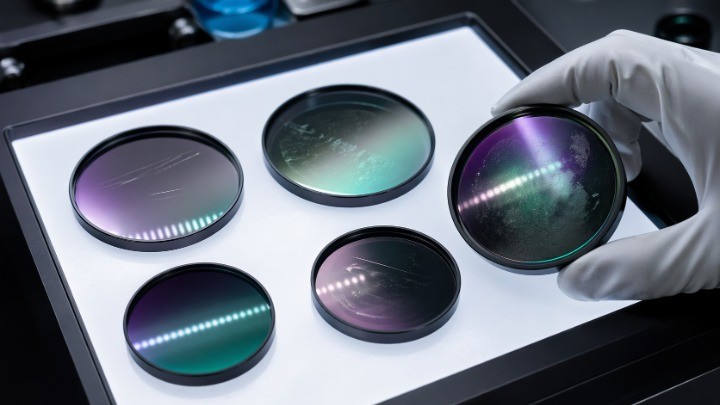 Low-quality multi coated lenses may show peeling, uneven color, poor scratch resistance, difficult cleaning, edging damage, or unstable batch quality.
These problems often appear after the lens leaves the factory. That makes them especially risky for wholesalers, distributors, and chain stores.
A low price can look attractive at first, but unstable coating can create higher after-sales costs later.
Coating Peeling or Delamination
Coating peeling happens when the coating layers do not bond well with the lens surface or with each other.
This may result from poor surface preparation, wrong process settings, weak hard coating, or unsuitable material-coating compatibility.
Once peeling appears, the lens usually cannot be repaired. The customer will see it as a product failure.
Uneven Reflection Color
Multi coated lenses often show green, blue, purple, or other reflection colors. A consistent reflection color helps create a clean product appearance.
Uneven reflection color may suggest coating thickness inconsistency or poor process control.
For private-label products and chain-store programs, this issue can affect brand consistency across batches.
Poor Scratch Resistance
Poor scratch resistance leads to visible surface marks during cleaning or daily use.
Customers may not understand the technical cause. They simply believe the lens is low quality.
This is why abrasion resistance testing and hard coating quality are important during supplier evaluation.
Difficult Cleaning and Easy Smudging
Some lenses attract fingerprints and oil marks too easily. Others leave streaks after wiping.
This problem often relates to weak top coating performance. Hydrophobic and oleophobic layers must be smooth, stable, and properly bonded.
For retail customers, cleaning difficulty is one of the most common daily frustrations.
Coating Damage During Edging or Assembly
Coating damage during edging, mounting, or frame assembly creates practical problems for optical labs and workshops.
The lens may pass visual inspection before processing but fail during installation.
Buyers who supply optical labs should test lenses through the real workflow, not only inspect them in untouched sample form.
Unstable Quality Between Different Production Batches
Batch instability is a major wholesale risk. One order may perform well, while the next order shows color difference, cleaning difference, or adhesion problems.
This creates problems for wholesalers and retailers because customers expect the same product every time.
A reliable manufacturer should control coating recipes, process parameters, inspection records, and batch traceability.
How to Judge the Quality of Multi Coated Lenses
 Buyers can judge multi coated lens quality by checking adhesion, abrasion resistance, salt spray performance, reflection color consistency, surface smoothness, and batch stability.
A visual check is useful, but it is not enough. Professional buyers should combine sample evaluation with basic performance testing.
This is especially important when sourcing large volumes or building a long-term private-label product line.
Coating Adhesion Test
Coating adhesion shows whether coating layers bond firmly to the lens surface.
Poor adhesion may cause peeling, cracks, or edge damage after processing. Good adhesion helps the coating survive cleaning, handling, and edging.
Buyers can ask suppliers what adhesion test method they use and whether the test applies to the specific lens material and coating grade.
Abrasion Resistance Test
Abrasion resistance shows how well the lens surface handles rubbing, wiping, and daily contact.
This does not mean the lens is scratch-proof. No regular prescription lens should be sold as impossible to scratch.
However, a good abrasion-resistant coating can reduce normal surface wear and improve customer satisfaction.
Salt Spray Test
Salt spray testing helps evaluate coating resistance in corrosive or humid environments.
This is useful for markets with high humidity, coastal climates, or frequent exposure to sweat and moisture.
A lens that performs well in a dry showroom may still face problems in tropical or coastal markets if coating stability is weak.
Reflection Color Consistency
Reflection color should remain consistent within the same product grade and batch.
This matters for retail display, customer trust, and private-label branding. A mixed batch with different reflection colors can look unprofessional.
Buyers should compare samples under the same lighting and angle. They should also check whether color remains stable across repeat orders.
Surface Smoothness and Cleaning Performance
Surface smoothness affects cleaning experience. A smooth top coating can help remove fingerprints, oil, and water marks more easily.
Buyers can test cleaning performance with a microfiber cloth, water droplets, and controlled handling.
This simple test often reveals practical differences between standard and premium coatings.
Batch Stability for Large-Scale Orders
Batch stability is one of the most important factors for professional buyers.
A supplier should maintain coating consistency across order cycles. This requires process control, inspection records, trained operators, and stable raw material sourcing.
For long-term cooperation, buyers should ask how the manufacturer handles quality traceability and repeat-order consistency.
What wholesale Buyers Should Check Before Sourcing Multi Coated Lenses
procurement teams should check lens material, index range, coating options, sample quality, packaging support, inspection standards, and delivery stability before sourcing multi coated lenses.
This checklist helps avoid price-only decisions. It also helps buyers compare suppliers more fairly.
A good sourcing process should connect technical quality with market needs.
Confirm the Lens Material and Index Range
Different lens materials and indexes may require different coating processes.
A buyer should confirm whether the supplier can provide the required range, such as 1.56, 1.60, 1.67, high-index lenses, PC lenses, photochromic lenses, bifocal lenses, or progressive lenses.
For a broad optical program, full-range capability helps reduce supplier management complexity.
Check Available Coating Options
Buyers should ask for a clear coating menu. This may include HC, HMC, SHMC, blue cut coating, UV coating, photochromic combinations, or special reflection colors.
They should also ask what each coating includes.
A coating name without technical detail can create misunderstanding during order confirmation.
Ask for Samples Before Bulk Orders
Samples help buyers check appearance, cleaning, reflection color, coating quality, packaging, and overall market fit.
However, samples should not be the only checkpoint. Buyers should also confirm whether bulk production follows the same standard.
A good supplier should match approved samples with stable production control.
Review Packaging and Private Label Options
Packaging matters for wholesalers, retailers, and private-label brands.
Buyers may need envelopes, middle boxes, labels, barcode stickers, brand inserts, or market-specific packaging language.
For OEM/ODM programs, lens coating and packaging should work together to create a clear product grade.
Confirm Inspection Standards and Delivery Stability
Inspection standards should include both optical properties and coating properties.
specifies requirements and verification methods for optical and geometrical properties of uncut finished single-vision and multifocal spectacle lenses. This helps buyers understand that finished lens quality should include both optical accuracy and surface performance. ()
For repeat orders, buyers should also review supplier inspection routines, sample approval processes, and production traceability.
Choose a Manufacturer with Consistent Coating Capability
A reliable manufacturer should control both production capacity and coating stability.
For procurement teams, a supplier’s strength is not only the ability to make a good sample. The real strength is the ability to deliver consistent quality across many batches.
This is where factory scale, inspection discipline, process control, and communication matter.
How to Choose a Reliable Multi Coated Lens Manufacturer
A reliable multi coated lens manufacturer should provide stable production, clear coating options, sample support, quality inspection, OEM/ODM service, and consistent delivery.
Buyers should look for a partner that understands both technical performance and market requirements.
For long-term cooperation, supplier reliability is as important as coating performance itself.
Full-Range Optical Lens Production Capability
A strong lens manufacturer should support multiple product categories. These may include single vision, progressive, bifocal, photochromic, blue light protection, high-index, and PC lenses.
This helps buyers simplify sourcing and build a more complete product range.
For example, a distributor may need 1.56 HMC lenses for standard sales, 1.60 or 1.67 SHMC lenses for higher prescriptions, and photochromic multi coated lenses for outdoor-use customers.
Customizable Coating Solutions
Different markets prefer different coating colors, coating grades, and product names.
A manufacturer with customizable coating solutions can support green coating, blue coating, purple reflection, gold reflection, UV-related options, blue cut options, and other market-specific requests.
This flexibility helps buyers build products that match local demand.
OEM/ODM and Private Label Support
OEM/ODM support matters when buyers want to build their own brand.
This may include lens envelopes, printed labels, coating names, product series, middle boxes, instruction inserts, and barcode systems.
A lens manufacturer should help buyers turn technical coating options into sellable product lines.
Stable Bulk Supply for Professional Optical Channels
Professional buyers need stable supply, not only good products.
Wholesalers, chain stores, and regional distributors often need repeat orders with consistent specifications. Delivery delay or coating inconsistency can affect their own customer relationships.
That is why stable capacity and repeat-order management should be part of supplier evaluation.
Quality Inspection for Coating Consistency
Quality inspection should cover appearance, coating color, adhesion, abrasion resistance, cleaning performance, and order consistency.
For large-scale buyers, batch traceability also matters. If a problem appears, the supplier should identify the batch, process, and possible cause quickly.
At , we focus on stable optical lens supply, OEM/ODM cooperation, coating solutions, and quality inspection for professional lens buyers. Our goal is to help customers build lens programs that are reliable, market-ready, and suitable for long-term supply.
Final Thoughts: Why Multi Coated Lenses Matter in Modern Eyewear
clear specifications, stable coating quality, reliable inspection, and consistent bulk supply.
If you are sourcing multi coated lenses for wholesale, retail, private-label, or optical chain programs,