


Photochromic spectacles are eyeglasses designed to adapt automatically to changing light conditions. This guide explains what photochromic spectacles are, how they work, and when they make sense for real-world use.
Many eyeglass wearers struggle with switching between regular glasses and sunglasses throughout the day. This inconvenience becomes more noticeable for people who move frequently between indoor and outdoor environments.
By reading this article, you will understand how photochromic spectacles function, what benefits they offer, where their limitations lie, and how to decide whether they are suitable for your needs.
What Are Photochromic Spectacles?
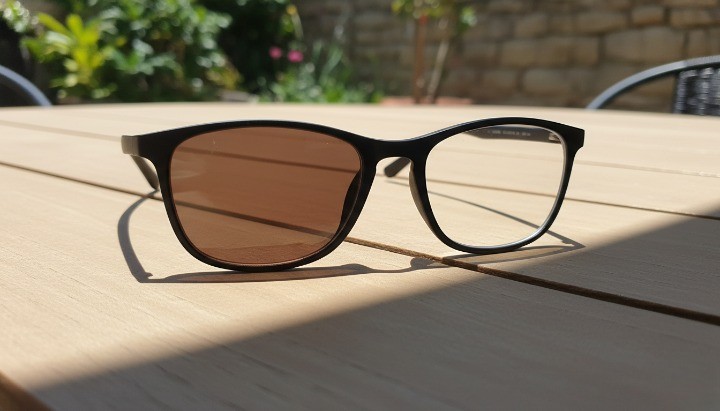
Photochromic spectacles are eyeglasses equipped with lenses that automatically darken when exposed to ultraviolet (UV) light and return to a clear state indoors. They combine vision correction and light adaptation in a single pair of glasses.
Unlike regular eyeglasses, photochromic spectacles respond dynamically to environmental light conditions. This makes them suitable for users who want basic sun protection without switching eyewear.
From a practical standpoint, photochromic spectacles sit between standard eyeglasses and sunglasses, offering moderate outdoor protection with everyday usability.
Definition of Photochromic Spectacles
Photochromic lenses contain light-sensitive molecules that change structure when exposed to UV radiation. This molecular change causes the lens to darken.
When UV exposure decreases, the molecules revert to their original form, and the lens becomes clear again. This process is automatic and repeatable over thousands of cycles.
How Photochromic Spectacles Differ from Regular Eyeglasses?
Regular eyeglasses maintain the same transparency regardless of lighting conditions. Photochromic spectacles adapt based on UV exposure.
Key differences include:
-
• Automatic darkening outdoors
-
• Built-in UV protection even when lenses appear clear
-
• Improved comfort during light transitions
Photochromic Spectacles vs Traditional Sunglasses
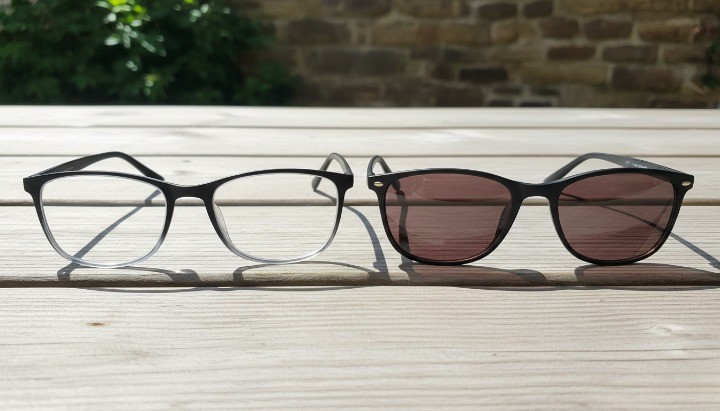
Traditional sunglasses remain dark at all times. Photochromic spectacles adjust their tint depending on UV exposure.
The table below summarizes the key differences from a real-world usage perspective.
| Feature | Photochromic Spectacles | Traditional Sunglasses |
|---|---|---|
| Indoor usability | Clear and comfortable | Too dark indoors |
| Outdoor protection | Moderate UV-based darkening | Strong fixed tint |
| Driving performance | Limited behind windshields | Stable performance |
| Daily convenience | One pair for most scenarios | Requires switching |
| Best use case | Mixed indoor–outdoor routine | Strong sunlight exposure |
This comparison shows why photochromic spectacles prioritize convenience, not maximum sun blocking.
How Photochromic Lenses Work?
Photochromic lenses rely on a reversible chemical reaction triggered by ultraviolet radiation. This reaction allows lenses to darken outdoors and clear indoors without user input.
Understanding this mechanism helps users set realistic expectations for daily performance.
Light-Responsive Technology Explained
Photochromic lenses contain compounds that absorb visible light when exposed to UV radiation. This absorption causes the lens to darken.
When UV exposure drops, these compounds return to their original state, restoring lens clarity.
Indoor vs Outdoor Lens Behavior
Indoors, UV levels remain low, so lenses stay mostly clear. Outdoors, increased UV exposure triggers lens darkening, even on cloudy days.
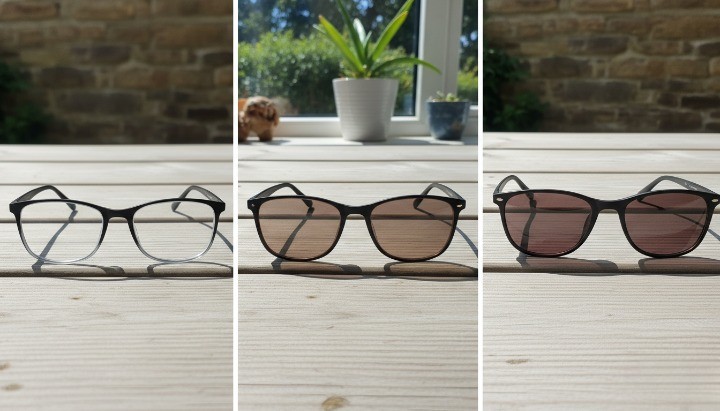
This behavior explains why photochromic lenses may not darken behind windows or vehicle windshields that block UV radiation.
Factors Affecting Photochromic Performance
UV Intensity
Higher UV exposure leads to faster and deeper lens darkening.
Temperature
Cold temperatures slow clearing, while hot conditions may reduce maximum darkness.
Lens Material
Material choice affects reaction speed, durability, and weight.
Benefits of Photochromic Spectacles
Photochromic spectacles offer practical advantages for users who frequently move between indoor and outdoor environments. Their value lies in adaptive comfort and everyday efficiency, rather than extreme sun protection.
Automatic Light Adaptation
Photochromic lenses adjust automatically as UV exposure changes.
Key benefits include:
-
Smooth indoor–outdoor transitions
-
Reduced reliance on sunglasses
-
Consistent visual comfort
UV Protection for Eye Health
Modern photochromic spectacles block up to 100% of UVA and UVB radiation, even when lenses appear clear.
According to the American Academy of Ophthalmology, long-term UV exposure contributes to cataracts and other eye conditions.
Reduced Eye Strain and Glare
By darkening outdoors, photochromic lenses reduce glare and sudden brightness changes.

-
Less squinting
-
Reduced eye fatigue
-
Improved transition comfort
One-Pair Convenience for Daily Use
One pair of photochromic spectacles covers most daily situations, especially for commuting and office routines.
Limitations of Photochromic Spectacles
Despite their flexibility, photochromic spectacles have clear limitations that users should understand.
-
Limited darkening while driving
-
Slower clearing in cold climates
-
Not ideal for extreme sunlight conditions
They are not a replacement for polarized sunglasses in demanding environments.
Who Should Choose Photochromic Spectacles?
Photochromic spectacles deliver the most value when matched to the right lifestyle.
Suitable Users
-
Full-time eyeglass wearers
-
Office workers and commuters
-
Light-sensitive users
Less Suitable Users
-
Professional drivers
-
Outdoor sports users
-
Users needing instant dark tint
How to Choose the Right Photochromic Spectacles?
Choosing the right photochromic spectacles depends on lens material, appearance, and daily usage.
Lens Material Options
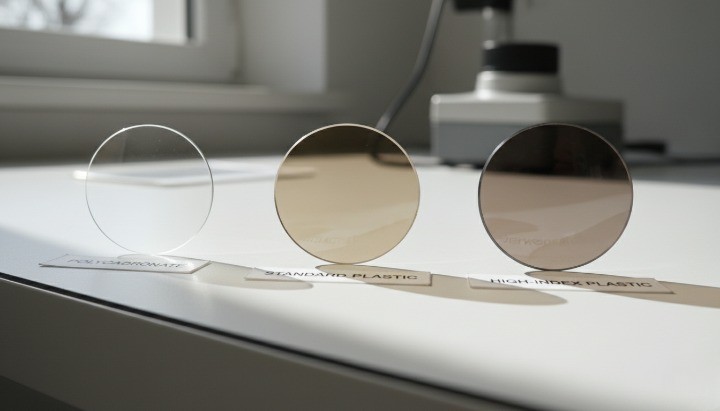
| Lens Material | Key Advantage | Typical Application |
|---|---|---|
| Polycarbonate | Impact resistance | Active daily wear |
| Standard plastic | Cost efficiency | General-purpose eyewear |
| High-index plastic | Thinner and lighter | Strong prescriptions |
Lens Color and Aesthetic Choices
-
Gray lenses preserve natural color accuracy
-
Brown lenses enhance contrast in bright light
Prescription Compatibility
Photochromic lenses are available for single vision, bifocal, and progressive designs. High prescriptions may affect material availability.
Lifestyle Considerations
Photochromic spectacles combine vision correction, UV protection, and everyday convenience in one solution. They work best for users who move between indoor and outdoor environments and prefer a single, adaptable pair of glasses.
They are not a full replacement for sunglasses, especially for driving or extreme sunlight. When selected with the right lens material and usage expectations, photochromic spectacles deliver reliable value for daily wear.
Choosing a Solution That Fits Your Needs
The right photochromic solution depends on how it will be used. Indoor–outdoor frequency, driving time, and prescription requirements all influence performance and satisfaction.