


A photochromic lens is a lens that darkens in sunlight and becomes clearer again when UV exposure drops. That simple definition answers the basic question, but most buyers want more than a short explanation. They want to know how these lenses work in daily life, what they do well, where they fall short, and whether they are worth choosing over clear lenses or a separate pair of sunglasses.
That is exactly why this topic matters. People do not search “what is a photochromic lens” just to learn a term. They search because they are trying to solve a practical problem: too much switching between indoor and outdoor eyewear, too much brightness outside, and too much uncertainty about whether an upgrade will actually improve everyday comfort.
In this guide, we will look at photochromic lenses from both a wearer’s view and a procurement team’s view. We will explain how they work, what benefits they offer, what limitations matter most, and how to choose the right option for different lifestyles, product lines, and wholesale programs. We will also point out where your business can connect this topic to related pages such as Single Vision Lenses, Progressive Lenses, Blue Light Lenses, Coatings, OEM/ODM & Private Label, and Quality Control & Inspection Reports on Vena Optics.

What Is a Photochromic Lens?
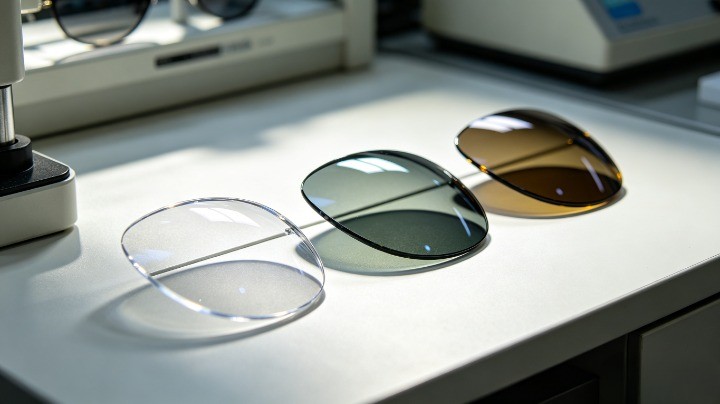
A photochromic lens is an optical lens that changes tint when it is exposed to UV light. Indoors, it remains mostly clear. Outdoors, it becomes darker to improve comfort in bright conditions. This is why many people think of it as a lens that adapts to changing light automatically.
That direct answer is useful for search, but it is only the starting point. In real buying situations, users usually want to know whether a photochromic lens can replace sunglasses, whether it works with prescriptions, and whether it adds enough practical value to justify a higher price. In retail and wholesale, the same question becomes more commercial: does this category meet a real need, and will customers feel satisfied after they buy it?
Photochromic lenses differ from regular clear lenses because they react to light conditions instead of staying optically neutral all day. They also differ from standard tinted lenses, which keep the same shade no matter where the wearer goes. Many consumers also use “Transitions lenses” as a generic phrase, but Transitions is a brand name, while photochromic is the broader lens category. (AAO)
In the market, buyers may also see related terms such as light-adaptive lenses, light-reactive lenses, or sun-responsive lenses. The wording changes from one supplier or market to another, but the basic idea stays the same: one lens that adjusts to changing light instead of forcing the wearer to switch eyewear manually.
How Do Photochromic Lenses Work?
Photochromic lenses work because special molecules in or on the lens react to UV light. When UV exposure increases, those molecules change structure and the lens darkens. When UV exposure drops, the molecules return toward their original state and the lens becomes clearer again.
That is the short answer, and it is enough for a featured snippet. The deeper answer is more useful for real buyers. Photochromic performance does not depend on one factor alone. Lens material, chemistry, coating quality, local climate, and usage habits all affect how the product behaves in daily use.
Plastic and glass photochromic lenses can use different technical approaches. In today’s market, resin-based formats dominate most general prescription programs because they fit modern coating systems, lightweight wear, and common Rx workflows more easily. That is one reason most mainstream photochromic products today are sold in plastic rather than traditional glass. (AAO)
Two questions matter most in real life: how fast the lens darkens outdoors, and how fast it clears indoors again. The American Academy of Ophthalmology also notes that temperature affects performance. Many photochromic lenses darken more in cooler weather and may appear lighter in very hot conditions. That does not automatically mean the lens is weak. It often reflects normal product behavior under different environmental conditions.
For retailers and distributors, this matters because end users judge the lens by what they can see, not by how elegant the chemistry sounds. A product may look great in a sample demonstration, but if performance feels inconsistent in real life, customers will remember the frustration more than the feature. That is why wholesale sourcing should never stop at a sales sheet.
What Problems Do Photochromic Lenses Solve?
Photochromic lenses mainly solve the inconvenience of switching between clear glasses and sunglasses. They are designed to make daily eyewear easier to manage, especially for people who move in and out of buildings often.
That convenience matters more than it sounds. Many people move between offices, shops, sidewalks, parking lots, and outdoor areas several times a day. Carrying a second pair of sunglasses sounds easy in theory, but in daily life people forget them, misplace them, or stop bothering. A photochromic lens reduces that friction.
These lenses also help many wearers feel more comfortable when light changes quickly. A person may not need full sunglass darkness every time they step outside, but they may still want less squinting, less harsh brightness, and a smoother transition between indoor and outdoor conditions. That is why students, commuters, office workers, and everyday prescription wearers often find them attractive.
UV protection is another important part of the value story. The National Eye Institute explains that UV light can damage the eyes, and it recommends sunglasses that block 99% to 100% of both UVA and UVB radiation. The World Health Organization also states that up to 10% of cataract cases worldwide may be caused by overexposure to UV radiation.
For procurement teams, photochromic lenses solve a product-positioning problem too. They give sales teams a clear upgrade story that combines convenience, comfort, and eye-health awareness. In many channels, that is easier to explain and easier to sell than a feature that feels purely technical.
Benefits of Photochromic Lenses
The biggest benefit of photochromic lenses is convenience. One pair can cover indoor use and brighter outdoor conditions without asking the wearer to switch eyewear every time light changes. For many people, that alone is enough to make the category appealing.
Another key benefit is everyday UV-related value. Eye-health authorities such as the NEI and WHO continue to stress the importance of reducing unnecessary UV exposure. That does not mean every photochromic product is identical, and buyers should still confirm real product specifications, but the category clearly connects to a genuine eye-care concern.
Photochromic lenses can also improve outdoor comfort by reducing brightness. However, it is important to keep the claim accurate. They are not the same as polarized sunglasses. The AAO explains that polarized lenses reduce glare from reflective surfaces, which is a different benefit from simple tint adaptation.
For many wearers, there is also a style and habit benefit. They can keep the same frame on all day. They do not need to carry a second case. They do not need to decide every morning whether to bring sunglasses. In optical retail, this often makes photochromic lenses easier to present as a practical lifestyle upgrade rather than a niche feature.
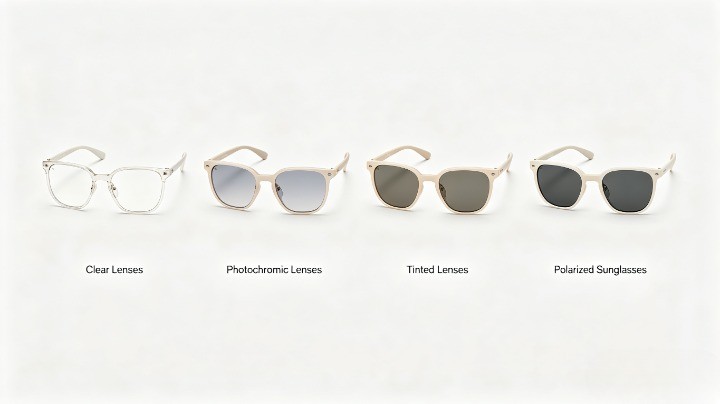
Here is a simple comparison to clarify where photochromic lenses fit:
| Lens Type | Main Strength | Main Limitation | Best Use |
|---|---|---|---|
| Clear lenses | Always clear indoors | No sun adaptation | Indoor-first wear |
| Photochromic lenses | Automatic light adaptation | Many standard designs do not darken enough in cars | Mixed indoor/outdoor use |
| Tinted lenses | Stable outdoor shade | Often too dark indoors | Regular outdoor use |
| Polarized sunglasses | Strong glare reduction | Usually needs a separate pair | Driving, water, snow, bright reflected light |
This comparison shows why photochromic lenses work well in broad consumer channels. They are not the strongest answer for every extreme condition, but they are often the most practical everyday answer for mixed-light wear.
Limitations of Photochromic Lenses You Should Know Before Buying
Photochromic lenses do have real limits, and driving is the most common one. Many standard photochromic lenses do not darken strongly inside a car because the windshield blocks much of the UV light that normally activates the lens. The AAO identifies this as one of the main drawbacks of transition-style lenses.
That point needs careful wording. It is not always correct to say that photochromic lenses do nothing in a car. It is more accurate to say that many standard designs do not darken enough for drivers who expect a sunglass-like result. This distinction matters because weak wording at the point of sale often creates avoidable disappointment later.
Activation speed is another limit. These lenses do not switch instantly. They need time to darken outdoors and time to clear indoors. Temperature can also affect the visible result, especially in hot climates. A wearer may feel the lens is underperforming even when it is behaving normally for its chemistry.
Some users still need dedicated sunglasses. This is especially true for people who drive long hours, spend time on water or snow, or want strong glare reduction. The AAO is clear that polarization reduces glare from reflective surfaces, and that remains important for specific outdoor environments.
The larger lesson is simple: many complaints come from wrong expectations, not from total product failure. If a store promises full sunglass replacement in every setting, returns become more likely. If the store explains that the lens is best for everyday mixed-light convenience, the user is more likely to feel satisfied.
Do Photochromic Lenses Wear Out Over Time?
Yes, photochromic lenses can lose some performance over time. The light-reactive molecules are not permanent in a perfect sense, so repeated use, aging, and exposure can eventually reduce how strongly or how quickly the lens reacts. The AAO notes that photochromic lenses can wear out over time.
Still, buyers should avoid vague claims like “they wear out fast.” Real lifespan depends on product chemistry, coating quality, daily exposure, cleaning habits, and general wear conditions. One lens may still perform well after years of daily use, while another may show decline earlier because of weaker process stability or rough handling.
In practice, retailers and distributors often notice three warning signs first:
• slower darkening outdoors
• lighter tint than expected
• slower fade-back indoors
These issues affect more than user comfort. They also affect remake rates, warranty discussions, and trust in the brand. That is why this section should connect naturally to internal pages such as Quality Control & Inspection Reports and Coatings, because long-term satisfaction depends on manufacturing consistency as much as on chemistry.
Vena Optics states on its site that it uses an ISO 13485-based system, standard SOPs, calibrated instruments, batch records, and full traceability from material intake to final inspection. It also says it can provide inspection reports and lot references to support audits and reduce remake risk. Those points are highly relevant for buyers who plan to carry photochromic lenses as a long-term category rather than a short-term trial item. (Vena Optical)
What Materials and Lens Types Can Photochromic Technology Be Combined With?
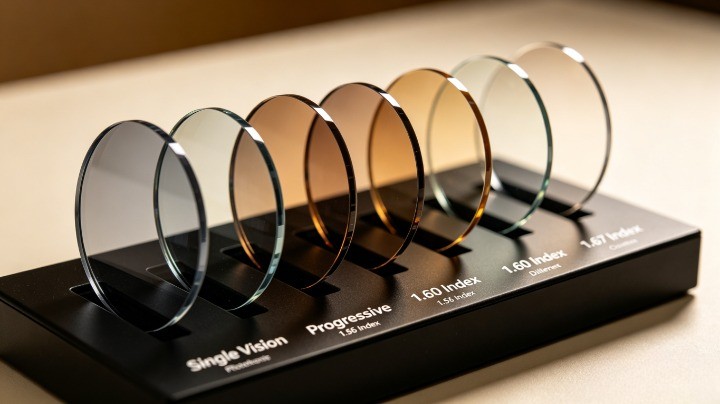
Photochromic technology can be combined with many common lens categories, including single vision, bifocal, and progressive designs, as well as multiple refractive indices and some impact-resistant materials. That flexibility is one of the main reasons the category works so well in both retail and wholesale programs.
For buyers, this is where the topic becomes commercial. A photochromic lens is not one product. It is a product family. The final offer depends on several choices: lens type, index, material, finished or semi-finished format, color option, coating stack, and target price band.
Higher-index versions matter for stronger prescriptions because they can improve lens thickness and appearance. Progressive photochromic lenses matter for presbyopic wearers who want convenience without carrying separate eyewear. Blue-cut photochromic lenses can make sense in markets where screen comfort and outdoor convenience are both part of the sales message.
Color selection also deserves more attention than many buyers give it. Gray usually works well as the safest general option because it feels neutral to many wearers. Brown may appeal where a warmer appearance is preferred. G15 or green-style options can support premium positioning in some markets. There is no universal winner. The right mix depends on what your channel can actually sell.
Finished stock and semi-finished blanks also serve different needs. Finished products can support faster-moving standard programs. Semi-finished products fit optical labs and customized prescription workflows better. This section is a natural place to support internal linking to Single Vision, Progressive Lenses, Blue Light Lenses, and Lens Parameters & Custom Specs on Vena Optics. The site already presents these categories as part of its broader product and support structure.
Vena Optics also says its photochromic lenses are available in gray, brown, and G15 across all refractive indices, with fast activation and UV400 positioning. Whether a buyer adopts that full matrix or a narrower mix should depend on target market demand, not on how many sample options look impressive in a catalog.
Who Should Use Photochromic Lenses?
Photochromic lenses work best for people who wear prescription glasses every day and move between indoor and outdoor settings often. They are strongest as an everyday convenience product, not as an extreme-performance sun product.
That includes office workers, students, commuters, retail staff, and general-purpose wearers who want fewer eyewear changes during the day. They also suit people who dislike carrying a second frame or who often forget sunglasses when they leave home.
They may be less suitable for users who spend long hours driving in bright conditions, need maximum glare reduction, or expect deep sunglass darkness every time they step outdoors. Those users may still prefer dedicated sun lenses or polarized sunglasses. The distinction matters because glare control and light adaptation are not the same thing.
From a retail point of view, this means positioning matters as much as product selection. A sales team should explain that photochromic lenses are a good fit for:
• all-day prescription wear
• mixed indoor/outdoor routines
• convenience-focused buyers
• wearers who care about UV-aware everyday use
They are often a weaker fit for:
• heavy daytime drivers
• water and snow glare conditions
• buyers who want the darkest possible outdoor tint
This kind of honest positioning helps stores convert the right customers instead of attracting avoidable complaints from the wrong ones.
How to Choose the Right Photochromic Lens
The right photochromic lens depends first on lifestyle, then on specifications. Many buyers start with index, coating, or price, but the better first question is simple: how will the wearer actually use the glasses every day?
If the wearer spends most of the day indoors and only goes outside now and then, a standard photochromic option may be enough. If the wearer drives often in bright conditions, a sunglass or stronger glare-control solution may still be necessary. If the wearer has a stronger prescription, a higher-index option may improve comfort and cosmetics.
This checklist can help structure the decision:
| Selection Factor | What to Check | Why It Matters |
|---|---|---|
| Lifestyle | Indoor/outdoor pattern, commuting, driving | Determines whether photochromic is the right category |
| Lens design | Single vision, bifocal, progressive | Affects adaptation and selling point |
| Index/material | 1.499, 1.56, 1.60, 1.67, 1.74, PC | Influences thickness, weight, and durability |
| Color | Gray, brown, G15, others | Shapes user preference and market fit |
| Add-ons | AR, blue cut, hard coat, hydrophobic | Changes price ladder and performance story |
| Supplier stability | QC, traceability, batch consistency | Reduces complaints and remake risk |
For procurement teams, supplier evaluation matters as much as lens selection. Vena Optics states that it serves optical retailers, distributors, eyewear brands, and chains in more than 50 countries, with annual production exceeding 10 million lenses and support for OEM/ODM, private labeling, custom packaging, and inspection documentation. Those are not small details. They directly affect whether a product line stays stable after it launches.
This section should connect naturally to internal pages such as OEM/ODM & Private Label, Packaging & Shipping Support, and Request a Quote (RFQ). These links help move the reader from education to inquiry without breaking the flow of the article.
Common Buying Mistakes with Photochromic Lenses
The first common mistake is assuming that photochromic lenses act like sunglasses in every situation. They do not. Many standard products have limited performance inside a car because windshields reduce UV exposure. That point alone explains a large share of customer confusion.
The second mistake is choosing only by price. In this category, weak consistency can destroy value quickly. If activation looks uneven, fade-back is slow, or tint depth varies too much from one batch to another, users notice it fast. A cheaper lens that creates more complaints is rarely cheaper in the long run.
The third mistake is ignoring climate and local usage habits. A program that sells well in one market may disappoint in another if people drive more, spend more time in intense heat, or expect deeper outdoor darkening. Product-market fit matters here more than many buyers think.
The fourth mistake is weak expectation setting at the point of sale. This is where many avoidable returns begin. A clear explanation before purchase usually protects margin far better than a discount or apology after delivery.
What wholesale Buyers Should Consider When Sourcing Photochromic Lenses
procurement teams should evaluate photochromic lenses through three filters: product performance, operational consistency, and market fit.
Product performance includes activation speed, fade-back behavior, tint depth, UV-related claims, and compatibility with different lens types and coatings. Operational consistency includes batch stability, traceability, packaging accuracy, and inspection support. Market fit includes whether the product actually matches what local customers want, not just what looks attractive in a presentation.
A practical sourcing checklist looks like this:
- Confirm available lens types, indices, and materials.
- Review QC documents, not just sales sheets.
- Check whether color options fit local demand.
- Decide whether you need finished stock, semi-finished blanks, or both.
- Align product claims with realistic end-user expectations.
- Ask about OEM, labeling, packaging, and delivery support.
Vena Optics describes itself as a large-scale optical lens manufacturer in Danyang, China, focused on stable supply, consistent quality, and long-term cooperation. Its site highlights support pages for OEM/ODM & Private Label, Lens Parameters & Custom Specs, Quality Control & Inspection Reports, Packaging & Shipping Support, and RFQ. For many buyers, that kind of integrated structure is as important as the lens technology itself because it reduces coordination risk across the supply chain.
At the same time, authoritative public-health guidance from the NEI, WHO, and AAO supports the broader value story around UV awareness and visual comfort. That mix of technical sourcing detail and trusted external context gives the article more credibility than a pure sales pitch.
Are Photochromic Lenses Worth It?
Yes, photochromic lenses are worth it for many users, but only when expected value matches real use. They are usually worth it when convenience matters more than maximum sunglass performance.
For individual wearers, that often means daily prescription use, frequent movement between indoor and outdoor settings, and a desire to simplify eyewear habits. For retailers and distributors, it means carrying a product that solves a real lifestyle problem and supports a clear upgrade conversation.
They may be less worthwhile when the user mainly needs strong glare reduction for driving, water, snow, or long hours in intense sunlight. In those situations, dedicated sunglasses or polarized lenses may create higher satisfaction. Again, that is not a weakness in the category itself. It is a reminder that product fit matters more than hype.
The better question is not “Can this replace every other lens option?” The better question is “Will this improve everyday wear enough to justify the upgrade?” For many people, the answer is yes.

Final Thoughts: How to Choose a Photochromic Lens That Fits Both User Needs and Market Demand
A good photochromic lens combines adaptive comfort, UV-aware everyday value, and practical convenience. It is not the right answer for every bright-light situation, but it can be one of the most useful lens upgrades in modern eyewear when it is matched to the right user and positioned honestly.
For optical businesses, the best strategy is straightforward: choose stable products, explain the limits clearly, and connect the category to the right lens designs and service support. On Vena Optics, this article can naturally connect to Single Vision, Progressive Lenses, Blue Light Lenses, Coatings, OEM/ODM & Private Label, Quality Control & Inspection Reports, and Request a Quote to help readers move from education to action.
Why Work With Vena Optics?
If you are looking for a reliable photochromic lens supplier, Vena Optics offers more than product variety. The company presents large-scale production, ISO 13485-based quality control, full traceability, OEM/ODM support, private labeling, custom packaging, and lens options across single vision, progressive, blue light, coating, and photochromic categories. For procurement teams, that combination supports more stable supply, clearer specifications, and lower remake risk.
Contact us today to discuss your photochromic lens project, request product details, or explore customized solutions for your market. We are ready to help you find the right lens options for your business.