


Progressive vs bifocal lenses is one of the most common comparisons in eyewear.
Most people search this topic when reading gets harder, screens feel less comfortable, and one pair of glasses no longer covers the whole day. as an age-related loss of near focusing ability that often becomes noticeable around age 45, while the that uncorrected refractive error remains the leading cause of vision impairment in both children and adults. ()
This guide gives a practical answer. It explains how progressive and bifocal lenses work, where each one performs well, why some people adapt easily while others struggle, and how to choose the option that fits your daily life, budget, and visual priorities.
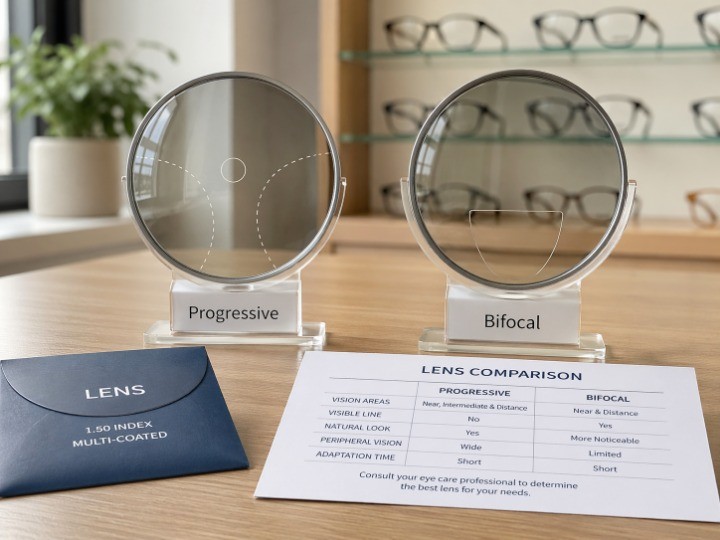
Progressive vs Bifocal Lenses
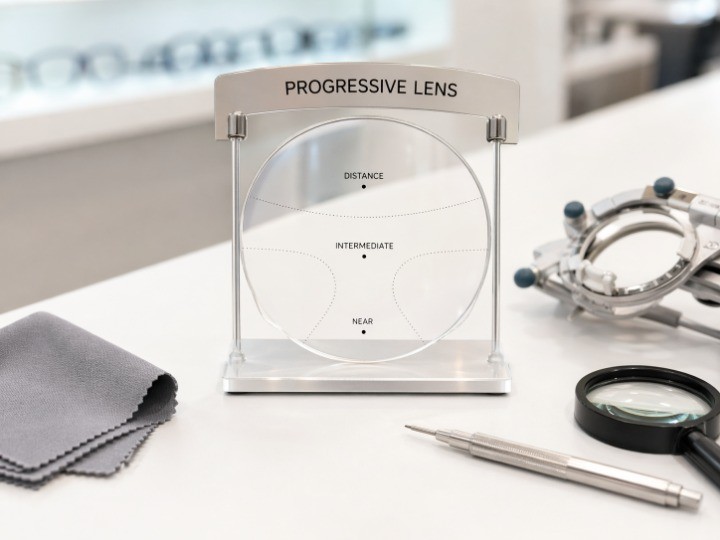
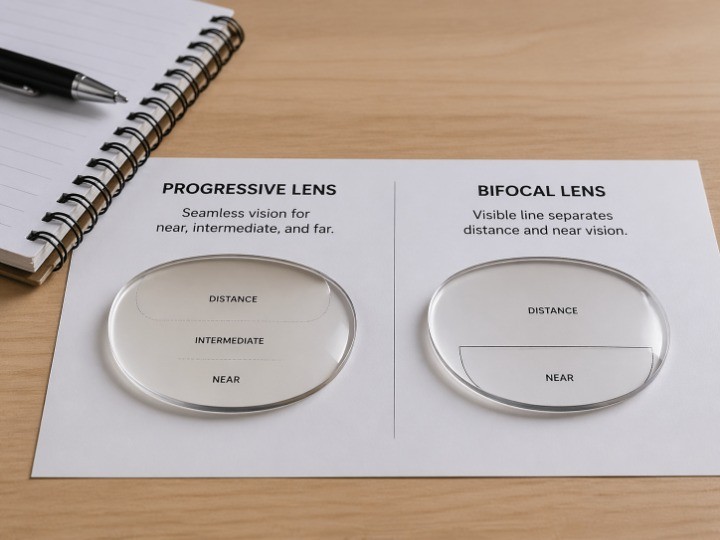
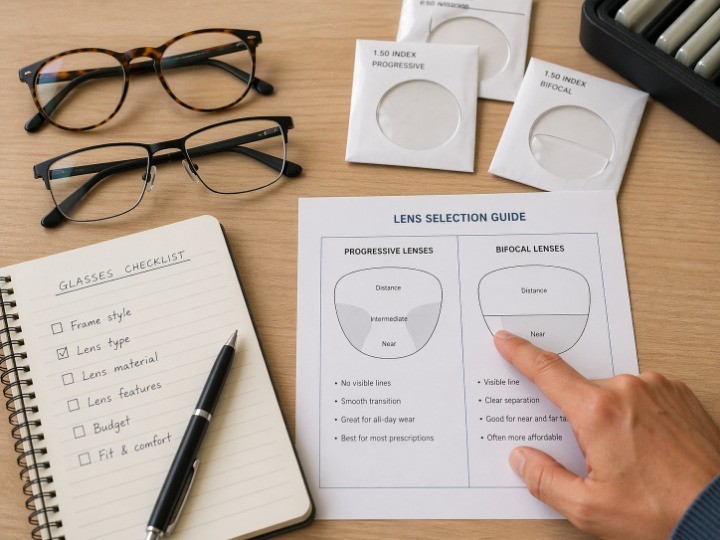
Progressive lenses give you distance, intermediate, and near vision in one smooth design, while bifocal lenses give you two fixed zones for distance and near vision. That one difference shapes comfort, appearance, adaptation, and price. Cleveland Clinic describes progressive lenses as multifocal lenses with three zones of vision in one lens and no visible lines.
In simple terms, progressive lenses usually fit people who want one pair for reading, screens, and distance vision with a cleaner look. Bifocals still fit wearers who want a simpler design, a shorter learning curve, and a lower upfront cost. The better lens is the one that matches how you actually use your eyes.
 What Are Bifocal Lenses?
Bifocal lenses combine two prescriptions in one lens. In everyday use, the top area supports distance vision and the lower segment supports near tasks such as reading.
That straightforward layout explains why bifocals still work well for many wearers. They solve a simpler problem than progressive lenses do. If your day mainly centers on distance and reading, a bifocal design can feel direct and easy to understand.
The limitation is just as clear. Bifocals do not provide a true intermediate zone for desktop monitors and many workstations. They also show a visible line, which some wearers dislike for cosmetic reasons. If you want a closer look at lined designs and their practical use, see our Bifocal Glasses guide.
That matters because most people do not live at only two distances anymore. You look far away when you walk or drive. You look at intermediate distance when you use a desktop monitor or speak across a table. You look near when you read a phone, label, or menu. Progressive lenses try to connect all of those tasks inside one lens.
They also appeal to wearers who care about appearance. A progressive lens does not show a visible reading segment, so the lens looks cleaner and more modern. If you want a product-side explanation of how this category works, you can continue to our .
The trade-off is that progressive lenses ask more from the wearer. Cleveland Clinic notes that some people need about a week to adjust, while others may need longer, and it also points out that progressive lenses can cost more, blur peripheral vision, and depend on accurate fitting. ()
What Are Bifocal Lenses?
Bifocal lenses combine two prescriptions in one lens. In everyday use, the top area supports distance vision and the lower segment supports near tasks such as reading.
That straightforward layout explains why bifocals still work well for many wearers. They solve a simpler problem than progressive lenses do. If your day mainly centers on distance and reading, a bifocal design can feel direct and easy to understand.
The limitation is just as clear. Bifocals do not provide a true intermediate zone for desktop monitors and many workstations. They also show a visible line, which some wearers dislike for cosmetic reasons. If you want a closer look at lined designs and their practical use, see our .
Progressive vs Bifocal Lenses: The Core Differences
The biggest difference is not the visible line. The biggest difference is the missing intermediate zone in bifocals. That point often decides whether a lens feels comfortable in a modern routine.
| Feature | Progressive Lenses | Bifocal Lenses |
|---|---|---|
| Vision support | Distance, intermediate, near | Distance and near |
| Lens line | No visible line | Visible segment line |
| Computer use | Usually better | Usually limited |
| Appearance | More modern look | More traditional look |
| Adaptation | Often takes longer | Often feels easier at first |
| Upfront cost | Usually higher | Usually lower |
The table gives the short version, but daily behavior tells the real story. If you move between road signs, dashboards, laptops, phones, and paperwork, progressive lenses usually fit that routine better. If you mostly need distance plus reading, bifocals often feel simpler and more direct.
This is why people often describe bifocals as easier on day one and progressives as more convenient over time. Cleveland Clinic’s three-zone explanation supports that logic because the design itself asks the wearer to use more than two viewing areas.
Why People Need Progressive or Bifocal Lenses
Most people start needing these lenses because presbyopia makes near vision harder with age. MedlinePlus says presbyopia happens when the lens of the eye loses its ability to focus up close, and it often becomes noticeable around age 45.
That pattern feels familiar to many wearers. Menus become harder to read in dim light. Small print on packaging becomes frustrating. Screens feel tiring by the end of the day. MedlinePlus also lists decreased focusing ability for near objects, eyestrain, and headache among common symptoms.
This topic matters beyond personal comfort. The explains that presbyopia is one of the common refractive problems affecting adults in middle age and older, while WHO states that uncorrected refractive error is the leading cause of vision impairment globally and that more than 800 million people have near vision impairment that could be addressed with reading glasses. ()
For optical retailers, labs, and sourcing teams, that matters in a practical way. The right multifocal recommendation affects wearer comfort, remake rates, staff time, and customer trust. A poor lens match does not stay in the exam room. It moves into returns, complaints, and repeat visits.
Which Lens Type Works Better for Daily Life?
Progressive lenses usually work better for mixed-distance routines, while bifocals often work better for simple distance-plus-reading routines. That is the clearest answer for most readers.
For reading and close work, both can work well. Bifocals often feel easier at first because the near zone is easy to find. Progressives can feel more natural after adaptation, but the reading area may feel narrower, especially in entry-level designs or poorly fitted pairs.
For computer and office use, progressive lenses usually win because they include intermediate support. Cleveland Clinic specifically notes that computer progressive lenses can help people who spend more than four hours a day using a computer indoors. That matters because most desktop screens sit at intermediate distance, not at pure reading range.
For walking, driving, and shifting between many distances, progressive lenses often feel smoother once the wearer adapts. Bifocals can still work well for distance, but the jump between zones can feel abrupt when the eyes move between the road, dashboard, mirrors, and close objects.
| Daily task | Usually better choice | Why |
|---|---|---|
| Reading books and labels | Bifocal or progressive | Both work, but bifocals feel simpler at first |
| Desktop computer work | Progressive | Intermediate zone matters |
| Moving between many distances | Progressive | Smoother power change |
| Budget-focused basic use | Bifocal | Lower cost and easier adaptation |
| Cosmetic appearance | Progressive | No visible line |
 Pros and Cons of Progressive Lenses
The biggest benefit of progressive lenses is convenience. They combine distance, intermediate, and near vision into one lens and remove the visible reading line. Cleveland Clinic also notes that other people usually cannot tell the wearer has multifocal correction.
Their strengths show up in routines that switch distances often. Office work, shopping, meetings, driving, checking a phone, and moving between indoor and outdoor spaces all reward a lens that handles more than two viewing ranges. That is why progressives often feel like the better all-around option for modern life.
The downsides are real, though. Cleveland Clinic lists expense, blurred peripheral vision, and design limits related to small and accurate prescription zones among the main disadvantages. These are not minor details. They explain why progressive success depends on design, fitting, and user expectations, not just prescription power.
Main benefits of progressive lenses
-
One pair for distance, intermediate, and near vision
-
No visible line
-
Better appearance for many wearers
-
Better support for mixed daily routines
-
Usually better than bifocals for monitor distance
Common drawbacks of progressive lenses
-
Higher price
-
More adaptation time
-
Narrower clear zones
-
Possible peripheral blur
-
Greater sensitivity to fitting accuracy
Pros and Cons of Bifocal Lenses
The biggest benefit of bifocal lenses is simplicity. You look through the top for distance and the bottom for near tasks. Many wearers understand that layout immediately, which is why bifocals still remain relevant.
Bifocals also make sense for people who value function over appearance. If you want a practical solution for distance plus reading and you do not spend long hours at a desktop monitor, they may do exactly what you need. They also tend to cost less upfront, which matters in entry-level product programs and budget-focused purchases.
The weaknesses are just as easy to see. Bifocals do not give you a true intermediate zone. The visible line is obvious. Some wearers also notice a less natural transition between distances. For heavy screen users, those limits often push the decision toward progressives or office-specific designs.
Main benefits of bifocal lenses
-
Clear two-zone design
-
Faster learning curve for many wearers
-
Lower upfront cost
-
Strong reading support
-
Practical for basic distance-plus-near use
Common drawbacks of bifocal lenses
-
No true intermediate zone
-
Visible segment line
-
Less natural transition between distances
-
Less suitable for long computer sessions
-
Weaker fit for mixed all-day routines
 Why Some People Struggle to Adapt to Progressive Lenses
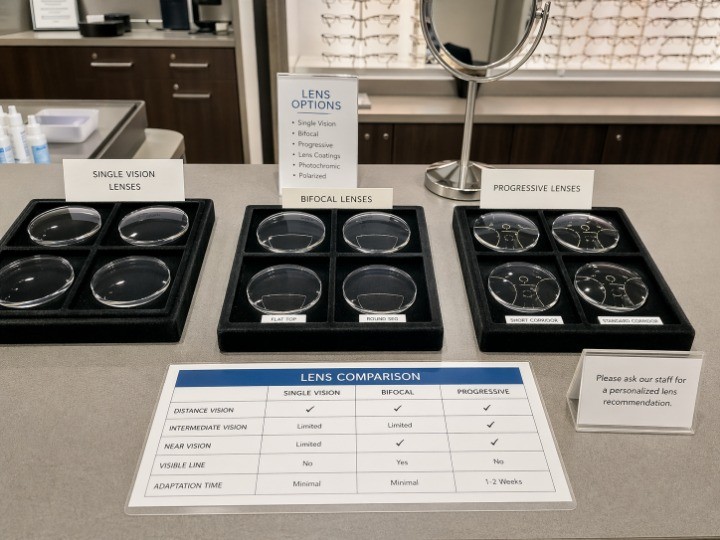
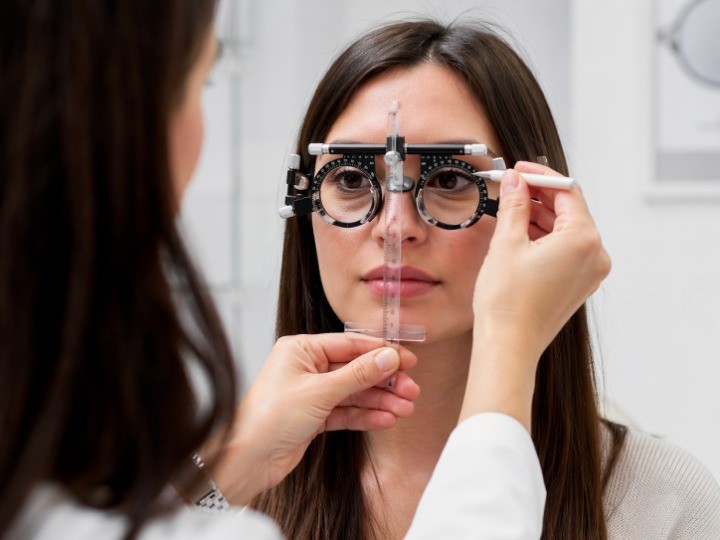
Most progressive complaints come from one of three issues: the wearer’s habits, the fitting, or the design itself. Many first-time wearers expect progressives to feel exactly like single vision lenses at every angle. They do not work that way.
Clear zones in a progressive lens sit in specific parts of the lens, so wearers often need to move their head more and rely less on side-eye viewing. That change feels natural for some people and awkward for others. Cleveland Clinic says some users adjust in about a week, while others may need much longer.
Frame choice matters too. Cleveland Clinic notes that short-corridor progressives are used for smaller frames and that the viewing areas are smaller, which can create sight problems. That is one reason a wearer may blame “progressives” when the real problem is the combination of frame size, fitting height, and lens design.
If you also want to improve comfort through coatings, our explains how AR coatings affect glare control, clarity, and daily wear.
 Progressive vs Bifocal Lenses by User Type
The best lens depends less on age alone and more on task pattern, appearance preference, and tolerance for adaptation. That is the most useful way to guide a real purchase decision.
For first-time multifocal wearers, bifocals often feel easier at the start. The near zone is obvious, and the design is straightforward. But if the wearer spends hours on screens and wants one pair for most tasks, a well-fitted progressive usually offers better long-term value.
For heavy computer users, progressive lenses almost always make more sense. Cleveland Clinic’s mention of computer progressive lenses supports that view because screen-heavy routines depend on intermediate vision. For budget-focused buyers, bifocals often make more sense. For users who care strongly about appearance, progressive lenses usually win because they remove the visible line.
For strong readers with light screen use, bifocals still remain a solid option. For people who switch constantly between reading, conversation distance, and far vision, progressive lenses usually feel more aligned with daily behavior.
When Neither Progressive Nor Bifocal Lenses Is the Best Choice
Sometimes the best answer is neither option. That point gets overlooked in many articles, but it matters in real fitting decisions.
If someone spends most of the day at a monitor, office or occupational lenses may work better than either standard progressives or bifocals. Cleveland Clinic’s description of computer progressives makes that clear because these designs are built for indoor screen-heavy routines rather than full-day distance changes.
Separate reading glasses and distance glasses can also make sense. They are less convenient, but they can deliver wider clear zones for each task. For some wearers, maximum clarity matters more than one-pair convenience.
This point is useful for procurement teams as well. A complete product program should not force every wearer into the same lens story. A better assortment usually includes general-purpose progressives, practical bifocals, and task-specific options for users with more specialized routines.
How to Choose Between Progressive and Bifocal Lenses
Start with one question: do you need clear vision at two distances or at many distances through the day? That question usually leads you to the right answer faster than any product label does.
Use this short checklist before you decide:
-
Do you spend hours on a desktop computer?
-
Do you want one pair for most daily tasks?
-
Do visible lens lines bother you?
-
Is fast adaptation more important than seamless transitions?
-
Is budget the deciding factor?
If you answer yes to screen use, all-day wear, and appearance, progressive lenses usually fit better. If you answer yes to lower price and faster adaptation, bifocals usually fit better. If you manage product assortments, the same logic can help you build a better lens mix for different customer profiles.
 Progressive vs Bifocal Cost: Price vs Long-Term Value
Bifocals usually cost less upfront, but progressive lenses often deliver better all-day value. That is the fairest way to frame the price question.
A cheaper lens is not always the cheaper decision over time. If a wearer buys bifocals and then struggles with screen posture, repeated glasses changes, or daily inconvenience, the real cost rises. On the other hand, if a wearer buys progressive lenses and never adapts, the added spend does not create value. The right choice depends on routine, not just price.
For retailers, brands, and sourcing teams, long-term value also includes remake risk, complaint rate, and staff time. A cheaper multifocal can become expensive if it creates more adjustments and lower wearer confidence. A better-fitted lens often performs better commercially, even when the unit price is higher.
If you source for the U.S. market, compliance matters too. says lenses for spectacles and sunglasses sold in the United States must comply with impact-resistant lens rules, and a certificate showing compliance should accompany each lot seeking entry into the country. ()
The most common mistake is choosing by price before choosing by use case. That one mistake leads to many poor lens decisions.
The second mistake is assuming progressive lenses are always the advanced answer. They are more versatile in many routines, but they are not automatically the right choice for every wearer. Some people want a simple reading solution. Some people need task-specific office lenses instead.
The third mistake is ignoring fit. Progressive performance depends heavily on frame shape, fitting height, and wearer expectations. The fourth mistake is ignoring education. Many complaints come not from the lens itself but from the gap between what the wearer expected and how the design actually works.、For wholesale teams, there is one more mistake to avoid: treating lens choice as a product-only decision. In real business, lens performance also depends on dispensing accuracy, staff explanation, and after-sales handling.
 For most modern lifestyles, progressive lenses are the better all-around choice because they support distance, screen, and near work in one cleaner-looking design. They make the most sense for people who want one pair for everyday use and who can accept a short learning curve.
Bifocal lenses are still the smarter option for some wearers. They work well for people who want a simpler lens, faster adaptation, and lower upfront cost, especially when daily life focuses mainly on distance plus reading instead of all-day multi-distance use.
If you want to build this topic into a broader buying journey, pair this article with your product and education pages. Readers who need a deeper comparison can move naturally to our , our , our , or our .
If you are an optical buyer, retailer, or brand and want to match lens programs to real customer profiles, you can also use this page as an educational step before moving into product selection or supplier discussion.
Common Questions About Progressive and Bifocal Lenses
Are progressive lenses better than bifocals?
Progressive lenses are usually better for people who need clear vision at distance, intermediate, and near. Bifocals can still be the better choice for users who want a simpler design, faster adaptation, and a lower cost.
Are bifocals easier to adjust to?
Many wearers find bifocals easier to understand at first because the lens has two clear zones instead of a full power corridor. Progressive lenses often need more adaptation time
Why are progressive lenses more expensive?
Progressive lenses cost more because the design is more complex and more sensitive to fitting accuracy. Cleveland Clinic also notes that they may still cost less than buying separate pairs for different distances.
Can bifocals work for computer use?
They can, but they are usually not ideal because standard bifocals do not include a true intermediate zone. That is why long computer sessions often feel more comfortable in progressive lenses or occupational lenses.
Can you drive with bifocals or progressive lenses?
Yes. Both can support distance vision for driving. Progressive lenses often feel smoother when wearers shift between the road, mirrors, and dashboard, but individual adaptation still matters.
What if I cannot adapt to progressive lenses?