


Choosing between photochromic vs tinted lenses looks simple at first. In real use, though, the right answer depends on more than lens color.
Most buyers do not struggle with color alone. They struggle with daily comfort, driving performance, indoor-outdoor use, appearance, prescription options, and long-term value. RNIB notes that tint darkness does not tell you how much UV protection a lens provides, while NEI advises buyers to choose sunglasses that block 99% or 100% of both UVA and UVB radiation.
This guide gives you a practical answer. It explains how each lens works, where each one performs well, where each one falls short, and how to choose the better option for real-world use. It also looks at prescription use, driving, glare, cost, and product planning for optical buyers.
Photochromic vs Tinted Lenses
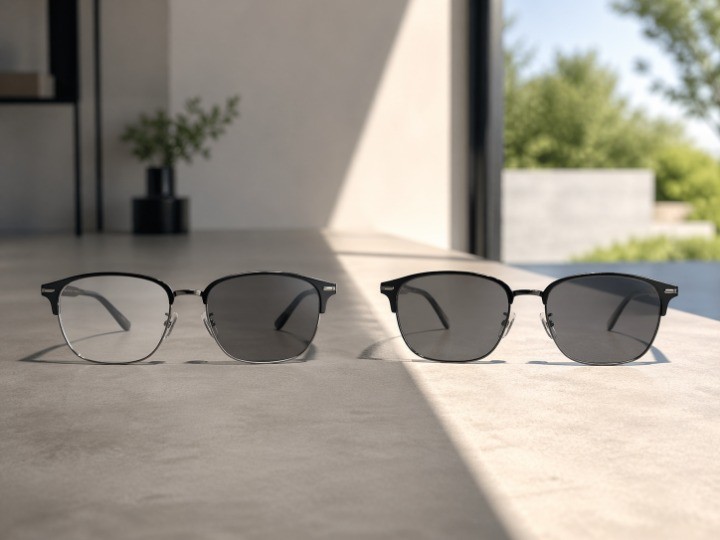
Photochromic lenses darken in UV light. Tinted lenses stay the same shade all the time.
That is the core difference, and it shapes almost every buying decision after that. RNIB explains that photochromic lenses darken when exposed to UV light, so they usually become darker outside, not inside or in the car.
If you want one pair that works through a normal day, photochromic lenses often make more sense. If you want steady outdoor shading, fixed appearance, or a dedicated sunglass feel, tinted lenses usually make more sense. FDA guidance also recognizes tinted, polarizing, and photosensitizing lenses as valid sunglass lens types, while noting that actual performance depends on the lens properties and the product specification.
One more point matters right away. Darker does not mean safer. FDA says you should look for a UV400 rating or “100% UV protection” on the label, and it warns consumers not to assume that dark-tinted lenses automatically provide UV protection.
| Factor | Photochromic Lenses | Tinted Lenses |
|---|---|---|
| Light response | Darken with UV exposure | Fixed tint all day |
| Indoor use | Usually clearer indoors | Stay tinted indoors |
| Outdoor convenience | Strong for mixed environments | Strong for dedicated sunwear |
| Driving in daylight | Often limited in standard designs | More consistent |
| Appearance control | More limited | Broader tint and style control |
| Best fit | One-pair daily wear | Driving, outdoor use, prescription sunglasses |
What Are Photochromic Lenses?
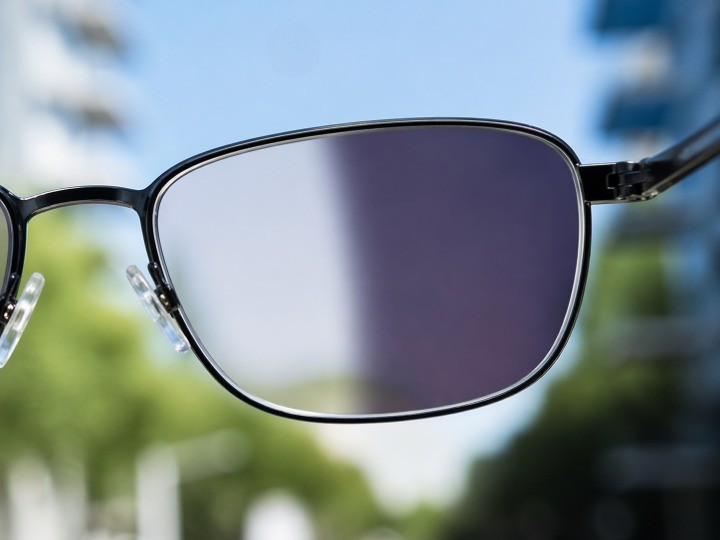
Photochromic lenses are adaptive lenses that respond to UV exposure.
In plain terms, they get darker outside and lighter again when UV exposure drops. That is why many buyers choose them for daily wear. They want one pair that can move from office to street to store to car park without a lens swap every time. RNIB describes this outdoor UV response clearly in its guidance on light sensitivity and glasses.
This design works well for people who spend part of the day indoors and part of the day outdoors. It also works well for buyers who dislike carrying two pairs. In a retail setting, that convenience makes photochromic lenses easy to position as an upgrade for all-day prescription wear rather than as a niche specialty product.
Photochromic lenses also fit into a wide range of prescription formats. In practice, buyers can combine adaptive performance with single vision, progressive, or other prescription needs, as long as the supplier can support the right material, coating, and production consistency. RNIB also notes that filter lenses can be made to prescription.
Still, convenience is not the same as full outdoor performance. Standard photochromic lenses usually do not become much darker in the car because the windshield blocks much of the UV they need. That is one of the biggest reasons some buyers try photochromic lenses once and then move back to fixed-tint sunwear for driving.
So the real value of photochromic lenses is simple. They solve a convenience problem better than they solve a maximum-shading problem.
What Are Tinted Lenses?
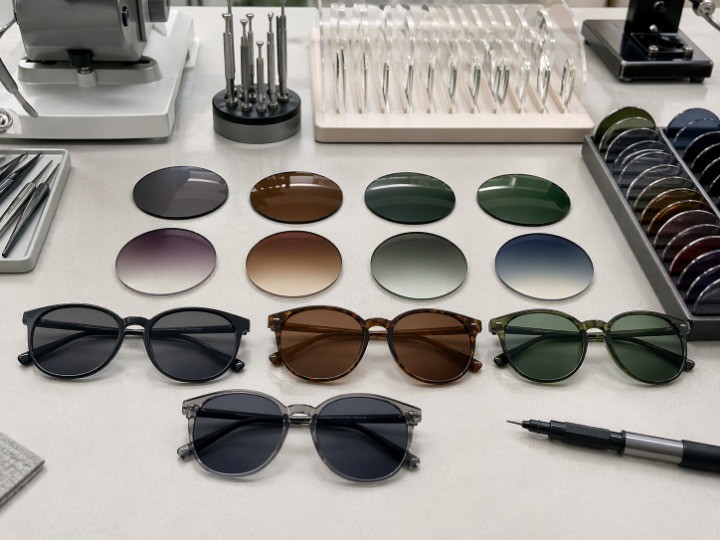
Tinted lenses use a fixed shade that does not change with the light.
That fixed behavior gives the wearer a more predictable experience. The lens looks the same and feels the same in bright sun every time. For buyers who care about steady outdoor comfort, dedicated driving use, or strong cosmetic control, that consistency is a real advantage.
FDA guidance supports this practical view. It explains that different sunglass shades suit different environments, with lighter and medium shades used more for everyday town wear and darker shades used more for brighter conditions such as beach or snow settings.
Tinted lenses also give brands and retailers more freedom with appearance. You can control color, density, and style direction more precisely. That matters in prescription sunglasses, fashion eyewear, sports eyewear, and private-label collections where product identity matters as much as basic function.
At the same time, fixed tint does not solve everything. RNIB says UV filters do not help with glare, which means buyers should not assume that a dark lens automatically handles road glare, water glare, or side light well. If glare is the main complaint, you need to think about polarization, frame shape, and wrap coverage as well.
That is why tinted lenses still need a specification-first buying approach. Shade, UV protection, glare control, and driving use are related, but they are not the same thing.
Photochromic vs Tinted Lenses: Side-by-Side Comparison
Photochromic lenses win on flexibility. Tinted lenses win on control.
That is the clearest way to compare them. Photochromic lenses adapt to changing conditions, so they reduce friction during a normal day. Tinted lenses hold one shade, so they give you a more stable outdoor experience.
For indoor-outdoor convenience, photochromic lenses usually come out ahead. They suit general daily wear because they adjust with the environment. People who move in and out of buildings, attend meetings, or walk between indoor and outdoor spaces often value that flexibility more than maximum darkness.
For visual consistency, tinted lenses usually come out ahead. They do not change with light conditions, so the wearer gets the same outdoor experience every time. That matters for driving, sport, long walks in strong sun, and buyers who simply prefer a steady sunglass feel.
For UV protection, both categories can work well, but the protection depends on the product claim, not the color. FDA says to choose lenses with UV400 or 100% UV protection, and NEI says sunglasses should block 99% or 100% of both UVA and UVB radiation. RNIB also says tint darkness does not tell you how much UV protection the lens gives.
For glare, many buyers compare the wrong thing. They compare dark versus light when they should compare basic tint versus polarized glare control. RNIB says UV filters do not help with glare, while the AOA says polarized tint can help reduce glare from horizontal surfaces when driving, cycling, and water activities.
For durability and daily practicality, you need to look past the light-response feature and ask better questions:
-
What material does the lens use?
-
What coating stack protects the surface?
-
What QC checks support consistency?
-
What documentation supports impact resistance or market compliance?
Those questions matter because lens performance depends on the full build, not on tint type alone. FDA guidance also states that sunglasses should be fitted with impact-resistant lenses and comply with applicable requirements.
Which Is Better for Different Real-Life Scenarios?
The better lens is the one that matches the routine.
For everyday indoor-outdoor wear, photochromic lenses usually make more sense. They reduce lens swapping, they feel easier to live with, and they fit buyers who want one pair to cover most of the day. That is why they remain attractive in everyday prescription programs.
For driving and commuting, fixed tint often makes more sense. Standard photochromic lenses usually do not darken much in the car, so drivers who expect sunglass-level shading can feel disappointed. In real life, many of these buyers prefer dedicated tinted prescription sunglasses.
For sports and long outdoor use, the answer depends on more than lens color. NEI recommends sports goggles with polycarbonate lenses for many activities, which shows that impact protection and eye safety matter as much as light filtering in sport settings.
For office wear and professional appearance, photochromic lenses often feel more natural because they clear indoors. Tinted lenses can still work, but they keep a sunglass look in indoor settings, and many buyers do not want that at work.
For light-sensitive users, RNIB recommends trying different tinted glasses, frames, and filter options with professional guidance. It also notes that wraparound shapes can help because a lot of glare enters from above and the sides.
A simple rule works well here:
-
Choose photochromic for mixed daily use.
-
Choose tinted for stronger outdoor consistency.
-
Choose polarized tint when reflective glare is the real problem.
-
Choose wraparound coverage when side light and stray glare bother the wearer.
Photochromic vs Tinted Lenses for Driving: A Critical Difference Many Buyers Miss

Driving is where standard photochromic lenses show their biggest weakness.
Many buyers assume that an adaptive lens will behave like a dedicated sunglass lens inside the car. In many cases, that does not happen. RNIB says photochromic lenses darken in UV light, so they usually do not become darker in the car.
Tinted lenses do not depend on UV activation, so they give a more predictable daytime driving experience. That is one reason fixed-tint prescription sunglasses still hold a strong position in driving eyewear.
FDA guidance adds another important point. Sunglasses intended for driving should meet traffic signal recognition requirements. If they do not, the product should carry a caution against driving use. FDA also says tinted eyewear is not recommended for night driving. Those details matter because they turn “driving performance” into a specification question, not just a comfort question.
Glare makes the gap even clearer. RNIB says UV filters do not help with glare, while the AOA says polarized tint helps reduce glare from horizontal reflective surfaces such as roads and water. So for many drivers, the better answer is not simply “darker lenses.” The better answer is proper tint, real UV protection, and polarized glare control where appropriate.
One Pair or Two Pairs? How to Make the Right Buying Decision
If convenience matters most, one pair may be enough. If performance matters most, two pairs often work better.
A single photochromic pair works well for many general wearers. It suits office workers, students, daily commuters, and buyers who mostly want fewer hassles. These users are not trying to optimize every setting. They are trying to make daily eyewear easier.
A two-pair setup works better when the wearer wants fewer compromises. In that setup, the buyer keeps a clear everyday pair and adds a dedicated tinted or polarized pair for driving, sport, or long outdoor exposure. This route costs more upfront, but it often performs better where adaptive lenses fall short.
For wholesale sellers, this choice matters commercially. A retailer that treats photochromic as the answer to every sunlight problem will miss buyers who really need dedicated sunwear. A better sales approach explains both systems clearly and lets the customer choose based on routine, not on pressure.
Prescription Considerations: Can Both Options Be Made for Corrective Eyewear?
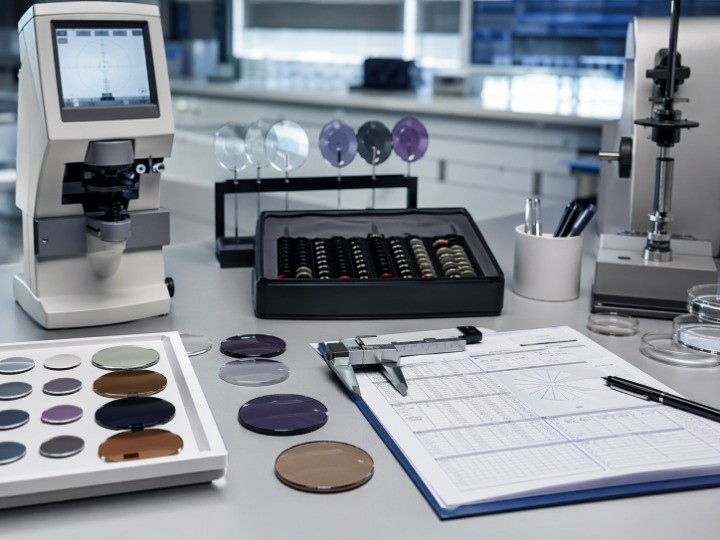
Yes. Both photochromic and tinted lenses can be made to prescription.
That said, prescription use changes the conversation. Once prescription power enters the picture, buyers must think about material, index, thickness, weight, coating performance, and production consistency, not just tint type or light response.
RNIB says registered opticians and optometrists can make filter lenses to prescription. NEI also notes that most protective eyewear can be made to match a prescription. That means both strategies can work in prescription eyewear when the supplier has the right technical range.
Prescription complexity can change the best choice. A moderate single-vision order may be straightforward. A progressive, bifocal, PC, or higher-index order demands more attention to optical design and manufacturing control. In those cases, the supplier’s capability matters more than the marketing language around the lens.
FDA guidance adds the compliance side. It says sunglasses should use impact-resistant lenses and follow applicable requirements under 21 CFR 801.410. It also warns against unsupported performance claims. For procurement teams, that means a serious supplier should provide more than lens options. The supplier should also support labeling accuracy, QC documentation, and inspection discipline.
A useful sourcing checklist includes:
-
Material and index range
-
UV specification
-
Tint or activation consistency
-
Coating stack and scratch resistance
-
Impact-resistance support
-
Batch traceability and inspection records
Cost vs Value: Which Lens Option Makes More Sense Financially?
The cheaper pair is not always the better value.
Value depends on whether the lens actually solves the wearer’s main problem. A photochromic upgrade may cost more per pair, but it may remove the need for a second pair in a daily mixed-light routine. For the right user, that can make it the better value.
A fixed-tint pair may cost less than an adaptive upgrade, but it often works as one part of a two-pair system. If the wearer still needs a clear indoor pair, the real comparison is system cost, not single-pair cost.
This is where honest selling matters. Convenience-led value supports photochromic well. Performance-led value supports tinted and polarized sunwear well. Both arguments can be true, but they fit different users.
What Optical Buyers, Retailers, and Brands Should Consider
A strong product line usually needs both adaptive convenience and fixed sunwear performance.
Photochromic lenses fit well into everyday prescription programs, one-pair convenience offers, and general lifestyle eyewear. Tinted lenses fit better into driving products, prescription sunglasses, outdoor collections, and style-led sunglass programs.
The right product mix depends on the target market. If the end customer spends a lot of time driving, working outdoors, or using eyewear in bright daylight, fixed-tint programs may deserve more weight. If the market values simplicity and indoor-outdoor flexibility, photochromic options may convert better.
At the buying level, the real questions are practical:
-
What UV claim will appear on the label?
-
What driving claims are actually valid?
-
-
What material and prescription combinations are realistic?
-
What documentation supports compliance and private-label work?
This is also where your own site structure can support the article well. After readers finish this comparison, the next useful internal paths are usually your photochromic lens page, progressive lens page, OEM/ODM service page, lens parameter page, and quality-control page.
Common Buying Questions About Photochromic and Tinted Lenses
Do photochromic lenses replace sunglasses completely? Not always. They work well in many daily situations, but RNIB says standard photochromic lenses usually do not become darker in the car. That leaves a real gap for driving and dedicated sunwear use.
Are tinted lenses better than photochromic lenses for driving?** Often yes. Fixed tint gives steadier daylight shading, and polarized tint can help reduce glare from reflective surfaces. FDA also says products intended for driving should meet traffic signal recognition requirements.
Can tinted lenses be made with prescription power?** Yes. RNIB says filter lenses can be made to prescription, and NEI notes that most protective eyewear can be matched to a prescription as well.
Which option is better for all-day wear? Photochromic lenses usually suit mixed indoor-outdoor wear better because they become lighter indoors and darker outdoors. Tinted lenses usually suit dedicated daylight use better.
Are photochromic lenses worth the extra cost? They are worth it when one-pair convenience is the main goal. They are less compelling when the wearer still needs a dedicated driving or sunwear pair.
Final Thoughts
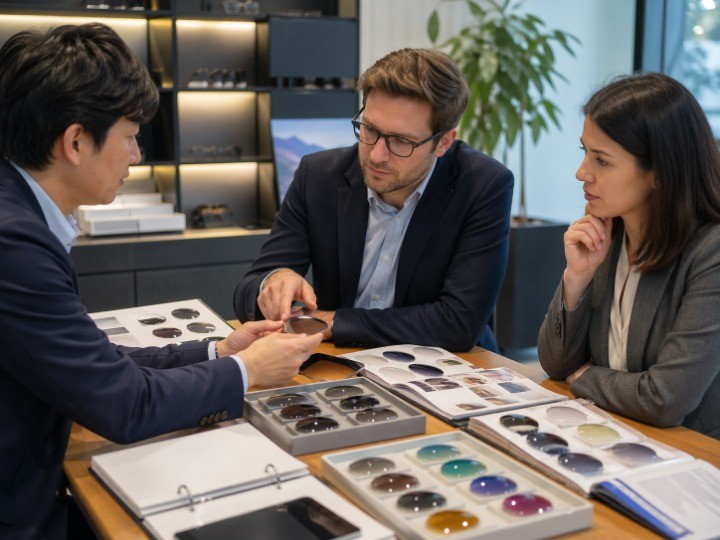
Photochromic vs tinted lenses is a use-case decision, not just a style decision. Photochromic lenses usually work better for convenience, daily transitions, and one-pair simplicity. Tinted lenses usually work better for stable outdoor performance, driving, and dedicated sunwear use. The smartest choice comes from matching the lens to the routine, not from assuming one category does everything better.
If you sell to optical buyers, distributors, or eyewear brands, this comparison should lead to a more technical conversation about UV claims, glare control, impact resistance, prescription range, coatings, QC, and OEM/ODM support. That is where an optical lens manufacturer–Vena Optical can stand out: not by making louder claims, but by helping buyers choose the right lens program for the market they serve.