


In most commercial contexts, it refers to CR-39 or a closely related resin-based substrate rather than glass. PPG describes CR-39 as a 1.5-index thermoset optical material, while the also highlights its long use in plastic lens production.
That quick answer helps, but it does not solve the real buying question. Many readers still want to know how resin compares with glass, polycarbonate, Trivex, and high-index materials. They also want to know where resin performs well, where it falls short, and what that means for coatings, durability, and sourcing decisions. ()
This guide explains what a resin lens really is, how it fits into today’s optical market, and how to choose it with more confidence. For readers comparing suppliers or product categories, you can also browse the or learn more about as a manufacturing reference point. ()
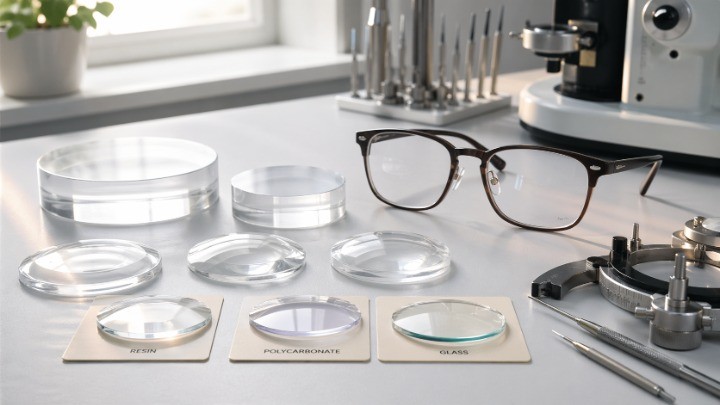 Resin Lens: The Quick Answer
A resin lens is a lens made from synthetic optical resin instead of mineral glass. In everyday optical language, it often means a plastic lens, and in many cases it points to CR-39, the long-established 1.50-index resin material used in high volumes for ophthalmic lenses.
At a glance, resin lenses usually offer a strong balance of optical clarity, lighter weight than glass, good tintability, and cost efficiency. That is why they remain common in everyday prescription eyewear and fashion sunwear. However, they do not lead the category in impact resistance, so safety, sports, and children’s eyewear often require a different material choice. ()
What Is a Resin Lens in Eyewear?
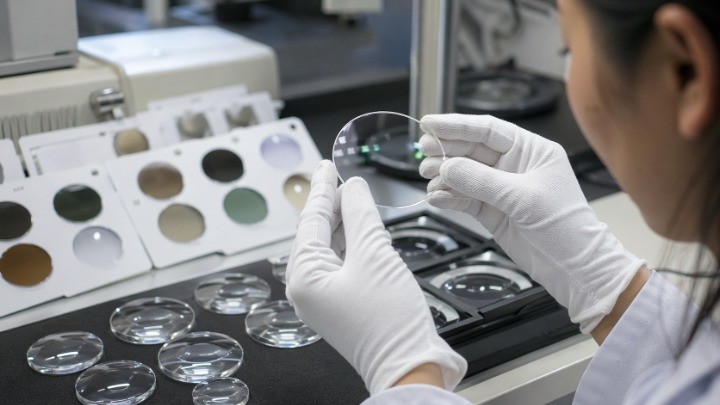 In eyewear, a resin lens is an ophthalmic lens made from a polymer-based substrate rather than glass. It is an engineered synthetic material, not natural tree resin. PPG defines CR-39 as allyl-diglycol-carbonate monomer, and the National Academy of Opticianry describes CR-39 as the long-standing standard plastic lens material in ophthalmic dispensing in its .
This is also why the term causes confusion. Buyers may hear “resin lens,” “plastic lens,” “hard resin lens,” or “CR-39 lens” used in overlapping ways. In strict material terms, these are not perfect synonyms. In practical sourcing conversations, though, they often point to the same mainstream category: a standard thermoset plastic lens with good optics and accessible cost.
The basic definition of a resin lens
A resin lens is the base lens substrate. It is not automatically a blue-cut lens, photochromic lens, progressive lens, or safety lens unless those functions are added through design, coating, or treatment. That distinction matters because many purchasing mistakes happen when buyers confuse substrate, design, and coating as if they were the same thing.
Natural resin vs synthetic optical resin
Natural resin belongs to general chemistry. Optical resin belongs to engineered manufacturing. Modern resin lenses use synthetic optical materials designed for transparency, processability, and dimensional stability. That is why the term “resin lens” in eyewear should be understood as a technical polymer category, not a casual materials label.
Where CR-39 fits into the resin lens category
CR-39 sits at the center of the category. It is the reference point many people mean when they say resin lens. PPG notes that lens wearers have relied on CR-39 for more than seven decades, and the material remains closely associated with standard 1.50 plastic lenses.
Why “resin lens,” “hard resin,” and “plastic lens” are often used interchangeably
They are used interchangeably because the market usually communicates by familiarity rather than polymer chemistry. Consumers ask for regular plastic lenses. Some labs say resin. Some catalogs say hard resin. For purchasing, the safest approach is to confirm the exact substrate, refractive index, and coating stack in writing.
Why Resin Lenses Became So Common
Resin lenses became common because they solved several practical problems at once. They offered lighter weight than glass, lower breakage risk in everyday use, easy tinting, and a cost profile that worked for large-volume optical programs. The National Academy of Opticianry notes that CR-39 was introduced as a replacement for glass and highlights its light weight, good optical properties, and tintability.
They also fit the economics of modern eyewear. A mainstream optical market needs materials that can support finished stock lenses, semi-finished surfacing, broad prescription ranges, and common coating systems without pushing every product into premium pricing. Resin stayed relevant because it is balanced, not because it is unbeatable in every performance category. ()
How Resin Lenses Are Made
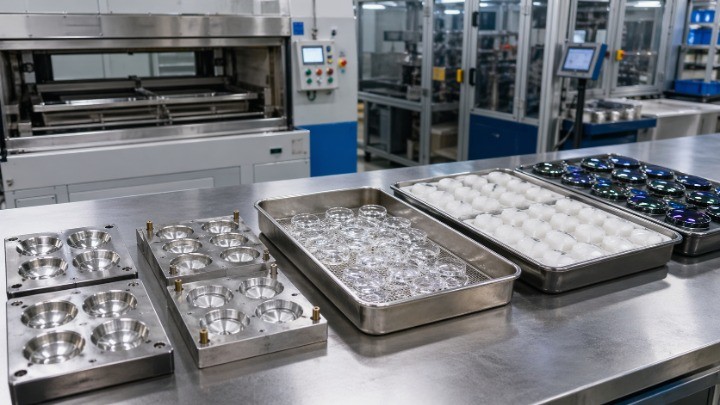 Resin lenses are made by polymerizing an optical monomer into a solid lens blank and then processing that blank into a finished or semi-finished lens. In the case of CR-39, the base chemistry is ADC thermoset resin. After the substrate is formed, manufacturers can add surfacing, edging, hard coating, AR coating, tinting, or other treatments depending on the product specification.
That process matters because buyers often judge a finished lens by the wrong layer. A resin substrate may be sound, but weak hard-coat adhesion, poor surfacing, or inconsistent curing can still create haze, scratch complaints, or tint mismatch. A good resin lens depends on both material choice and process control. ()
[Image placeholder: Resin lens production sequence showing casting molds, cured blanks, hard coating, and AR coating in a clean factory setting. Alt text: resin lens manufacturing process from casting to hard coating and AR coating]
The Main Benefits of Resin Lenses
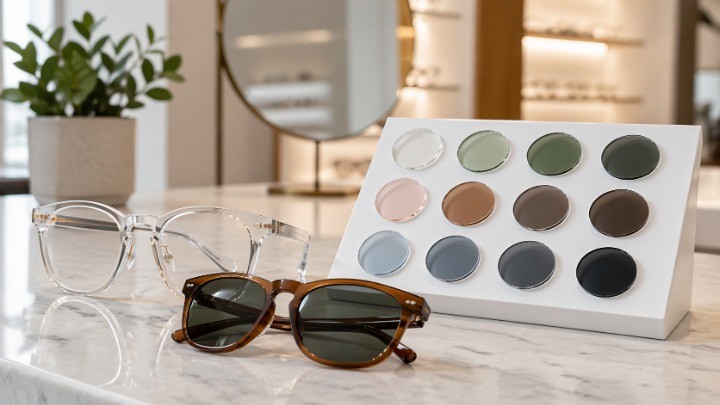 The main benefits of resin lenses are practical and easy to explain. They are lighter than glass, optically strong for everyday prescriptions, easy to tint, widely available, and commercially efficient. That is why they remain a reliable option for clear lenses, tinted lenses, and mainstream finished stock programs.
Another important advantage is flexibility in product planning. Resin works well in projects where buyers need stable supply, broad tint options, and reasonable cost control across multiple SKUs. That makes it attractive for prescription programs, fashion sunwear, and standard private-label ranges.
Key benefits at a glance
| Benefit | Why it matters in real projects |
|---|---|
| Lower weight than glass | Improves comfort in everyday wear |
| High Abbe value | Helps support cleaner optics and lower color dispersion |
| Good tintability | Useful for sunglass and fashion color programs |
| Mainstream cost position | Fits volume-oriented product lines |
| Coating compatibility | Supports HC, AR, hydrophobic, and other upgrades |
The National Academy of Opticianry lists CR-39 at a specific gravity of 1.32 and an Abbe value of 58, while crown glass is heavier and polycarbonate has a lower Abbe value. Those numbers help explain why resin often feels like the most balanced choice for mainstream use.
The Limitations Buyers Should Understand
Resin lenses are useful, but they are not ideal for every project. Their biggest weakness is lower impact protection compared with polycarbonate and Trivex. CDC states that most protective eyewear lenses are made of polycarbonate, and NIOSH specifically recommends polycarbonate or Trivex for prescription safety glasses because they provide the best impact protection in that category. You can review both points in the and the .
Resin also becomes less attractive as prescriptions become stronger. Higher-index materials reduce thickness more effectively, and glass still offers harder surfaces. So while resin performs very well in the center of the market, it does not lead at the extremes of impact protection, minimum thickness, or scratch resistance.
Common limitations
• Lower impact protection than polycarbonate and Trivex • More dependent on hard coating for scratch resistance • Greater thickness in stronger prescriptions • Less suitable for high-risk industrial or sports use • More likely to create complaints if coating quality is weak
Resin Lens vs Other Lens Materials
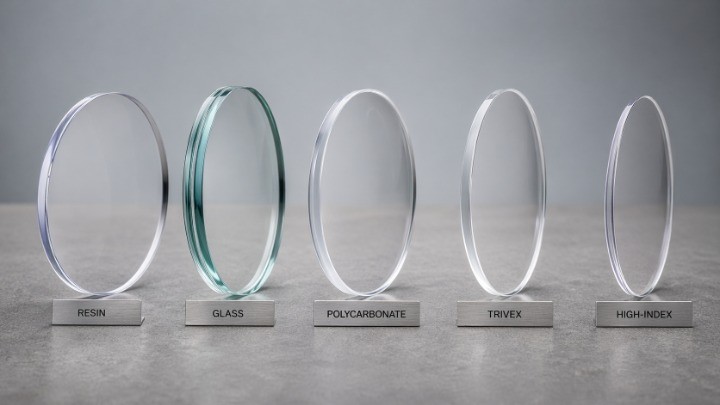 Resin makes the most sense when you compare it directly with the alternatives. It does not exist in isolation. Buyers choose it against glass, polycarbonate, Trivex, and high-index materials, each of which carries a different trade-off in clarity, weight, thickness, and toughness.
| Material | Typical refractive index | Strength area | Typical use case |
|---|---|---|---|
| Resin / CR-39 | 1.50 | Balanced everyday performance | Prescription eyewear, fashion sunwear |
| Glass | 1.52 | Hard surface, classic optics | Niche optical use |
| Polycarbonate | 1.586 | High impact protection | Kids, sports, safety |
| Trivex | 1.53 | Strong impact and lighter weight | Active wear, rimless, premium everyday |
| High-index resin | 1.60–1.74 | Thinner profile in strong Rx | Higher prescriptions |
Resin lens vs glass lens
Resin is lighter and more practical for daily wear. Glass still offers hard surfaces and strong optical reputation, but it is heavier and less forgiving in impact scenarios. For most modern eyewear, resin is the more commercially practical default.
Resin lens vs polycarbonate lens
Resin usually offers better optics and easier tinting. Polycarbonate usually wins on impact protection. The decision should follow the use case: choose resin when clarity and balanced cost matter more, and choose polycarbonate when protection matters more.
Resin lens vs Trivex lens
Trivex often provides a more premium balance between optics and impact resistance. Resin still wins on mainstream cost efficiency. That is why Trivex tends to appear in more specialized or premium applications rather than high-volume standard programs.
Resin lens vs high-index lens
High-index resin is usually the better cosmetic choice for stronger prescriptions because it reduces thickness. Standard resin still makes more sense in low to moderate prescriptions where price, clarity, and supply efficiency matter more than maximum thinness.
Who Should Choose Resin Lenses?
Resin lenses are a strong choice for buyers who need a mainstream, optically solid, cost-efficient lens material. That includes everyday prescription programs, fashion-oriented sunglass collections, and wholesale ranges built around common powers and repeat orders.
They are especially suitable when the product brief values tint flexibility, acceptable weight, broad coating compatibility, and manageable cost. For procurement teams, that often means finished stock ranges, private-label sunglass programs, and general prescription products in full-rim frames where extreme impact or ultra-thin cosmetics are not the first priority. For related manufacturing information, readers can explore or use the for product discussions. ()
When Resin Lenses May Not Be the Best Option
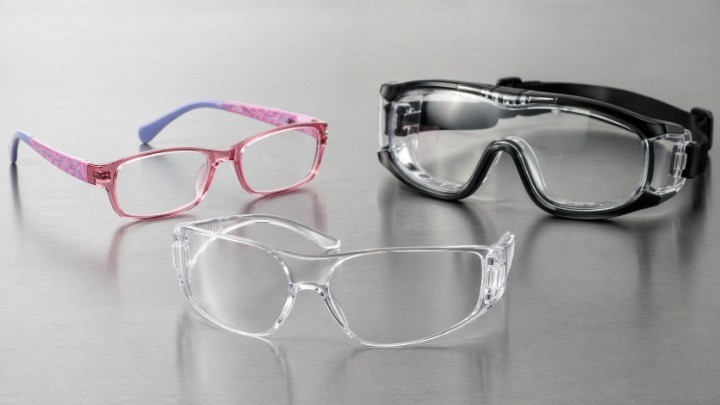 Resin should not be forced into applications that clearly favor tougher materials. If the project involves high impact, heavy mechanical stress, or stricter safety expectations, standard resin is usually not the best fit. CDC and NIOSH both push protective eyewear toward polycarbonate or Trivex for that reason.
The same applies when the prescription is strong and thickness becomes a cosmetic or fitting problem. In that situation, higher-index materials usually deliver a better result. So the better question is not “Is resin good?” but “Is resin right for this application?” ()
What Coatings Work Well With Resin Lenses?
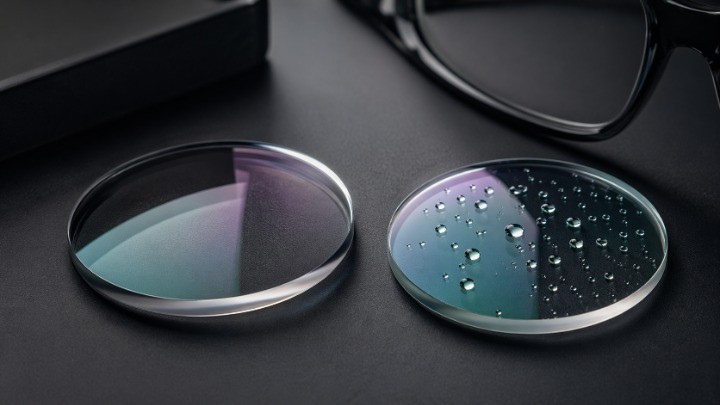 Resin lenses work best when the coating system is chosen as carefully as the substrate. A resin lens without a competent hard coat can underperform quickly in real-world wear. Hard coating is usually the first priority, followed by AR, hydrophobic, oleophobic, UV-management, or special-function layers depending on the product brief.
This is also where many products separate in real quality. Two lenses can both be called resin lenses and still behave very differently because the coating stack, curing discipline, and adhesion control are different. That is why buyers should evaluate finished-lens performance rather than relying only on base-material language.
Coating priorities for resin lenses
-
Hard coat for basic scratch resistance
-
AR coating for better appearance and visual comfort
-
Hydrophobic and oleophobic layers for easier cleaning
-
UV-management where product claims require it
-
Photochromic or blue-light-related functions where the market supports them
For sunglasses, FDA advises buyers to look for lenses labeled UV400 or 100% UV protection. The states that these sunglasses block more than 99% of UVA and UVB radiation.
Common Problems With Resin Lenses and What Causes Them
Most resin lens complaints do not come from one single cause. They usually come from an interaction between material choice, coating quality, frame matching, process discipline, and user expectation. That is why a lens can look fine in pre-shipment inspection but still generate failures after edging, mounting, shipping, or several weeks of wear. ()
The most common issues include scratches, coating adhesion failure, haze, tint inconsistency, and remake risk from unstable process control. In other words, many problems blamed on “resin” are actually factory-discipline problems rather than simple material defects.
How to Judge Resin Lens Quality Before You Buy
 The best way to judge a resin lens is to evaluate the finished product across optics, surface durability, consistency, and documentation. Do not buy only from a data sheet. Buy from tested samples, repeat results, and documented controls. FDA makes clear that impact-resistant lens compliance, testing, and record maintenance matter in regulated eyewear trade in its . ()
A practical quality review should include both lab checks and field thinking. Lab checks tell you whether the lens meets a spec. Field thinking tells you whether it will survive edging, mounting, transport, and end-user wear without driving claim rates higher than expected.
Quality checkpoints before approval
• Surface clarity and cosmetic cleanliness • Coating adhesion and abrasion resistance • Power accuracy and repeatability • Tint uniformity and backside reflection control • Packaging, lot control, and traceability • Regulatory documentation where required
How wholesale Buyers Should Evaluate a Resin Lens Supplier
procurement teams should evaluate suppliers at three levels: material truth, process control, and delivery reliability. Material truth means the supplier tells you exactly what the substrate is. Process control means the supplier can keep results stable. Delivery reliability means the product arrives on time with the same quality you approved.
This is where resin lens sourcing becomes more than material selection. Two suppliers can both offer “1.50 resin lenses,” but their real output can differ sharply in coating durability, tint consistency, packaging discipline, and remake handling. If you are building a long-term program, those differences matter more than small first-quote price gaps.
Questions worth asking a supplier
• Is the substrate CR-39 or another resin system? • What is the exact refractive index? • What hard-coat and AR performance data can you provide? • How do you manage batch traceability and remake analysis? • What is customizable in OEM or private-label production? • How do you handle regulated-market documentation?
How to Choose the Right Resin Lens for Different Market Needs
The right resin lens depends on the market brief. There is no single best resin lens for every product line. A budget reading-glasses program, a fashion sunglass collection, and a prescription wholesale assortment can all use resin, but they need different priorities in coating, tinting, packaging, and specification control.
Start with wearer needs, frame type, prescription range, expected claim profile, and target price. Then match the resin-lens specification to that commercial reality. That approach works better than choosing materials based only on a familiar name or a low opening quotation. For project inquiries, you can or review the broader for adjacent lens topics. ()
Frequently Asked Questions About Resin Lenses
Is a resin lens the same as CR-39?
Often yes in practical optical conversations, but not always. Many people use “resin lens” as a general term for standard plastic optical lenses, while CR-39 is a specific and historically important material within that category.
Are resin lenses the same as plastic lenses?
In most commercial conversations, yes. In technical sourcing, the safer answer is that a resin lens is a type of plastic optical lens, usually a thermoset ophthalmic material such as CR-39 or a similar resin substrate.
Are resin lenses better than glass lenses?
For most modern everyday eyewear, yes. Resin is lighter and more practical in daily use. Glass still has advantages in surface hardness, but it is heavier and less suitable for many mainstream applications.
Are resin lenses better than polycarbonate?
Not in every case. Resin usually offers better optical quality and tint flexibility. Polycarbonate usually offers better impact protection. The correct choice depends on whether your priority is clarity or protection.
Do resin lenses scratch easily?
They can scratch more easily than glass if the coating system is weak. That is why hard coating is such a critical part of finished-lens quality.
Are resin lenses good for sunglasses?
Yes, especially for fashion and lifestyle sunglasses. Resin supports tinting well and can deliver strong optical clarity, but UV claims should always be verified against actual finished-lens performance.
What coating should a resin lens have?
)
Final Thoughts
A resin lens still matters because it solves a very large share of real optical business needs. It is not the toughest material, the thinnest material, or the most premium-sounding material. It is the balanced material. That balance is exactly why it remains relevant in modern eyewear. ()
The best decision is rarely “resin or not resin” in isolation. The better decision is to match the material to the use case, coating requirement, frame category, prescription range, and target claim profile. When you do that, resin becomes easier to evaluate, easier to source, and easier to sell with confidence. If you want a manufacturer-side follow-up, you can review or reach out through the . (