

Many customers understand “nearsightedness,” but they may not know how a myopia lens works, why it uses minus power, or which lens type fits different prescriptions. This confusion can lead to poor lens selection, especially when thickness, coating, frame size, age, and daily use all affect the final wearing experience.
This guide explains myopia lenses from both optical and sourcing perspectives, so you can choose, compare, or supply the right lens solution with more confidence.
 What Is a Myopia Lens?
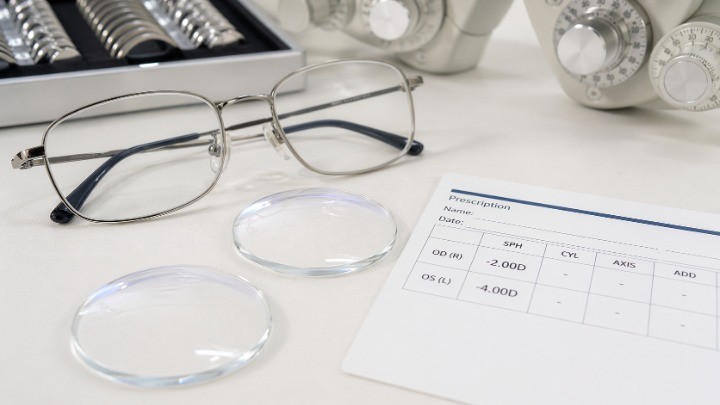
A myopia lens is a corrective eyeglass lens used for nearsightedness, helping distant objects appear clearer. It usually has minus power because it needs to adjust how light enters the eye and help the image focus more accurately on the retina.
The World Health Organization explains that refractive errors, including myopia, can be corrected with appropriate eyeglasses, contact lenses, or other treatment methods. It also notes that uncorrected refractive error remains a leading cause of vision impairment in both children and adults. ()
Simple Definition of a Myopia Lens
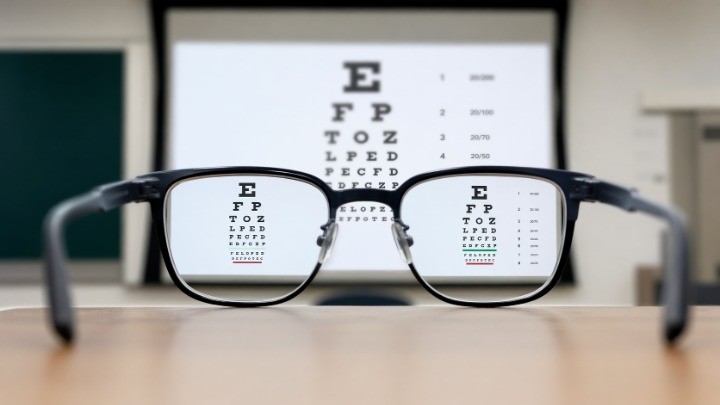
A myopia lens is a prescription lens for people who see nearby objects more clearly than distant objects. In daily optical practice, it often means a single-vision minus lens for distance correction.
However, the term can cover more than one product category. A myopia lens may be a standard clear lens, a high-index lens, a blue cut lens, a photochromic lens, a PC lens, or a special myopia control spectacle lens.
For professional buyers, this distinction matters. A customer may ask for “myopia lenses,” but the real order still needs clear details, including index, coating, power range, diameter, packaging, and quality level.
What Vision Problem Does It Correct?
A myopia lens corrects distance blur caused by nearsightedness. A wearer may read a phone or book clearly but struggle to see road signs, classroom boards, faces across a room, or outdoor objects.
The National Eye Institute explains that myopia can happen when the eyeball grows too long from front to back, or when the cornea or lens shape causes light to focus in front of the retina instead of on it. ()
This is why myopia correction is not only about making objects look larger. The lens must change the light path before light reaches the eye.
Why Myopia Lenses Usually Use Minus Power
Myopia lenses usually use minus power because they need to move the focal point backward onto the retina. A minus lens has a concave optical form, which spreads incoming light before it enters the eye.
In prescriptions, myopia often appears as negative values, such as -1.50D, -3.00D, or -6.00D. A higher minus number usually means stronger correction.
For manufacturing and sourcing, stronger minus powers need better thickness control. Lens index, frame size, center thickness, edge thickness, and coating quality all become more important.
What Is Myopia and Why Does It Matter?
Myopia, also called nearsightedness, is a refractive error that makes distant objects look blurry. It matters because proper correction supports clear vision, daily safety, learning, driving, work efficiency, and overall visual comfort.
Myopia is common across many markets. It is also becoming a more important topic for parents, schools, optical stores, and lens suppliers because childhood myopia and high myopia can require more careful product decisions.
A Simple Look at Nearsightedness
Nearsightedness means the eye focuses light too early. Instead of focusing directly on the retina, the image focuses in front of it.
This creates distance blur. A student may sit closer to the classroom board. A driver may notice road signs too late. An office worker may see a computer clearly but find long-distance vision weak.
A myopia lens solves this practical problem by helping the wearer see distant objects more clearly while wearing the glasses.
Why Distant Objects Look Blurry
Distant objects look blurry because the eye’s optical system does not place the image in the correct position. The issue can relate to eye length, corneal curvature, lens shape, or a combination of refractive factors.
A myopia lens changes the direction of incoming light. It helps the optical system refocus the image more accurately.
This also explains why lens accuracy matters. If the power, cylinder, axis, or fitting data is wrong, the wearer may still experience blur, strain, or poor comfort.
Why Myopia Needs Proper Correction
Proper correction helps the wearer function better in real situations. Clear distance vision can support classroom learning, driving, outdoor activity, sports, retail work, factory work, and daily movement.
For children, proper correction is especially important because vision can affect learning and comfort. For adults, clear correction can support safety and productivity.
The right myopia lens should match the prescription, wearer age, frame style, lifestyle, and expected product quality.
How Does a Myopia Lens Work?
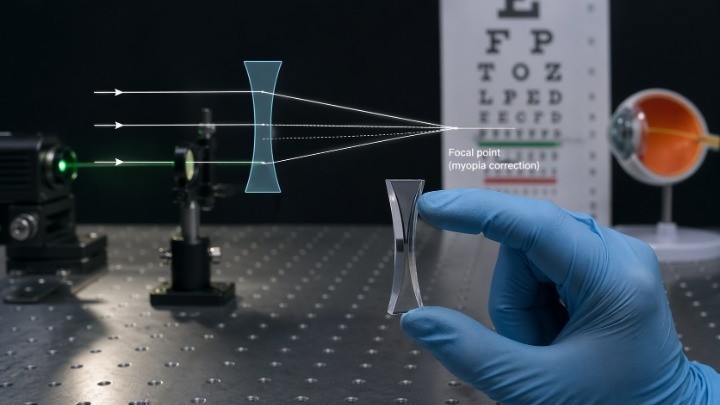 A myopia lens works by using minus power to diverge incoming light, helping the eye focus distant images more accurately on the retina. It compensates for the eye focusing light too far forward.
This optical principle looks simple, but the final lens performance depends on lens design, material, index, coating, inspection accuracy, and frame selection.
How Minus Lenses Help Focus Light Correctly
Minus lenses spread light slightly before it enters the eye. This adjustment helps move the focal point backward.
For the wearer, the result should be clearer distance vision. For the lens manufacturer, the task is to produce the correct optical power, stable surface quality, accurate diameter, and consistent coating performance.
Professional buyers should not only ask whether the lens is “for myopia.” They should also check power accuracy, coating quality, and repeat-order consistency.
Concave Lens Design Explained in Simple Terms
A concave lens is thinner in the center and thicker at the edge. This shape helps correct myopia, but it also creates a visible issue: edge thickness.
As minus power increases, the lens edge usually becomes thicker. Large frames can make this issue more obvious because the lens needs a wider diameter.
This is why high-index lenses often matter for moderate and high myopia. They can reduce thickness compared with lower-index options under similar conditions.
How Prescription Power Affects Lens Thickness
Prescription power strongly affects lens thickness. A -1.00D lens usually looks thin in many frame styles. A -6.00D lens can show much thicker edges, especially in large frames.
Lens thickness depends on several factors:
• Sphere power • Cylinder power • Lens index • Frame size • Lens diameter • Decentration • Center thickness • Edge design
For product planning, one myopia lens category cannot serve every customer equally well.
Why Frame Size and Lens Index Matter for Higher Myopia
Frame size matters because larger frames usually require larger lens blanks. Larger blanks can increase edge thickness in minus lenses.
Lens index matters because higher-index materials bend light more efficiently. This allows thinner lenses for stronger prescriptions.
For optical stores, this point helps improve customer recommendations. For wholesalers and distributors, it supports a better product ladder, such as 1.56, 1.60, 1.67, and 1.74 myopia lenses.
Standard Myopia Lenses vs. Myopia Control Lenses
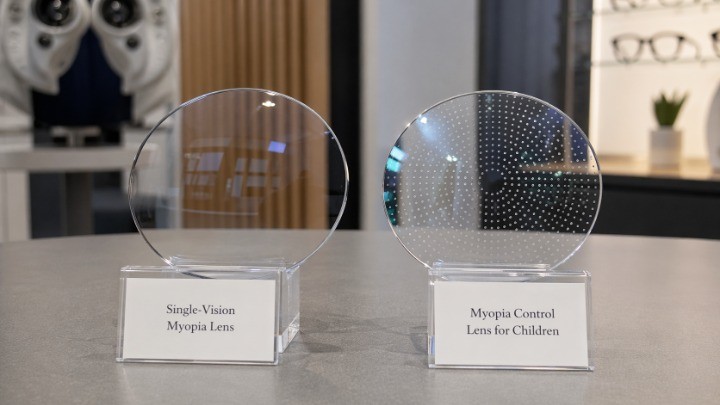 Standard myopia lenses correct blurry distance vision, while myopia control lenses aim to correct vision and help slow myopia progression in eligible children. Buyers should not treat these two categories as the same product.
This distinction is important for product descriptions, optical store education, and wholesale sourcing.
What Standard Myopia Lenses Do
Standard myopia lenses help the wearer see distant objects clearly while wearing glasses. Most standard myopia lenses are single-vision minus lenses.
They can be used by children, teenagers, and adults. They can also combine with functions such as anti-reflective coating, blue cut coating, photochromic treatment, UV protection, and high-index materials.
For many wholesalers, standard single-vision myopia lenses remain the foundation of the lens catalog.
What Myopia Control Lenses Try to Do Differently
Myopia control spectacle lenses try to do more than correct blur. They use special optical designs to help slow myopia progression in suitable children.
In 2025, the U.S. FDA authorized marketing of Essilor Stellest eyeglass lenses to slow pediatric myopia progression. The FDA reported that a two-year clinical study showed a 71% reduction in myopia progression based on spherical equivalent refraction compared with single-vision control lenses. ()
This does not mean every child needs the same product. It means myopia control should involve proper clinical guidance and accurate product claims.
Why Children’s Myopia Needs Special Attention
Children’s myopia needs special attention because their eyes may continue to grow. Their prescriptions may change over time, and some children may need myopia management rather than only standard correction.
Parents may ask for “children’s myopia glasses,” but an eye care professional should decide whether standard correction, myopia control spectacle lenses, contact lenses, or other options are suitable.
For suppliers, this also means product language must stay accurate. A standard myopia lens should not be marketed as a myopia control lens unless the product has the correct evidence and local authorization.
Why Buyers Should Not Confuse Vision Correction with Myopia Management
Vision correction and myopia management are related, but they are not the same. A standard minus lens corrects blur. A myopia control lens uses a special design to address progression risk.
This difference protects the wearer, retailer, and supplier. It also helps procurement teams build clearer catalogs and avoid misleading claims.
If you source or sell myopia lenses, you should describe the lens function clearly and avoid overstating benefits.
Main Types of Myopia Lenses
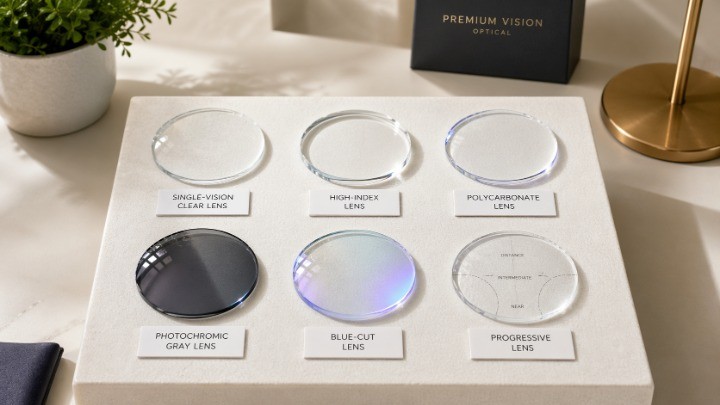 The main types of myopia lenses include single-vision lenses, high-index lenses, polycarbonate lenses, photochromic lenses, blue cut lenses, progressive lenses for adults, and myopia control spectacle lenses for children. Each type serves a different need.
A complete product line should cover both basic correction and value-added functions.
Single-Vision Myopia Lenses
Single-vision myopia lenses correct one viewing distance, usually distance vision. They are the most common lens type for nearsightedness.
They can serve mild, moderate, and stronger prescriptions depending on index and material. They are also practical for stock programs, wholesale orders, and standard optical retail channels.
For many distributors, single-vision myopia lenses are the highest-volume category.
High-Index Myopia Lenses
High-index myopia lenses help reduce edge thickness for stronger minus prescriptions. Common options include 1.60, 1.67, and 1.74.
These lenses often improve appearance and comfort for customers who dislike thick lens edges. They also support premium product positioning.
However, high-index lenses need strong coating quality and stable surface control because customers expect better visual and cosmetic results.
Polycarbonate Myopia Lenses
Polycarbonate myopia lenses are lightweight and impact resistant. They are often used for children’s eyewear, sports eyewear, rimless frames, and safety-related applications.
In the U.S., 21 CFR 801.410 states that eyeglasses and sunglasses must generally be fitted with impact-resistant lenses, except in specific cases directed by a physician or optometrist. ()
For buyers selling into regulated or safety-conscious markets, impact resistance and related documentation can become important sourcing points.
Photochromic Myopia Lenses
Photochromic myopia lenses darken outdoors and become clearer indoors. They allow users to move between indoor and outdoor environments with one pair of glasses.
This lens type works well for daily wear, outdoor activity, travel, school use, and markets where consumers value convenience.
For sourcing, buyers should check color depth, activation speed, fade-back speed, color uniformity, and long-term stability.
Blue Cut Myopia Lenses
Blue cut myopia lenses combine distance correction with blue light filtering design or coating. They are popular for screen-heavy environments, office work, online eyewear channels, and students.
However, not every blue cut lens looks or performs the same. Some lenses have a stronger base color. Some show a stronger blue reflection. Some keep a more natural appearance.
A good supplier should help buyers choose the right balance between protection claim, lens appearance, and local customer preference.
Progressive Lenses for Adults with Myopia and Presbyopia
Adults with myopia may develop presbyopia as they age. In this case, they may need progressive lenses that support distance, intermediate, and near vision in one pair.
Progressive myopia-related lenses require more design control than basic single-vision lenses. Corridor length, fitting height, frame choice, and wearer adaptation all matter.
For optical chains and distributors, progressive lenses can become a higher-value product category when supported by stable design and fitting guidance.
Myopia Control Spectacle Lenses for Children
Myopia control spectacle lenses are designed for children who need correction and progression management. They should be recommended through professional eye care channels.
This category has growth potential, but buyers must handle it carefully. Only products with proper evidence and local market authorization should be sold as myopia control solutions.
Myopia Lens Materials and Index Options
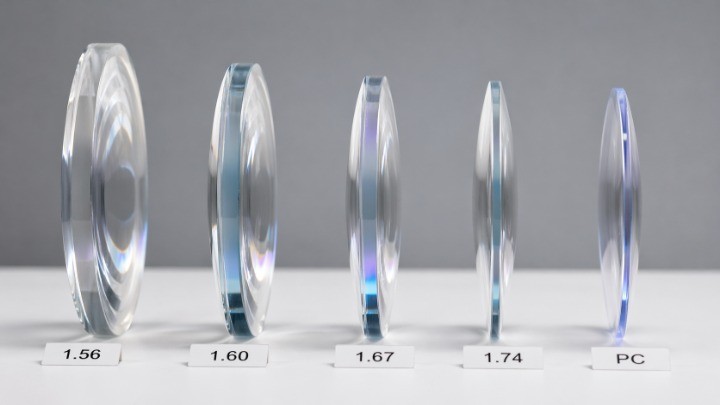 Myopia lens materials and index options affect thickness, weight, clarity, durability, price, and product positioning. A practical myopia lens line usually includes several index options, so buyers can match different prescription levels and market needs.
ISO 8980-1:2017 specifies requirements and verification methods for optical and geometrical properties of uncut finished single-vision and multifocal spectacle lenses. This type of standard helps professional buyers understand why measurable lens accuracy matters. ()
1.56 Myopia Lenses for Everyday Use
1.56 myopia lenses are widely used for everyday prescriptions and value-focused markets. They often provide a practical balance between cost, availability, and performance.
They work well for mild to moderate myopia, especially when the frame is not oversized. For wholesalers, 1.56 lenses often form a core stock category.
Common options include 1.56 HMC, 1.56 SHMC, 1.56 blue cut, and 1.56 photochromic lenses.
1.60 Myopia Lenses for Better Thickness Control
1.60 myopia lenses offer better thickness control than 1.56 lenses. They are a useful upgrade for customers who want thinner lenses without moving into a high premium price range.
This index often fits moderate prescriptions well. It can also support fashionable frames where appearance matters.
For wholesale product planning, 1.60 lenses can serve as a mid-range product tier between standard and premium categories.
1.67 Myopia Lenses for Moderate to High Myopia
1.67 myopia lenses are suitable for moderate to high myopia. They help reduce edge thickness and improve cosmetic appearance.
Many optical stores recommend 1.67 lenses when the wearer has a stronger minus prescription and wants a thinner look.
For suppliers, this category needs stable coating adhesion, clean surface quality, and reliable repeat-order consistency.
1.74 Myopia Lenses for Strong Prescriptions
1.74 lenses are usually positioned for stronger prescriptions where thickness reduction is a key concern. They can help create a thinner lens compared with lower-index alternatives.
However, 1.74 lenses are more expensive and may not be necessary for every wearer. Buyers should match this option to prescription range, frame style, and market price acceptance.
A good product line should offer 1.74 as a solution for high myopia, not as the default answer for every order.
PC Lenses for Children, Sports, and Impact Resistance
PC lenses are useful when impact resistance, light weight, and safety are priorities. Children, active users, and sports eyewear customers often benefit from this material.
However, PC lenses also need good coating support. Poor coating can reduce product life and increase complaints.
Professional buyers should ask about abrasion resistance, coating adhesion, optical clarity, and packaging protection before bulk orders.
How to Choose Lens Index by Prescription Range
The table below gives a practical sourcing reference. Final selection should still consider frame size, wearer expectations, local price level, and optical recommendation.
| Prescription Range | Common Lens Choice | Main Advantage | Buyer Concern |
|---|---|---|---|
| Low myopia | 1.56 lens | Cost-effective and widely available | Basic coating quality |
| Moderate myopia | 1.60 lens | Better thickness control | Price-performance balance |
| Moderate to high myopia | 1.67 lens | Thinner edge and better appearance | Coating stability |
| High myopia | 1.74 lens | Strong thickness reduction | Higher cost |
| Children or sports use | PC lens | Impact resistance and light weight | Surface durability |
Coating Options for Myopia Lenses
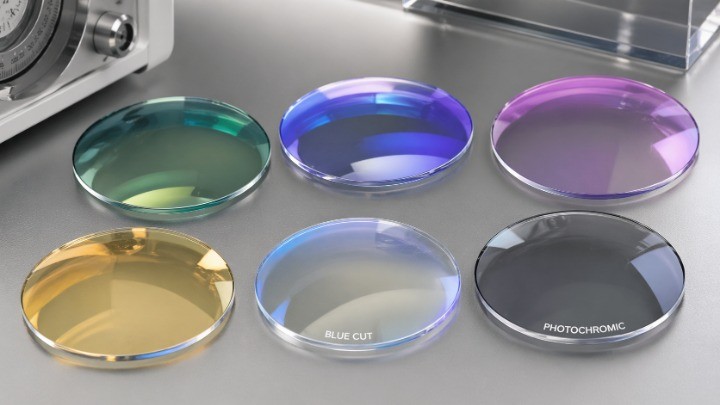 Coating options improve the durability, comfort, appearance, and market value of myopia lenses. Common coating choices include hard coating, anti-reflective coating, blue cut coating, UV protection, and photochromic treatment.
ISO 8980-3:2022 specifies requirements for transmittance properties of uncut and unmounted finished spectacle lenses, including attenuation of solar radiation. This makes transmittance and UV-related claims important areas for professional lens evaluation. ()
Hard Coating for Better Scratch Resistance
Hard coating helps improve scratch resistance compared with an uncoated lens surface. It is often the base layer in a coated lens structure.
For everyday myopia lenses, hard coating supports longer product life and fewer visible surface marks.
For bulk orders, buyers should ask whether the coating process remains consistent across different batches.
Anti-Reflective Coating for Clearer Vision
Anti-reflective coating reduces surface reflections and improves lens appearance. Many customers associate low reflection with better quality and clearer vision.
Common AR coating colors include green, blue, purple, and gold. Different markets may prefer different coating colors.
For procurement teams, coating color consistency matters because uneven reflection can make a product line look mixed or unstable.
Blue Cut Coating for Screen-Heavy Use
Blue cut coating is popular for office, school, and screen-related use. It can add commercial value to standard myopia lenses.
However, buyers should evaluate more than the marketing name. They should check base color, reflection color, transmission feel, and visual comfort.
A lens that looks too yellow may not suit every market. A lens with strong blue reflection may appeal to some customers but not others.
UV Protection for Daily Eye Protection
UV protection is an important feature for modern optical lenses. Many clear lenses can provide UV protection depending on material and coating design.
Buyers should confirm UV claims with test data or supplier documentation when the product label mentions UV400, UV protection, or outdoor use.
This is especially important for professional catalogs, retail packaging, and market compliance.
Photochromic Treatment for Indoor and Outdoor Wear
Photochromic treatment allows lenses to darken outdoors and become clearer indoors. It adds convenience for users who move between different light environments.
For sourcing, buyers should test activation speed, fade-back speed, color depth, color uniformity, and stability after repeated use.
Photochromic lenses also need strong process control because poor quality can lead to weak color change or uneven appearance.
Why Coating Quality Matters for Repeat Orders
Coating quality affects after-sales risk. Scratches, peeling, weak adhesion, visible spots, and color inconsistency can damage customer confidence quickly.
For wholesalers and optical chains, repeat-order consistency matters more than one good sample.
Before confirming a supplier, buyers should review coating samples, inspection standards, batch stability, and complaint handling process.
Myopia Lenses for Children and Adults
Children and adults may both need myopia lenses, but their priorities are different. Children often need safety, fit, durability, and myopia management guidance, while adults often focus on clarity, thickness, coatings, and appearance.
A strong product line should separate these needs instead of selling one generic lens to every user.
Myopia Lenses for Children
Children’s myopia lenses should support clear vision, comfort, safe wearing, and proper frame fit. Parents often care about durability because children may drop, bend, or scratch glasses more often.
PC lenses can be useful for children because of impact resistance and light weight. However, children with progressing myopia should receive professional eye exams and guidance.
If a child needs myopia control, the product should come through qualified eye care channels and proper local authorization.
Myopia Lenses for Adults
Adults usually choose myopia lenses based on prescription strength, daily use, frame style, and lifestyle. A low-power office worker may prefer a blue cut lens. A driver may value anti-reflective coating and clear distance vision.
An outdoor user may choose photochromic lenses. A high-myopia wearer may choose 1.67 or 1.74 lenses to reduce edge thickness.
For retailers, adult myopia products can be segmented into basic, comfort, premium, and functional categories.
High Myopia and Cosmetic Lens Thickness
High myopia creates a stronger need for thickness control. Customers may dislike thick edges, heavy frames, or strong visual distortion around the lens edge.
Lens index, frame size, and lens shape all affect the final result. Smaller round or oval frames may help reduce edge thickness compared with oversized frames.
For professional buyers, high-myopia products should include clear index guidance and realistic expectations.
Myopia with Astigmatism or Presbyopia
Many wearers have myopia with astigmatism. In this case, the lens must correct both sphere and cylinder values. Axis accuracy becomes important for comfort and clarity.
Adults with myopia may also develop presbyopia. They may need progressive lenses, bifocals, or separate reading solutions.
This is why a manufacturer should offer more than one basic product. A complete prescription lens range helps buyers serve real customer needs.
Why Professional Eye Exams Still Matter
A myopia lens should be based on an accurate prescription. Eye exams help identify sphere, cylinder, axis, pupillary distance, and other fitting needs.
The manufacturer can produce the lens, but an eye care professional should handle diagnosis, prescription decisions, and child myopia management.
This clear role division protects users, retailers, and lens suppliers.
How to Choose the Right Myopia Lens
The right myopia lens should match prescription strength, frame size, wearer lifestyle, age group, coating needs, and budget. A good choice balances optical clarity, comfort, appearance, durability, and price.
For professional buyers, the best lens is not always the most expensive one. It is the lens that fits the target market and stays stable across repeat orders.
Start with the Prescription Strength
Prescription strength should guide the first decision. Low myopia may only need a standard lens. Moderate or high myopia often needs better thickness control.
A practical approach looks like this:
| User Need | Recommended Focus | Product Direction |
|---|---|---|
| Mild myopia | Clear correction and cost control | 1.56 HMC or blue cut |
| Moderate myopia | Better appearance and comfort | 1.60 or 1.67 |
| High myopia | Thickness reduction | 1.67 or 1.74 |
| Children | Safety and durability | PC or child-focused solution |
| Outdoor use | Light adaptation | Photochromic myopia lens |
| Screen-heavy use | Functional comfort | Blue cut myopia lens |
Match Lens Index with Frame Size
Frame size can change the final lens appearance. A large frame can make the edge thicker, especially for minus lenses.
If a customer has stronger myopia, the optical store should consider both lens index and frame choice. A higher-index lens may still look thick in an oversized frame.
For wholesale catalogs, this point can become a useful sales education tool.
Choose Coatings Based on Lifestyle
Different coatings solve different problems. Anti-reflective coating improves clarity and appearance. Blue cut coating supports screen-focused positioning. Photochromic treatment helps outdoor users. Hard coating improves surface durability.
Buyers should avoid adding every function without strategy. Too many features can increase cost without matching customer demand.
A better approach is to create clear product levels, such as basic, comfort, outdoor, premium, and high-index.
Consider Lens Weight and Edge Thickness
Weight and thickness affect comfort. A heavy or thick lens may make a customer unhappy even when the optical power is correct.
For high myopia, edge thickness often becomes a major concern. For children, weight and safety may matter more than cosmetic thinness.
This is why lens recommendation should be practical, not only technical.
Decide Between Standard Correction and Myopia Control
Standard correction helps users see clearly. Myopia control requires a more specific professional decision, especially for children.
If the wearer is a child and the prescription is changing, parents should speak with an eye care professional. If the buyer is sourcing products for retail, the catalog should clearly separate standard myopia lenses from myopia control spectacle lenses.
Clear product naming reduces misunderstanding and protects brand credibility.
What Professional Buyers Should Check Before Sourcing Myopia Lenses
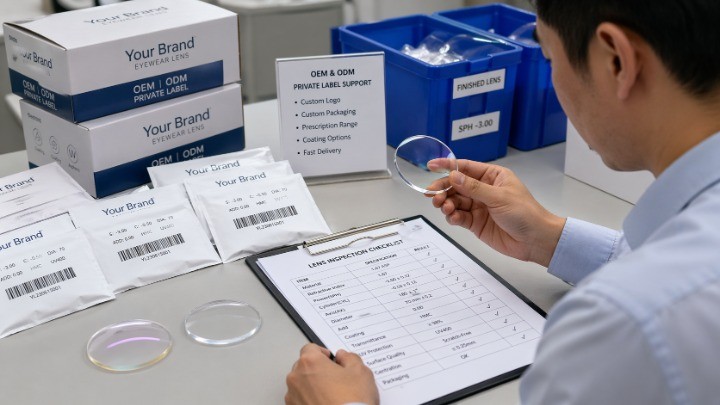 Professional buyers should check product range, power availability, lens index options, coating stability, inspection standards, OEM support, lead time, and repeat-order consistency before sourcing myopia lenses. These factors often matter more than the lowest unit price.
A low quotation can become expensive if it creates returns, complaints, delayed shipments, or unstable quality.
Power Range and Stock Availability
Power range affects how well a supplier can support your market. If your customers often need common minus powers, stock availability can speed up delivery.
Ask your supplier about:
• Common stock powers • Cylinder options • Diameter options • Finished lens availability • Semi-finished lens availability • Replenishment speed
For wholesalers, popular power availability can directly affect sales performance.
Lens Index and Material Options
A strong supplier should support multiple index options. 1.56 may serve basic demand, while 1.60, 1.67, and 1.74 support thinner lens needs.
PC lenses can support children, sports, and impact-related uses. Semi-finished blanks can support optical labs and Rx processing channels.
A narrow product range can limit your ability to serve different customer groups.
Coating Stability and Surface Quality
Coating stability should be a major sourcing checkpoint. Buyers should check coating color, adhesion, abrasion resistance, reflection quality, and surface cleanliness.
A product sample may look good, but repeat orders show the real supplier quality.
Ask whether the factory inspects scratches, coating spots, peeling risk, dust marks, color consistency, and final packaging accuracy.
Power Accuracy and Inspection Standards
Power accuracy affects customer comfort and optical performance. Professional lens suppliers should use proper inspection tools and documented processes.
Buyers should also ask how the supplier controls sphere power, cylinder power, axis, prism, diameter, center thickness, add power, and visual defects.
This process helps reduce after-sales issues and supports more stable long-term cooperation.
Finished and Semi-Finished Lens Supply
Finished lenses help wholesalers and distributors move quickly. Semi-finished lenses help optical labs process prescriptions locally.
A manufacturer that supports both categories can serve a wider customer base. This is useful for buyers who sell to both retail channels and Rx processing partners.
When sourcing semi-finished blanks, buyers should check base curve range, add power options, diameter, surface quality, and packaging protection.
OEM Packaging and Private Label Support
OEM packaging can help buyers build brand value. Lens envelopes, middle boxes, carton labels, barcodes, inserts, and product series names all affect market presentation.
Private label support is especially useful for eyewear brands, distributors, and optical chains.
A manufacturer should help you create packaging that matches your price level, market language, and local customer expectations.
Lead Time, Batch Consistency, and Repeat Order Stability
Lead time matters because lens businesses depend on reliable replenishment. A supplier should provide realistic production schedules and communicate early if delays occur.
Batch consistency matters even more. Your second, third, and fourth orders should match the approved sample and previous shipments.
This is where long-term factory cooperation becomes valuable.
Common Questions About Myopia Lenses
Most questions about myopia lenses focus on definition, cure, thickness, blue cut function, photochromic use, and the best lens for high myopia. Clear answers help consumers and professional buyers make better decisions.
This section also helps the article cover long-tail search queries naturally.
Are Myopia Lenses the Same as Prescription Lenses?
Myopia lenses are one type of prescription lens. A prescription lens can correct myopia, hyperopia, astigmatism, presbyopia, or combined vision needs.
So, all myopia lenses are prescription lenses, but not all prescription lenses are myopia lenses.
Can Myopia Lenses Cure Myopia?
Standard myopia lenses do not cure myopia. They correct blurry distance vision while the wearer uses the glasses.
Myopia control lenses may help slow progression in specific children, but they require professional guidance and should not be described as a cure.
Are Thinner Lenses Always Better for Myopia?
Thinner lenses are not always better for every wearer. They can improve appearance and comfort for stronger prescriptions, but they may also cost more.
For low myopia, a standard lens may be enough. For moderate or high myopia, 1.60, 1.67, or 1.74 may provide better results.
Do Blue Cut Lenses Help Myopia?
Blue cut lenses do not correct myopia by themselves. The prescription power corrects myopia. The blue cut function adds a screen-use or light-filtering feature.
This distinction is important for product descriptions. A blue cut myopia lens is still a prescription myopia lens first.
Are Photochromic Lenses Good for Myopia?
Photochromic lenses can be a good option for myopia users who want indoor and outdoor convenience. They correct distance vision and darken outdoors.
Buyers should test color performance, fade-back speed, and coating stability before ordering in bulk.
What Is the Best Lens for High Myopia?
The best lens for high myopia usually combines a suitable high-index material, good frame selection, accurate prescription processing, and stable coating quality.
Many high-myopia users choose 1.67 or 1.74 lenses for thinner appearance. However, the final choice should consider prescription, frame size, budget, and wearer comfort.
Build a More Reliable Myopia Lens Product Line with Vena Optics
A reliable myopia lens product line should include standard correction lenses, functional coating options, high-index materials, PC options, OEM packaging support, and stable repeat-order quality. For professional buyers, this structure creates more flexibility and reduces sourcing risk.
supports optical lens supply for wholesalers, eyewear brands, regional agents, and optical chains. Our product range includes single-vision lenses, progressive lenses, bifocal lenses, photochromic lenses, blue light protection lenses, high-index lenses, PC lenses, finished lenses, and semi-finished blanks.
Stable Supply for Wholesalers, Brands, and Optical Chains
Stable supply matters because professional buyers need predictable quality and delivery. A lens product line must support ongoing sales, not only one-time sampling.
Vena Optics focuses on large-scale production and practical product planning. We help customers match lens type, index, coating, packaging, and price level with their target market.
This approach helps reduce purchasing risk and supports long-term cooperation.
A strong myopia lens range should include clear lenses, blue cut lenses, photochromic lenses, high-index lenses, PC lenses, and progressive options for adult wearers.
Vena Optics can support different product tiers, from basic stock lenses to customized OEM and ODM solutions.
This gives wholesalers and optical chains more flexibility when building their own product systems.
OEM/ODM, Coating, Packaging, and Quality Control Support
Professional buyers often need more than lens blanks. They need private label support, packaging design, coating selection, specification control, and inspection coordination.
Vena Optics can support OEM/ODM projects, brand labeling, customized packaging, coating solutions, parameter customization, and quality inspection.
These services help buyers create a more complete and market-ready myopia lens product line.
Contact Vena Optics for Myopia Lens Sourcing Solutions
Choosing the right myopia lens starts with the prescription, but successful sourcing depends on product range, coating stability, material choice, packaging support, and supplier reliability.