


resin lens vs polycarbonate lens is not only a material question. It affects clarity, safety, coating quality, cost, and product positioning.
Many buyers compare these two lens materials because both appear in prescription eyewear, children’s glasses, sports eyewear, sunglasses, and safety-related products. However, resin lenses and polycarbonate lenses serve different needs. Resin lenses often support daily eyewear and cost control, while polycarbonate lenses focus more on impact resistance and lightweight performance.
This guide explains the real differences, advantages, limits, and purchasing considerations, so you can choose the right lens material for your product line.
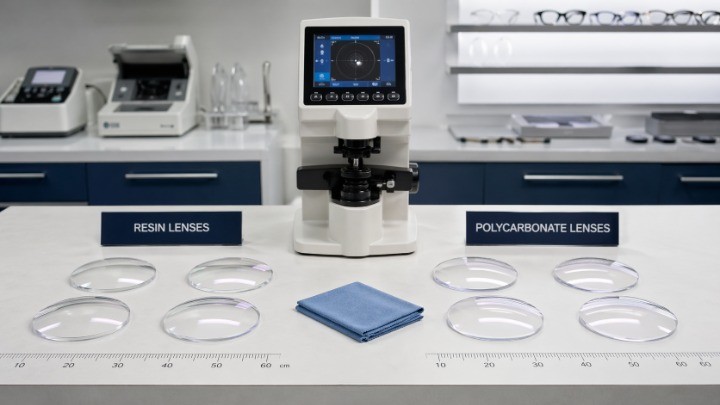
Resin Lens vs Polycarbonate Lens: Quick Answer
A resin lens is usually better for cost-effective daily prescription eyewear, while a polycarbonate lens is usually better for impact resistance, children’s eyewear, sports glasses, and safety-related applications.
The best choice depends on your target market, prescription range, frame type, safety requirements, and price level. Resin lenses and polycarbonate lenses should not be treated as direct replacements in every product line.
Which One Is Better for Daily Eyeglasses?
Resin lenses are often better for daily eyeglasses because they offer good optical clarity, stable production, and competitive cost.
For standard prescription eyewear, especially low to moderate prescriptions, resin lenses can help wholesalers and optical shops control price while maintaining a comfortable visual experience. This makes resin lenses a practical choice for general single vision lenses, reading glasses, and standard optical retail lines.
Which One Is Better for Children, Sports, and Safety Eyewear?
Polycarbonate lenses are usually better for children, sports, and safety eyewear because they provide stronger impact resistance and lighter wearing comfort.
The U.S. FDA explains that impact-resistant lenses help reduce eye injuries from eyeglasses and sunglasses, and relevant lenses generally need to withstand the impact test described in 21 CFR 801.410. This is why impact resistance becomes a serious purchasing factor for safety-focused eyewear. ()
Simple Comparison Summary for Fast Decision-Making
| Factor | Resin Lens | Polycarbonate Lens |
|---|---|---|
| Best use | Daily prescription eyewear | Children, sports, safety eyewear |
| Optical clarity | Very good | Good |
| Impact resistance | Moderate | Strong |
| Weight | Light | Very light |
| Thickness | Standard | Usually thinner than standard resin |
| Scratch resistance | Needs hard coating | Strongly needs hard coating |
| UV protection | Depends on material and coating | Often strong |
| Cost | More cost-effective | Higher cost |
| Product positioning | Standard and value lines | Safety and performance lines |
What Is a Resin Lens?
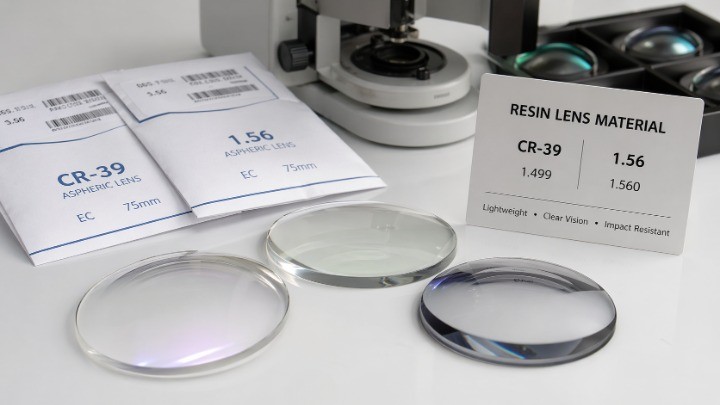 A resin lens is a plastic optical lens made from organic polymer material instead of mineral glass. In many optical markets, the term “resin lens” often refers to standard plastic lenses, CR-39 lenses, or other optical resin materials.
Resin lenses became popular because they are lighter than glass, easier to process, and suitable for a wide range of prescription eyewear. They also support different coating options, including hard coating, HMC, SHMC, UV protection, blue cut coating, and photochromic treatment.
Resin Lens Meaning in the Optical Lens Industry
In the optical lens industry, “resin lens” is a broad term. It may describe CR-39, 1.56 resin, high-index resin, or other plastic optical materials.
This creates confusion in sourcing. A buyer may ask for “resin lenses,” but the factory still needs to confirm the exact refractive index, material type, coating, diameter, power range, and packaging requirements.
Professional buyers should not compare resin lens prices before confirming the exact material and coating structure.
Is a Resin Lens the Same as a Plastic Lens?
A resin lens is a type of plastic lens, but not every plastic lens performs the same way.
In daily market language, many people use “plastic lens” and “resin lens” almost interchangeably. In production and purchasing, this is not accurate enough. A CR-39 lens, 1.56 resin lens, 1.60 high-index lens, and polycarbonate lens all belong to broad plastic lens categories, but their performance can differ greatly.
CR-39 Resin Lenses and Standard Optical Resin Materials
CR-39 is one of the most recognized standard plastic lens materials. It remains common in prescription eyewear because it offers good optical clarity and stable processing.
For buyers, CR-39 is often associated with clear vision, good tinting ability, and cost-effective daily eyewear. However, it does not offer the same impact resistance as polycarbonate. This is why CR-39 works well for many daily-use lenses but may not be the best choice for children’s or safety eyewear.
Common Uses of Resin Lenses in Prescription Eyewear
Resin lenses work well in many standard optical products.
Common uses include:
-
Single vision prescription lenses
-
Reading glasses
-
Standard optical retail lenses
-
Fashion eyewear
-
Tinted prescription lenses
-
Blue cut lenses
-
Photochromic lenses
-
Large-volume wholesale lens programs
For daily prescription eyewear, resin lenses remain one of the most practical material choices. You can connect this section with your internal page for .
What Is a Polycarbonate Lens?
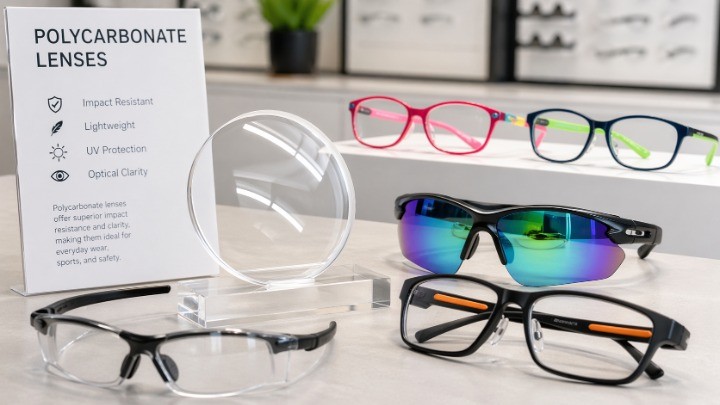 A polycarbonate lens is an optical lens made from PC material, a lightweight plastic known for impact resistance. It is widely used in children’s eyewear, sports glasses, safety eyewear, and lightweight prescription glasses.
Polycarbonate material is also known for toughness and optical transparency. Britannica describes polycarbonate as a tough, transparent synthetic resin used in safety glass and eyeglass lenses because of properties such as impact resistance and optical clarity. ()
Polycarbonate Lens Meaning
A polycarbonate lens uses PC material instead of standard resin materials such as CR-39.
In product descriptions, buyers may see polycarbonate written as PC lens. Many customers choose PC lenses when they need lighter, thinner, and more impact-resistant lenses. However, PC lenses also need strong hard coating because the surface can scratch without proper protection.
Why Polycarbonate Is Used for Impact-Resistant Eyewear
Polycarbonate lenses are widely used for impact-resistant eyewear because the material absorbs impact better than many standard plastic lens materials.
This feature makes PC lenses useful for children’s glasses, sports eyewear, active lifestyle frames, and safety-related applications. However, impact resistance should not become a vague marketing claim. Buyers should confirm the actual testing requirements for their destination market.
Common Applications of PC Lenses
PC lenses often appear in product lines where safety, weight, and durability matter.
Common applications include:
-
Children’s prescription eyewear
-
Sports glasses
-
Safety eyewear
-
School eyewear programs
-
Rimless or semi-rimless frames
-
Lightweight prescription glasses
-
Active lifestyle eyewear
-
Protective sunglasses
Why Polycarbonate Lenses Are Popular for Children and Sports Glasses
Children and sports users expose eyewear to more impact, movement, drops, and daily handling.
Polycarbonate lenses fit these scenarios because they reduce breakage risk and keep the eyewear lighter. However, a polycarbonate lens is impact-resistant, not scratch-proof. A stable hard coating still matters for daily use and after-sales control.
Resin Lens vs Polycarbonate Lens: Key Differences
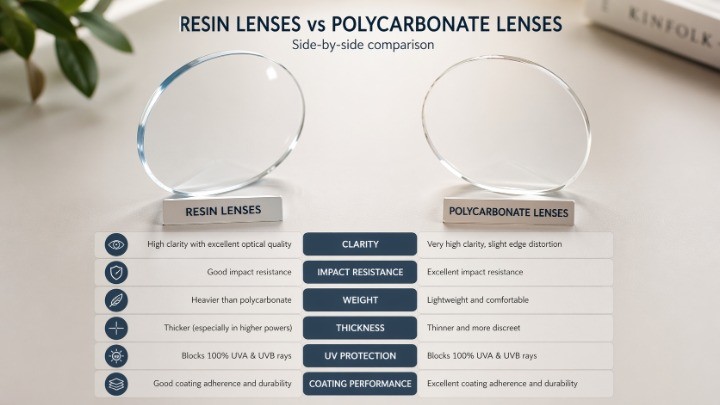 The key differences between resin lenses and polycarbonate lenses include optical clarity, impact resistance, weight, thickness, scratch resistance, UV protection, coating needs, and cost.
A useful comparison should not choose one winner for every situation. Instead, it should match the lens material with the application. Daily eyewear, children’s glasses, sports eyewear, and wholesale stock lenses all need different priorities.
Material Structure and Basic Performance
Resin lenses and polycarbonate lenses both belong to plastic optical lens categories, but they use different material systems.
Standard resin lenses usually focus on optical clarity, easy processing, flexible coating, and cost control. Polycarbonate lenses focus on impact resistance, lightweight performance, and thinner appearance.
Optical Clarity and Visual Comfort
Resin lenses, especially CR-39 lenses, are often valued for clear visual performance in daily eyewear.
Polycarbonate lenses still provide good vision, but some users may notice more chromatic aberration in certain prescriptions or larger lens shapes. This is one reason buyers should not choose PC lenses only because they sound more advanced.
Impact Resistance and Safety
Polycarbonate lenses perform better when impact resistance matters.
The U.S. eCFR states that eyeglasses and sunglasses must be fitted with impact-resistant lenses, with specific exceptions, to help protect the public from eye injury. This makes impact resistance important for suppliers serving regulated or safety-sensitive markets. ()
Weight and Wearing Comfort
Both resin and polycarbonate lenses are lighter than traditional glass lenses.
Polycarbonate lenses are usually very light, so they work well for children, sports frames, and larger lens shapes. A lighter lens can improve comfort and reduce pressure on the nose and ears.
Lens Thickness and Appearance
Polycarbonate lenses usually look thinner than standard CR-39 resin lenses because PC has a higher refractive index.
However, high-index resin lenses may offer even better thinness for stronger prescriptions. So buyers should compare PC lenses with the exact resin index, not with the general word “resin.”
Scratch Resistance and Coating Dependence
Both resin and polycarbonate lenses need coating, but PC lenses depend more heavily on hard coating.
Polycarbonate offers strong impact resistance, but the surface can scratch if the coating is weak. Resin lenses also need good hard coating for daily cleaning, edging, shipping, and handling.
Coating quality often decides whether the final lens feels premium or cheap, regardless of the base material.
UV Protection Performance
Polycarbonate lenses often offer strong UV protection, while standard resin lenses may need additional UV coating or material treatment.
ISO 8980-3 specifies requirements for the transmittance properties of uncut and unmounted finished spectacle lenses, including attenuation of solar radiation. This gives buyers a useful reference when reviewing UV-related lens claims. ()
Cost and Market Positioning
Resin lenses usually offer better cost control for large-volume daily eyewear.
Polycarbonate lenses usually cost more, but they support stronger safety and performance positioning. A distributor may use resin lenses for standard stock and PC lenses for children’s, sports, or safety-focused collections.
Coating Compatibility and Customization Options
Resin lenses usually support many coatings and tints. Polycarbonate lenses can also support coatings, but the factory must control surface preparation and adhesion carefully.
For OEM orders, both materials can support private label packaging, power envelopes, middle boxes, cartons, barcodes, and lens series naming. Still, PC orders often need stricter coating inspection to reduce after-sales risk.
Resin Lens vs Polycarbonate Lens Comparison Table
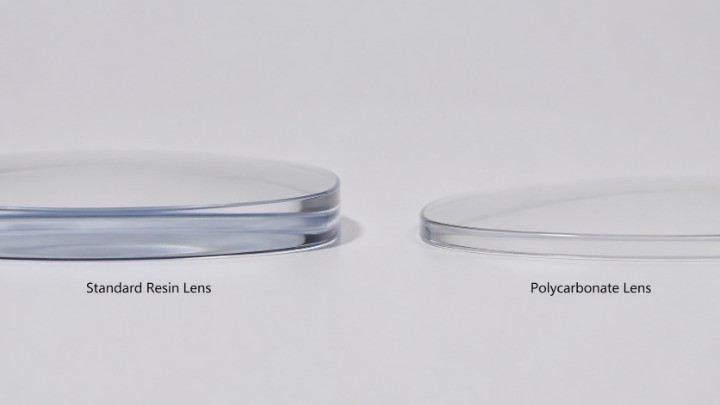 A side-by-side table helps buyers compare resin lenses and polycarbonate lenses quickly before they review technical details.
This table works well for purchasing teams, product managers, and wholesalers because many visitors want a fast answer before reading the full guide.
| Comparison Point | Resin Lens | Polycarbonate Lens |
|---|---|---|
| Common meaning | Standard plastic or CR-39-type resin lens | PC lens made from polycarbonate material |
| Main strength | Optical clarity and cost control | Impact resistance and light weight |
| Optical clarity | Very good | Good |
| Impact resistance | Moderate | Strong |
| Weight | Light | Very light |
| Thickness | Standard, depends on index | Usually thinner than CR-39 |
| Scratch resistance | Needs hard coating | Strongly needs hard coating |
| UV protection | Depends on material and coating | Often strong |
| Tinting | Usually good | More limited than some resin materials |
| Cost | Lower | Higher |
| Best use | Daily eyewear and wholesale stock | Children, sports, safety, active use |
| Buyer focus | Price, clarity, volume | Safety, durability, performance |
Resin Lens Pros and Cons
Resin lenses offer strong value for daily prescription eyewear, but they do not fit every application.
A smart buyer should compare their advantages and limits based on real use. Resin lenses can support a broad optical product line, but children’s, sports, or safety channels may need stronger impact resistance.
Advantages of Resin Lenses
Resin lenses offer several practical benefits for optical businesses.
-
They provide good optical clarity.
-
They support cost-effective large-volume supply.
-
They work well for single vision and many standard prescription lenses.
-
They support tinting, blue cut options, photochromic options, and AR coatings.
-
They help wholesalers build stable standard stock programs.
-
They allow flexible OEM packaging and private label product lines.
For many markets, resin lenses are the best starting point for daily eyewear because they balance price, clarity, and production efficiency.
Disadvantages of Resin Lenses
Resin lenses also have limits.
-
They offer lower impact resistance than polycarbonate lenses.
-
They may look thicker than PC lenses under similar prescriptions.
-
They may need added UV protection depending on material design.
-
They can scratch without stable hard coating.
-
They may not suit high-risk sports or safety eyewear.
These limits do not make resin lenses weak. They simply show that resin lenses should match the right product category.
Polycarbonate Lens Pros and Cons
Polycarbonate lenses are strong, light, and useful for safety-focused eyewear, but they also need careful coating and positioning.
A PC lens can create higher perceived value in the right market. However, it may not be necessary for every daily eyewear product, especially when buyers need a cost-effective standard lens line.
Advantages of Polycarbonate Lenses
Polycarbonate lenses offer clear advantages in active-use applications.
-
They provide strong impact resistance.
-
They reduce weight for better wearing comfort.
-
They usually look thinner than standard resin lenses.
-
They suit children’s eyewear and sports eyewear.
-
They support safety-related product lines.
-
They often provide strong UV protection.
For customers who need durability, polycarbonate lenses justify their higher cost through stronger protection and lighter performance.
Disadvantages of Polycarbonate Lenses
Polycarbonate lenses also have trade-offs.
-
They usually cost more than standard resin lenses.
-
They may create more visual color dispersion than CR-39 in some cases.
-
They need strong hard coating to reduce scratches.
-
They may need tighter coating process control.
-
They may not suit every budget-focused product line.
A good supplier should explain these trade-offs clearly instead of presenting PC as the best option for every customer.
Which Lens Material Is Better for Different Applications?
The better lens material depends on the use case. Resin lenses serve daily vision correction and cost control well, while polycarbonate lenses serve impact-resistant and active-use eyewear better.
This application-based comparison gives buyers a practical decision path. It also helps prevent wrong sourcing choices, such as using low-cost resin lenses for safety-focused products or using expensive PC lenses where the market does not need them.
Daily Prescription Eyeglasses
Resin lenses usually work well for daily prescription eyeglasses.
They offer clear vision, stable production, and a competitive price. For standard single vision orders, resin lenses can help wholesalers and optical shops control cost while keeping a good user experience.
Children’s Eyewear
Polycarbonate lenses usually fit children’s eyewear better.
Children’s glasses face drops, bending, school activity, and rough handling. PC lenses reduce breakage risk and improve safety. However, buyers should require strong scratch-resistant coating because children also clean and handle glasses frequently.
Sports Eyewear
Polycarbonate lenses are usually the stronger choice for sports eyewear.
Sports users need lightweight comfort and impact protection. PC lenses match these needs better than standard resin lenses. If the product also needs sun protection, the buyer should confirm UV and tint performance with test support.
Safety Eyewear
Polycarbonate lenses are often the practical choice for safety eyewear.
OSHA requires appropriate eye or face protection when workers face hazards such as flying particles, molten metal, liquid chemicals, acids, caustic liquids, chemical gases, vapors, or harmful light radiation. This makes impact protection and correct product selection important in occupational environments. ()
Fashion Eyewear
Resin lenses often work well for fashion eyewear because they support tinting, coating colors, and cost-effective supply.
If the frame design is large, rimless, or semi-rimless, PC may offer better weight and impact performance. So fashion eyewear buyers should choose based on frame structure and target retail price.
Sunglasses and Tinted Lenses
Resin lenses can support many tint colors and fashion effects.
Polycarbonate lenses can support sunglasses too, especially when lightweight and impact resistance matter. For UV claims, buyers should ask for transmittance testing rather than relying only on dark color.
Blue Light Protection Lenses
Both resin and polycarbonate lenses can support blue light protection.
The key question is whether the blue light function comes from substrate absorption, coating design, or a combined method. Buyers should also check whether the lens keeps comfortable color perception.
Photochromic Lens Product Lines
Resin lenses are widely used in photochromic product lines, especially for daily prescription eyewear.
Polycarbonate photochromic lenses can serve more active-use markets, but buyers should review activation speed, fading speed, final color, coating compatibility, and batch consistency. You can connect this section with your internal page for .
Wholesale and Large-Volume Lens Supply
Resin lenses often fit large-volume stock programs because they support cost control and broad market coverage.
Polycarbonate lenses work better as a specialized line for children, sports, safety, or lightweight premium positioning. Many wholesalers can use both materials instead of choosing only one.
Resin Lens vs Polycarbonate Lens for Product Planning
For product planning, resin lenses and polycarbonate lenses should play different roles in your assortment.
A strong lens program does not rely on one material. It uses resin lenses for standard demand and polycarbonate lenses for performance-focused categories. This approach helps balance margin, stock depth, market coverage, and after-sales risk.
When Resin Lenses Are Better for Your Product Line
Choose resin lenses when your product line needs clear vision, flexible coating options, and competitive pricing.
They work well for standard optical retail, wholesale lens supply, reading glasses, tinted fashion eyewear, and many single vision orders. Resin lenses also help buyers build large stock programs without pushing costs too high.
When Polycarbonate Lenses Are Worth the Higher Cost
Choose polycarbonate lenses when safety, impact resistance, and lightweight comfort justify the higher cost.
PC lenses are worth considering for children’s eyewear, sports eyewear, safety eyewear, active lifestyle collections, and markets where buyers expect stronger durability.
How to Balance Price, Performance, and Market Positioning
Buyers should not compare material cost alone. They should compare the full product value.
Ask these questions:
-
Does the customer need safety performance?
-
Does the target market accept a higher retail price?
-
Does the lens require special coating or tinting?
-
Will after-sales risk increase if we choose the cheaper material?
-
Can the supplier keep batch quality stable?
The best material is the one that matches the product promise.
How Different Markets May Prefer Different Lens Materials
Different markets buy lenses for different reasons.
Some markets prioritize price and standard prescription availability. Others prioritize children’s safety, sports performance, UV protection, or thin appearance. This is why a factory should offer more than one material solution.
Coating Quality Matters More Than Many Buyers Think
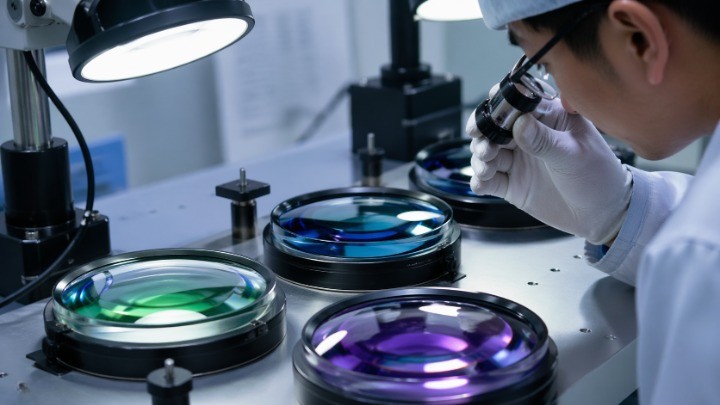 Coating quality can decide the real performance of both resin and polycarbonate lenses.
A good base material cannot solve weak coating. Poor hard coating may cause scratches. Weak AR coating may peel or show unstable reflection color. Poor UV or blue cut control may create product claims that are hard to support.
Why Hard Coating Is Important for Both Materials
Hard coating helps protect the lens surface from scratches during cleaning, use, and handling.
Both resin and PC lenses need hard coating, but PC lenses depend on it more. A polycarbonate lens may offer strong impact resistance, yet still disappoint users if the surface scratches quickly.
AR Coating, HMC, and SHMC Options
AR coating reduces surface reflection and improves visual comfort. HMC and SHMC lens options often create a more premium appearance and better daily-use experience.
For professional supply, coating consistency matters. Buyers should check reflection color, surface cleanliness, adhesion, and batch repeatability.
UV Protection and Blue Cut Coating Considerations
UV and blue cut claims should connect with real optical performance.
ISO 8980-1 specifies requirements and verification methods for optical and geometrical properties of uncut finished single-vision and multifocal spectacle lenses. This type of standard helps buyers understand why lens performance should be measured, not only described in sales language. ()
Why Polycarbonate Lenses Need Strong Coating Control
Polycarbonate lenses need careful surface preparation before coating.
If the coating process is weak, buyers may face scratches, peeling, cleaning marks, or poor cosmetic quality. These problems can create after-sales claims even when the PC base material itself has good impact resistance.
How Coating Quality Affects After-Sales Risk
Coating failure creates visible complaints. Users notice scratches, peeling, glare, color differences, and cleaning problems quickly.
For wholesalers and optical chains, after-sales cost includes replacement, shipping, customer service time, and brand damage. So coating quality should be part of supplier evaluation, not a small technical detail.
Quality Control Points Before Purchasing Resin or Polycarbonate Lenses
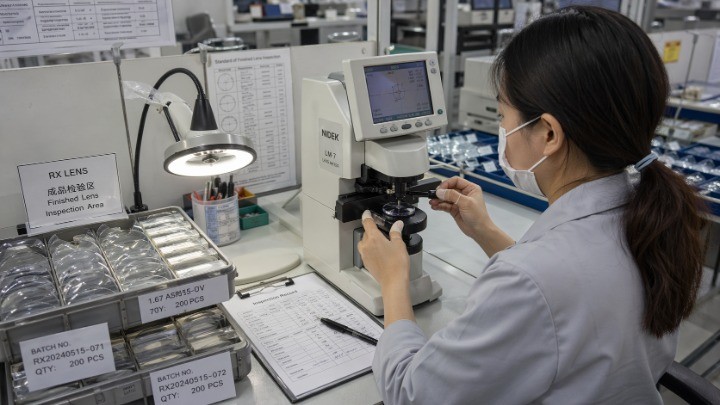 Buyers should inspect power accuracy, surface quality, coating adhesion, scratch resistance, impact requirements, and batch traceability before purchasing resin or polycarbonate lenses.
Quality control matters because optical lenses are precision products. A small defect can affect comfort, appearance, fitting, or customer trust. A reliable manufacturer should explain its inspection process clearly.
Power Accuracy and Optical Inspection
Power accuracy should include sphere, cylinder, axis, add power, and optical center control where relevant.
For prescription lenses, inaccurate power can create discomfort and remake costs. Buyers should ask how the manufacturer checks powers during production and before shipment.
Surface Defect Inspection
Surface inspection should identify scratches, bubbles, coating spots, dust points, pits, and cosmetic defects.
This step matters for both clear lenses and coated lenses. A lens may pass basic power inspection but still fail retail appearance standards.
Coating Adhesion Test
Coating adhesion affects durability and customer satisfaction.
Buyers should ask whether the factory checks coating adhesion, especially for PC lenses and functional coatings. Poor adhesion may cause peeling during edging, cleaning, or normal use.
Scratch Resistance and Durability Testing
Scratch resistance testing helps buyers understand daily-use durability.
No lens should be marketed as impossible to scratch. A more realistic approach explains the coating level, recommended cleaning method, and expected product use.
Impact Resistance Requirements for PC Lenses
Impact resistance matters most for children’s, sports, and safety eyewear.
For U.S.-related eyewear, FDA information states that lenses for spectacles and sunglasses sold in the U.S. must comply with the impact-resistant lens regulation under 21 CFR 801.410, and a certificate should accompany each lot seeking entry into the U.S. ()
Batch Consistency and Traceability
Batch traceability helps solve problems after shipment.
A good manufacturer should manage lot numbers, inspection records, packaging labels, and order details. This helps both sides identify issues faster if a customer reports a coating or power problem.
Other Lens Materials to Consider
Resin and polycarbonate lenses are important, but they are not the only lens materials.
Buyers may also compare high-index lenses, Trivex lenses, and glass lenses when they plan a full product range. These materials serve different prescription levels, comfort needs, safety requirements, and market positions.
High-Index Lenses
High-index lenses help reduce thickness for stronger prescriptions.
They usually cost more than standard resin lenses, but they can improve appearance for high myopia or strong prescription users.
Trivex Lenses
Trivex lenses also offer impact resistance and lightweight performance.
They can serve buyers who want a balance of safety, comfort, and optical quality. However, Trivex may not match polycarbonate in every cost-sensitive market.
Glass Lenses
Glass lenses offer strong optical clarity and scratch resistance, but they are heavier and more fragile than modern plastic lens materials.
For most daily eyewear markets, resin, PC, and high-index plastic materials have replaced glass in many product lines because they offer better comfort and safer handling.
How Resin and Polycarbonate Compare with Other Materials
Resin lenses compete well on clarity and price. Polycarbonate lenses compete well on safety and weight. High-index lenses compete on thinness. Trivex competes on a balance of impact resistance and visual quality.
A complete product strategy may include several materials instead of forcing one material to serve every customer.
How to Choose Between Resin and Polycarbonate Lenses
Choose resin lenses when you need cost-effective daily eyewear. Choose polycarbonate lenses when you need impact resistance, lightweight comfort, and stronger safety positioning.
This decision becomes easier when you match the material with prescription strength, frame type, customer group, retail price, and after-sales expectations.
Choose Resin Lenses If You Need Cost-Effective Daily Eyewear
Resin lenses work well when the product line needs stable quality and accessible pricing.
They fit single vision lenses, reading glasses, standard optical retail, and large-volume wholesale supply. They also support common coatings and private label packaging.
Choose Polycarbonate Lenses If You Need Impact Resistance
Polycarbonate lenses make more sense when safety and durability matter.
They fit children’s eyewear, sports frames, safety-related applications, and active lifestyle products. They also support lightweight product positioning.
Choose Based on Prescription Strength and Frame Type
Frame and prescription affect material choice.
A large frame may need a lighter lens. A rimless frame may need better impact resistance. A stronger prescription may need high-index material instead of standard resin or PC.
Choose Based on Target Customer Group
Different users need different benefits.
Adults who want affordable daily eyewear may prefer resin lenses. Parents may prefer PC lenses for children. Sports users may value durability and weight more than the lowest price.
Choose Based on Your Price Level and Market Position
Your material choice should match your selling price.
If you sell a value line, resin lenses may protect margin. If you sell a performance line, polycarbonate lenses can support a stronger product story. If you sell premium thin lenses, high-index materials may join the comparison.
Questions to Ask Your Optical Lens Manufacturer
Before you place an order, ask your optical lens manufacturer about material, coating, testing, customization, and repeat supply.
Good questions help you avoid unclear quotations and hidden quality risks. They also show whether the factory understands your product line or only wants to sell the lowest price.
What Resin Material Do You Use?
Ask whether the lens uses CR-39, 1.56 resin, high-index resin, or another material.
This question prevents confusion. “Resin lens” can mean different things in different markets.
Can You Provide CR-39, Standard Resin, and PC Lens Options?
A flexible manufacturer should explain the differences between standard resin and PC lens options.
This helps you build a product range instead of making one material carry every application.
What Coating Options Are Available?
Ask about hard coating, HMC, SHMC, blue cut, UV protection, photochromic options, anti-fog coating, and coating colors.
You should also ask which coatings work best with resin lenses and which need extra care on PC lenses.
How Do You Test Scratch Resistance and Coating Adhesion?
A serious supplier should explain how it checks coating durability.
The answer does not need to sound complicated. It needs to show a real process, not only a sales claim.
Can You Support OEM Packaging and Private Label Orders?
Ask about lens envelopes, middle boxes, carton labels, barcodes, product names, and brand artwork.
For wholesale and brand customers, packaging affects product recognition, warehouse control, and repeat order accuracy.
Can You Provide Stable Supply for Repeat Orders?
Ask about production capacity, regular stock, lead time, mixed orders, and batch traceability.
A low first-order price has limited value if the supplier cannot repeat the same quality and delivery schedule.
Final Recommendation: Resin Lens or Polycarbonate Lens?
Resin lenses are better for general daily eyewear, cost-effective wholesale supply, and strong optical clarity. Polycarbonate lenses are better for impact resistance, children’s eyewear, sports glasses, safety eyewear, and lightweight performance.
The best sourcing decision does not depend on one material name. It depends on how the lens will be used, how the product will be positioned, and how well the manufacturer controls coating and quality.
Best Choice for General Daily Eyewear
Choose resin lenses for daily prescription eyewear when clarity, comfort, and price matter most.
This choice works well for standard optical shops, wholesalers, and broad-market lens programs.
Best Choice for Children and Sports Eyewear
Choose polycarbonate lenses for children and sports eyewear.
This choice supports impact resistance and lightweight comfort, which matter more in active-use conditions.
Best Choice for Cost Control
Choose resin lenses when you need a more cost-effective lens program.
They help reduce unit cost while still supporting good performance when the factory uses stable coating and inspection processes.
Best Choice for Safety and Durability
Choose polycarbonate lenses when safety and durability drive the buying decision.
They help reduce breakage risk and support stronger product positioning in safety-related channels.
Best Choice for Long-Term Product Line Planning
Use both materials when your product range serves different markets.
A balanced program may use resin lenses for standard daily eyewear and PC lenses for children, sports, and protective applications.
Work with Vena Optics for Resin and Polycarbonate Lens Supply
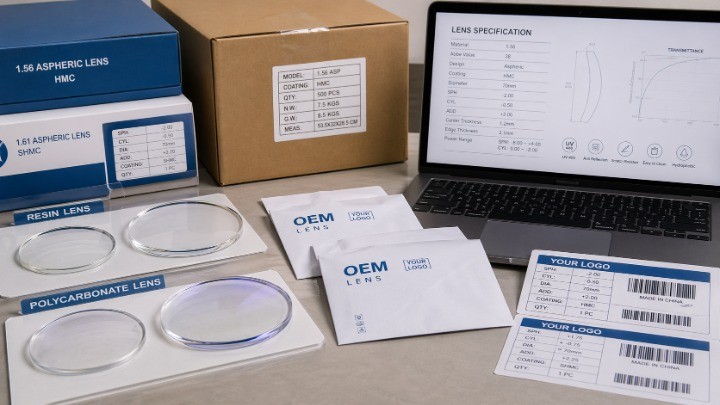 Vena Optics supports stable optical lens manufacturing from Danyang, China, with resin lenses, polycarbonate lenses, photochromic lenses, blue cut lenses, high-index lenses, and customized coating solutions.
We help professional customers build practical lens product lines by combining material selection, coating design, OEM packaging, quality inspection, and supply-chain support. If you need resin lens or polycarbonate lens supply for your market, the right starting point is not only price. It is product fit, stable quality, and repeatable delivery.
Stable Optical Lens Manufacturing from Danyang, China
Danyang has a strong optical lens manufacturing base, and Vena Optics focuses on large-scale supply for professional optical customers.
We support standard and customized orders for customers who need stable quality, cost performance, and long-term cooperation.
Resin, Polycarbonate, Photochromic, Blue Cut, and High-Index Lens Options
You can build standard stock lines with resin lenses, safety-focused lines with PC lenses, outdoor lines with photochromic lenses, and thinner prescription lines with high-index lenses.
OEM/ODM Packaging, Coating Solutions, and Quality Inspection Support
We can support OEM/ODM packaging, private labeling, coating color selection, product series planning, inspection control, and shipment coordination.
This support helps customers reduce supplier complexity and improve product consistency.
Contact Vena Optics for Lens Material Selection and Product Planning
If you are comparing resin lens vs polycarbonate lens for your product range, Vena Optics can help you choose the right material based on application, price level, coating needs, and target market.