


Office work needs the best blue light lenses for office use to balance comfort, clarity, and coating quality.
Many people look for blue light lenses because their eyes feel tired after long hours of emails, spreadsheets, design work, video meetings, or multi-screen tasks. However, blue light filtering alone does not solve every office vision problem.
This guide helps you choose practical office lenses, compare lens types, avoid overclaimed products, and evaluate lens quality from both user comfort and professional sourcing perspectives.

What Are the Best Blue Light Lenses for Office Use?
The best blue light lenses for office use are clear blue cut lenses with quality anti-reflective coating, accurate prescription support, low color distortion, and stable surface durability. This combination gives office users a better balance between screen comfort, natural vision, and daily wearability.
The best choice for most office users is not the darkest lens. A clear or lightly tinted blue light lens usually works better during daytime work because it keeps screens, documents, and colors closer to normal.
The best choice for most office users
Most office users should choose clear blue light lenses with AR coating. These lenses look professional, keep the screen clear, and reduce the risk of yellow color shift.
They also fit common office tasks better than strong amber lenses. People can use them for emails, documents, video calls, spreadsheets, and general computer work without feeling like the lens changes everything they see.
Why blue light filtering alone is not enough
Blue light filtering only solves one part of the problem. Office discomfort can also come from glare, dry eyes, outdated prescriptions, screen distance, poor lighting, and long near-focus work.
The American Academy of Ophthalmology explains in its guide to that long screen use can cause temporary discomfort, but digital devices do not permanently damage the eyes. This supports a more balanced view of office lenses: blue light control can help product positioning, but comfort also depends on user habits, lighting, and lens design.
The ideal office lens combination
A strong office lens should combine several features:
| Lens Feature | Why It Matters for Office Use |
|---|---|
| Blue light filtering | Helps manage selected blue-violet light |
| Anti-reflective coating | Reduces glare from screens and office lighting |
| Accurate prescription | Supports clear vision during long work hours |
| Low color distortion | Keeps documents, screens, and charts natural |
| Scratch resistance | Protects lenses during daily handling |
| Easy-clean coating | Makes fingerprints and dust easier to remove |
The best office lens is not just a blue light lens. It is a complete computer lens solution.
What Are Blue Light Lenses for Office Use?
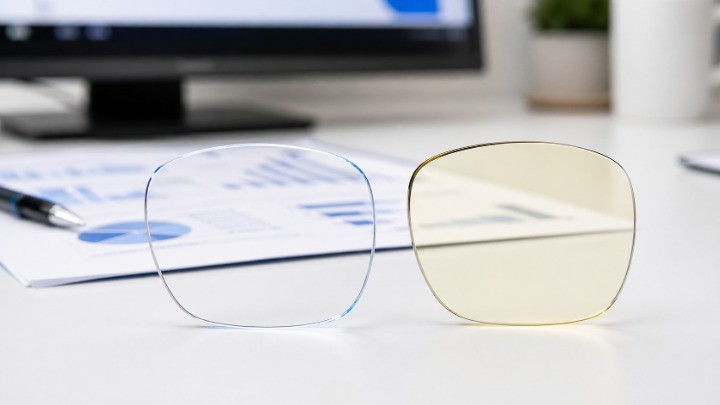 Blue light lenses for office use are optical lenses that filter part of the blue-violet light range while keeping vision clear for computer, laptop, tablet, and indoor work environments. They can be made as non-prescription lenses, prescription lenses, progressive lenses, high-index lenses, or customized office eyewear.
Blue light exists in visible light. Sunlight, digital screens, LED lamps, and many indoor light sources all include blue light. Office lenses do not need to block all blue light. In fact, complete blocking would make daytime vision less natural.
How blue light lenses filter part of the blue-violet light range
Blue light lenses usually reduce selected wavelengths in the blue-violet range. The exact performance depends on lens material, coating design, and filtering technology.
For professional buyers, this means you should not judge the lens only by a simple demo card. You should review lens clarity, visible light transmission, color balance, and coating quality together.
Clear blue cut lenses vs tinted blue blocking lenses
Clear blue cut lenses look almost like normal clear lenses. They suit daytime office work because they keep the wearer’s appearance natural and reduce strong color shift.
Tinted blue blocking lenses often look yellow, amber, or orange. They may suit evening screen use better, but they can feel too strong for regular office tasks.
| Lens Type | Best Use | Main Concern |
|---|---|---|
| Clear blue cut lenses | Daytime office work | Needs good coating quality |
| Light yellow lenses | Mixed screen use | May slightly change color |
| Amber lenses | Evening screen use | Less suitable for color-sensitive work |
| Orange lenses | Strong nighttime filtering | Not ideal for professional office use |
Why office lenses should balance protection, clarity, and color accuracy
Office users need comfortable lenses, but they also need natural vision. A designer, sales manager, accountant, or purchasing team member cannot work comfortably if the lens makes everything look too yellow.
A good office blue light lens should reduce selected light without making the workplace look unnatural.
Do Blue Light Lenses Really Help with Office Eye Strain?
Blue light lenses may support comfort for some office users, but current evidence does not prove that blue light filtering alone reliably reduces digital eye strain. Office eye strain often comes from dry eyes, reduced blinking, glare, poor screen setup, and incorrect prescription.
A 2023 found that blue-light filtering spectacle lenses may not reduce short-term eyestrain associated with computer work compared with non-blue-light filtering lenses. This makes honest product positioning very important.
What current research says about blue light and digital eye strain
Research does not strongly support the idea that blue light lenses alone solve computer eye strain. This does not make the product useless. It means users and buyers should set realistic expectations.
Blue light lenses can still serve a useful role in modern office eyewear when they come with good AR coating, correct prescription, and clear product positioning.
Why screen discomfort is often linked to blinking, glare, dry eyes, and fixed-distance focus
People blink less when they stare at screens. Long screen sessions can also keep the eyes focused at one distance for too long. Office lights may reflect from screens, lenses, or glossy surfaces.
The National Eye Institute notes that can be connected, especially when people spend a lot of time looking at a computer, tablet, or smartphone. This is why blue light lenses should sit inside a wider office comfort plan.
Where blue light lenses may still support visual comfort
Blue light lenses may help some users feel more comfortable during long screen work. They may also help eyewear brands and optical stores build a clear office eyewear category.
However, businesses should sell them as part of a complete office comfort solution, not as a guaranteed medical treatment.
Why honest product claims build more trust
Professional buyers should avoid exaggerated claims such as “prevents all eye strain” or “fully protects the eyes from screens.” These statements create unrealistic expectations.
A stronger message is simpler: blue light lenses can support screen comfort when paired with correct prescription, good AR coating, and healthy screen habits.
Blue Light Lenses vs Anti-Glare Lenses: What Is the Difference?
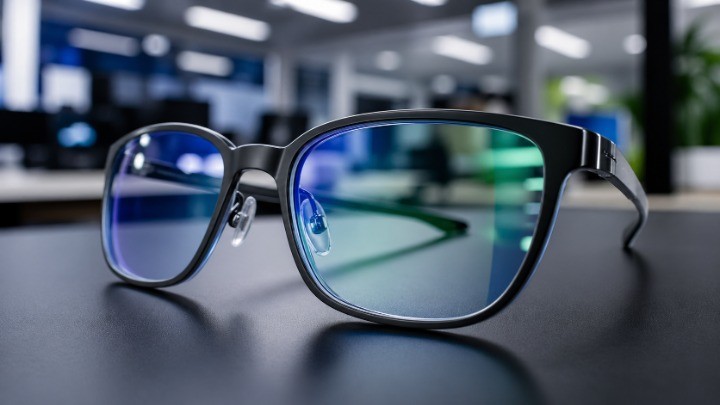 Blue light lenses filter selected wavelengths, while anti-glare lenses reduce reflections from screens, lamps, and office lighting. These two features solve different problems, and office users often need both.
Many customers mix these terms together. They may ask for “blue light glasses” when they actually need better anti-reflective coating. This is why optical stores and suppliers should explain the difference clearly.
Blue light filtering controls selected wavelengths
Blue light filtering changes how part of the visible light spectrum passes through the lens. The design can come from lens material, coating, or a combination of both.
This function mainly relates to light filtering, not surface reflection.
Anti-glare coating reduces reflections from screens and office lighting
Anti-glare coating, also called anti-reflective coating or AR coating, reduces reflection on the lens surface. It can make lenses look clearer and improve visual comfort under office lights.
A lens can filter blue light but still feel uncomfortable if the AR coating performs poorly.
Why office users often need both functions together
Office users face screens, ceiling lamps, desk lamps, windows, and reflective surfaces. Blue light filtering alone does not remove these reflections.
For daily office eyewear, blue light filtering plus AR coating usually works better than blue light filtering alone.
How poor AR coating can cause halos, reflections, and visual discomfort
Poor AR coating can create visible halos, surface glare, or uneven reflection color. These problems can make a lens feel cheap, even if the blue light filtering claim sounds strong.
For wholesale buyers, AR quality also affects product appearance. A stable green, blue, or light residual reflection can make the product look more consistent across batches.
Who Should Consider Blue Light Lenses for Office Use?
Blue light lenses suit office users who spend long hours on screens and want a lens option that combines clear vision, comfort, and daily wearability. They work best when users also need glare control, prescription correction, or a more complete office eyewear solution.
The American Optometric Association describes as a group of eye and vision-related problems linked to prolonged computer, tablet, e-reader, and phone use. This supports a broader office eyewear recommendation that includes prescription, lighting, breaks, glare reduction, and lens design.
Office workers who spend long hours on screens
Office employees who spend most of the day on computers may prefer blue light lenses because the product directly addresses their screen-heavy lifestyle.
These users often care about comfort, appearance, and lens cleanliness. They want lenses they can wear all day without feeling like the color of their work changes.
Prescription wearers who need daily computer comfort
Prescription wearers should solve vision correction first. If the prescription is wrong, the user may still feel tired, even with blue light filtering.
For these users, prescription blue light lenses can make more sense than non-prescription computer glasses.
People working under LED or fluorescent office lighting
LED and fluorescent lighting can create glare and reflections in some offices. In this case, the user may need AR coating as much as blue light filtering.
This is why a good office lens should handle both screen work and indoor lighting.
Users who may need anti-glare or occupational lenses instead
Some users may need anti-glare lenses, office progressive lenses, or occupational lenses instead of standard blue light glasses.
For example, a person over 40 who struggles with near and intermediate distances may benefit more from a progressive or office lens design than from a simple non-prescription blue light lens.
Best Types of Blue Light Lenses for Office Use
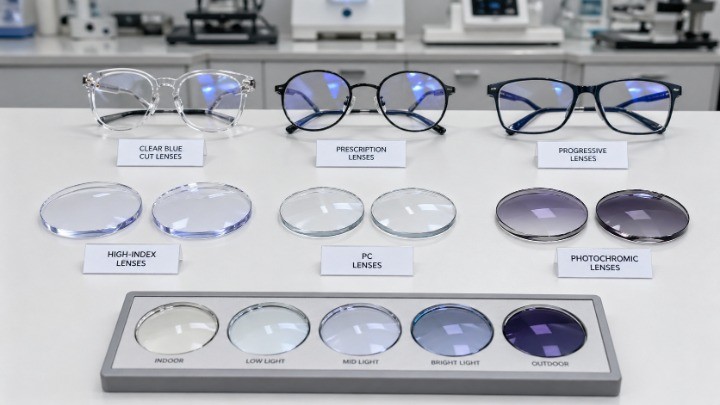 The best type of blue light lens depends on the user’s age, prescription, working distance, screen habits, and product expectation. Clear blue cut lenses fit most office users, while progressive, high-index, photochromic, and PC options serve more specific needs.
A strong product line should include more than one lens type. This helps optical stores and wholesalers serve different customer groups.
Clear blue light lenses for daytime office work
Clear blue light lenses work well for most daytime office tasks. They look natural, reduce concern about yellow tint, and fit a professional work environment.
They also give optical stores an easy product to explain and sell.
Prescription blue light lenses for everyday computer users
Prescription blue light lenses combine vision correction with blue light filtering. They suit users who already wear glasses for distance, reading, or computer work.
For these users, accurate power matters more than any blue light claim.
Progressive blue light lenses for office workers over 40
Progressive blue light lenses support users who need distance, intermediate, and near vision. They can help office workers who switch between screens, documents, meetings, and walking around.
The lens design, corridor, fitting height, and adaptation support all matter in this category.
High-index blue cut lenses for stronger prescriptions
High-index blue cut lenses help users with stronger prescriptions reduce lens thickness. 1.60 and 1.67 lenses often support a more premium product position.
For procurement teams, high-index blue cut lenses can expand the product line beyond basic 1.56 options.
Photochromic blue light lenses for indoor and outdoor movement
Photochromic blue light lenses suit users who move between indoor offices and outdoor light. They provide convenience for people who do not want to switch glasses often.
Buyers should check darkening speed, fading performance, final color, and coating stability.
PC blue light lenses for lightweight and impact-resistant eyewear
PC blue light lenses work well for lightweight frames, safety-style eyewear, children’s eyewear, or selected active-use products. Polycarbonate also offers strong impact resistance.
For the U.S. market, professional buyers should also consider . FDA guidance explains that lenses generally must withstand the impact test described in 21 CFR 801.410, and this point matters when sourcing PC lenses or safety-style eyewear.
Amber or yellow-tinted lenses for evening screen use
Amber or yellow-tinted lenses can reduce more visible blue light, but they may not suit daytime office work. They can change screen color and may look less professional in meetings.
These lenses fit evening screen use better than standard office environments.
How to Choose Blue Light Lenses for Different Office Scenarios
 You should choose blue light lenses based on the user’s daily tasks, screen time, color needs, prescription, and lighting environment. A designer, programmer, remote worker, and optical store customer may need different lens solutions.
This scenario-based approach helps buyers avoid one-size-fits-all recommendations.
General office work: emails, documents, and video meetings
General office users need clear, comfortable lenses. Clear blue cut lenses with AR coating usually fit this group well.
They should keep text sharp, reduce visible reflections, and maintain a natural appearance during meetings.
Programmers and financial workers: long screen hours and dual monitors
Programmers, analysts, and finance teams often use screens for long, focused sessions. They may also work with small text, charts, dashboards, and multiple monitors.
These users usually need strong clarity, stable AR coating, and accurate prescription support.
Designers and photographers: color accuracy matters more
Designers, photographers, and product teams should avoid strong tinted lenses during color-sensitive work. A yellow or amber lens can affect how they judge images, materials, and color samples.
Clear blue cut lenses with low color distortion usually fit these users better.
Remote workers: mixed lighting, laptop use, and home office glare
Remote workers often switch between natural window light, warm room lamps, phone screens, and laptop displays. Their lighting environment changes more often than a standard office.
They may benefit from blue light lenses with strong AR coating and UV protection, especially if they work near windows.
Optical shops and eyewear brands: matching lens type to customer groups
Optical shops and eyewear brands should segment blue light lens products by user type. This helps sales teams make clearer recommendations.
| Office Scenario | Recommended Lens Direction |
|---|---|
| General office work | Clear blue cut lenses with AR coating |
| Long screen hours | Prescription blue light lenses with premium AR |
| Over-40 office users | Progressive blue light lenses |
| Strong prescription users | 1.60 or 1.67 high-index blue cut lenses |
| Indoor-outdoor workers | Photochromic blue light lenses |
| Color-sensitive work | Low color distortion clear blue cut lenses |
Key Features That Matter in Office Blue Light Lenses
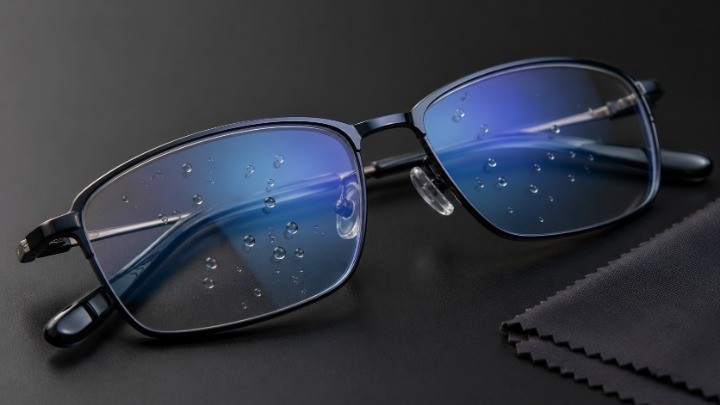 The most important features in office blue light lenses are low color distortion, high clarity, reliable AR coating, scratch resistance, UV protection, comfortable material, and stable batch quality. These details affect real office use more than a single blocking percentage.
A lens may look good in a simple sales test, but users judge it during long workdays. They notice glare, fingerprints, reflections, color shift, and cleaning problems.
Low color distortion for professional work
Low color distortion matters because office users read documents, compare charts, review product photos, and attend video meetings.
A lens that makes everything look too warm may create complaints, especially from users who care about color accuracy.
High lens clarity and stable transmittance
Office lenses should keep text sharp and screens clear. Transmittance matters because it affects how much light passes through the lens and how natural the wearer’s vision feels.
ISO 8980-3 covers for uncut and unmounted finished spectacle lenses, including attenuation of solar radiation. This standard gives professional buyers a more technical way to review UV protection, visible light transmission, and functional lens claims.
Quality anti-reflective coating
AR coating helps reduce surface reflections. In office use, it can make lenses look clearer and feel more comfortable under screens and ceiling lights.
Poor AR coating may make a blue light lens feel worse than a normal clear lens.
Scratch resistance and easy-clean coating
Office users clean their lenses often. They touch frames, move between meetings, and wipe lenses during the day.
Scratch resistance and easy-clean coating improve daily user experience and reduce complaints after purchase.
UV protection for office users near windows
Some office users work close to windows or move between indoor and outdoor spaces. UV protection can add practical value, especially for daily eyewear.
Buyers should ask suppliers to support UV claims with real specifications instead of vague promises.
Comfortable lens material and index selection
Lens material affects weight, thickness, and comfort. 1.56 works well for mainstream demand. 1.60 and 1.67 support thinner lens options. PC can support lightweight and impact-resistant eyewear.
A broader index range helps businesses serve more customers.
Stable coating color for repeat orders
For wholesalers and eyewear brands, coating color consistency matters. A customer expects the same product appearance when they reorder.
If coating reflection changes too much between batches, the product line becomes harder to manage.
What Matters Beyond Blue Light Blocking Percentage
Blue light blocking percentage is only one part of lens quality. Office users also need clear vision, low reflection, natural color, durable coating, and accurate prescription support. A high blocking claim cannot make up for poor real-world comfort.
Many low-quality products focus too much on filtering numbers. They may use strong tint to create a visible effect, but that does not always fit office use.
Filter percentage is not the only quality standard
A higher filtering percentage may sound better, but it may also create more color shift. Office users often prefer a balanced lens because they wear it for long hours.
Professional buyers should review the full lens experience, not only one number.
Strong yellow tint can reduce office usability
Strong yellow or amber tint can make a lens look less professional. It can also change the color of documents, charts, and screen images.
For daytime work, clear blue cut lenses usually create a smoother user experience.
Poor coating can create more glare than it solves
A blue light lens with weak AR coating may reflect too much office lighting. Users may see halos, ghost images, or bright reflections.
This is why coating quality must stay at the center of lens evaluation.
Batch consistency matters for optical stores and wholesalers
A sample may look good, but a bulk order must stay consistent across powers, cartons, and repeat shipments.
Wholesalers should check reflection color, tint level, surface quality, and packaging accuracy across multiple samples.
Lens appearance, reflection color, and packaging affect retail confidence
Retail teams sell what they can explain and display with confidence. A clean lens appearance, stable coating reflection, and clear packaging make the product easier to present.
A good blue light lens line should feel reliable before, during, and after the sale.
Buying Guide for Optical Stores, Wholesalers, and Eyewear Brands
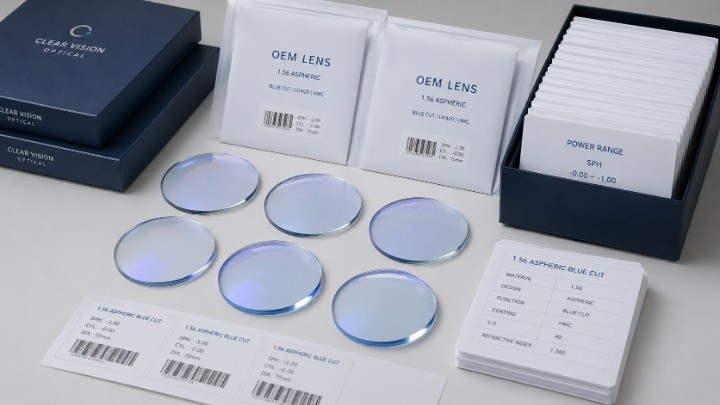 Optical stores, wholesalers, and eyewear brands should evaluate blue light lenses by lens specification, coating quality, index range, sample testing, packaging support, and supplier stability. This approach reduces quality risk before bulk orders.
A professional buyer should treat blue light lenses as a product system, not only as a single item.
How to evaluate blue cut lens specifications
Start with the basics: lens index, material, coating type, power range, diameter, UV protection, blue light filtering design, and packaging format.
A reliable supplier should explain these details clearly. If the supplier only gives general marketing words, the buyer should ask for more information.
Which lens indexes should be included in a blue light product line
A practical blue light lens line usually includes several index options.
| Lens Index | Common Business Use |
|---|---|
| 1.56 blue cut lenses | Mainstream and cost-effective market |
| 1.60 blue cut lenses | Mid-range thinner option |
| 1.67 blue cut lenses | Stronger prescription and premium positioning |
| PC blue cut lenses | Lightweight and impact-resistant eyewear |
| Photochromic blue cut lenses | Indoor-outdoor product line |
A wider index range helps wholesalers serve more price levels and prescription needs.
How to choose between finished and semi-finished blue light lenses
Finished blue light lenses work well for stock programs, fast-moving powers, and wholesale distribution.
Semi-finished blue light lenses suit Rx labs and customized processing. They give labs more flexibility for different prescriptions and fitting needs.
What to check before placing a bulk order
Before bulk ordering, buyers should test samples under real office conditions. They should check screen clarity, lens tint, reflection color, coating appearance, and cleaning performance.
They should also confirm package labels, power markings, SKU rules, and carton organization.
Why sample testing should include coating, color, power range, and packaging
A sample test should not only check whether the lens blocks blue light. It should also show whether the lens can become a stable commercial product.
Good sample testing reduces the risk of returns, customer complaints, and reorder problems.
How OEM and private-label packaging support local market positioning
OEM packaging helps businesses build their own product identity. Lens envelopes, middle boxes, barcode labels, stickers, and local language inserts can turn standard lenses into a stronger product line.
Vena Optics supports for professional customers who need private-label packaging, coating customization, and stable bulk supply.
Common Mistakes When Choosing Blue Light Lenses
The most common mistake is choosing blue light lenses only by blocking percentage while ignoring AR coating, prescription accuracy, color balance, sample testing, and supply stability. This mistake can create problems after the first order.
Buyers should ask one practical question: will this lens feel clear, comfortable, and consistent in real office use?
Choosing only by blue light blocking percentage
A blocking percentage may help with comparison, but it does not tell the full story. It does not show coating quality, surface durability, or user comfort.
Buyers should treat the percentage as one data point, not the final decision.
Ignoring anti-reflective coating quality
AR coating can strongly affect office comfort. A lens with poor AR coating may create reflections under office lights.
This problem can make customers think the whole lens is low quality.
Overpromising eye strain relief
Blue light lenses should not be marketed as a guaranteed cure for computer eye strain. Evidence does not support that kind of claim.
A more accurate promise builds more trust: blue light lenses can support office comfort as part of a complete eyewear solution.
Choosing lenses with too much tint for daytime office use
Strong tint may look effective, but it can reduce office usability. Users may dislike the lens appearance or the way it changes screen colors.
Clear blue cut lenses usually fit daytime office work better.
Ignoring prescription accuracy
Prescription accuracy matters more than blue light filtering for users who need vision correction. A wrong prescription can create fatigue, headaches, or poor screen comfort.
Optical businesses should keep prescription quality at the center of office eyewear.
Not testing samples before wholesale orders
Skipping sample testing creates unnecessary risk. Buyers may discover coating, tint, or packaging problems only after shipment.
A small sample review can prevent a large after-sales problem.
Overlooking long-term supply stability
A good first order does not guarantee long-term consistency. Buyers should check whether the supplier can keep the same coating quality, lens appearance, and packaging format across repeat orders.
Stable supply matters more than a one-time low price.
How to Test Whether Blue Light Lenses Are Suitable for Office Use
You can test office blue light lenses by checking screen clarity, glare control, color comfort, coating durability, cleaning performance, packaging accuracy, and batch consistency. A practical test should copy real office conditions.
A showroom test is not enough. Office users judge lenses after long screen sessions, not only after a few seconds.
Test clarity, glare control, and reflection color under office lighting
Check the lens with a laptop, white document, spreadsheet, and video call screen. The lens should keep text clear and screen colors natural.
Then look at the lens under LED and fluorescent lighting. The reflection should look clean and stable.
Check comfort during long screen and document reading
A lens may feel fine for five minutes but uncomfortable after two hours. Test the lens during longer reading, typing, and screen-switching tasks.
This helps buyers understand real user comfort.
Evaluate coating durability and cleaning performance
Clean the lens several times with a microfiber cloth. Check whether fingerprints come off easily and whether the surface smears.
Easy-clean coating improves daily user satisfaction.
Confirm packaging labels and SKU accuracy for bulk orders
For wholesale orders, packaging accuracy matters. A wrong power label, unclear barcode, or mixed SKU can create serious warehouse and retail problems.
Bulk buyers should check carton labels, envelopes, power markings, and product descriptions before shipment.
| Test Item | What to Check |
|---|---|
| Screen clarity | Sharp text and comfortable contrast |
| Color comfort | Natural white and low yellow shift |
| Reflection | Low glare under office lights |
| Coating surface | Smooth and even appearance |
| Cleaning | Easy fingerprint removal |
| Packaging | Correct power and product labels |
| Batch consistency | Similar color and coating across samples |
Recommended Blue Light Lens Solution for Office Use
For most office users, the best solution is a clear blue cut lens with high-quality AR coating, accurate prescription support, and low color distortion. This solution gives the best balance between comfort, appearance, and daily usability.
For optical businesses, the best solution may include several lens categories rather than one product.
Best everyday choice: clear blue cut lenses with AR coating
This is the most practical option for everyday office work. It works for emails, documents, meetings, and general screen use.
It also avoids the strong yellow appearance that many office users dislike.
Best for prescription users: customized prescription blue light lenses
Prescription users need accurate power first. Once the prescription is correct, blue light filtering and AR coating can add value.
This product fits daily eyewear programs well.
Best for mature office users: progressive blue light lenses
Office workers over 40 may need help with near and intermediate distances. Progressive blue light lenses can support screens, documents, meetings, and walking.
However, fitting accuracy and design quality matter.
Best for premium products: high-index blue cut lenses with SHMC coating
High-index blue cut lenses support stronger prescriptions and thinner lens appearance. SHMC coating can improve clarity, cleaning, and product value.
This option fits premium optical stores and higher-end eyewear brands.
Best for optical businesses: stable blue cut lens supply with OEM support
Businesses need more than good samples. They need stable coating, repeatable production, packaging support, and clear communication.
| Business Need | Recommended Solution |
|---|---|
| Mainstream office eyewear | 1.56 clear blue cut lenses |
| Premium office eyewear | 1.60 or 1.67 blue cut lenses |
| Presbyopia users | Progressive blue light lenses |
| Indoor-outdoor use | Photochromic blue light lenses |
| Private-label programs | OEM packaging and custom coating |
| Wholesale supply | Stable batch quality and stock planning |
Why Work with a Professional Blue Light Lens Manufacturer?
 A professional blue light lens manufacturer helps customers control quality, coating consistency, packaging, customization, and long-term supply. This matters because office lens products need stable performance across many orders.
A manufacturer should not only provide lenses. It should help buyers build a product line that customers can understand, trust, and reorder.
Stable production capacity for repeat orders
Large-scale production supports better cost control and supply planning. However, scale only helps when the factory also controls quality.
Professional buyers should ask whether the supplier can keep lead times stable during repeat orders and peak seasons.
Consistent coating and reflection color control
Coating consistency affects product appearance. If the reflection color changes from batch to batch, retailers may lose confidence.
A good manufacturer controls coating process, inspection, and batch standards.
Flexible lens index and power range options
Different markets need different lens indexes and power ranges. A strong supplier can support mainstream and premium options.
This helps buyers build a more complete office lens product line.
OEM/ODM packaging for private-label products
OEM/ODM support helps customers build brand identity. Custom envelopes, boxes, labels, and product names make the lens line easier to sell.
This is especially useful for wholesalers, regional agents, and eyewear brands.
Quality inspection before shipment
A professional manufacturer checks lenses before shipment. Inspection should include power, coating, surface appearance, packaging, and label accuracy.
This reduces problems after goods arrive.
Supply chain support for wholesalers, brands, and optical channels
Vena Optics works as a professional optical lens manufacturer based in Danyang, China. We support single vision, progressive, bifocal, photochromic, blue light protection, high-index, and PC lenses.
We also support coating customization, quality inspection, OEM/ODM packaging, and long-term supply collaboration for professional optical customers.
FAQs About Blue Light Lenses for Office Use
Are blue light lenses good for office work?
Blue light lenses can be good for office work when they combine clear vision, AR coating, and comfortable lens design. They should not be sold as the only solution for digital eye strain.
Office users should also manage screen brightness, blinking, breaks, lighting, and prescription accuracy.
Are clear blue light lenses better than yellow lenses?
Clear blue light lenses usually work better for daytime office use because they keep colors more natural and look more professional. Yellow or amber lenses may suit evening screen use, but they can affect color perception.
For optical stores, clear blue cut lenses often fit a wider customer base.
Do blue light lenses help with computer eye strain?
Blue light lenses may help some users feel more comfortable, but evidence does not prove that they alone reduce computer eye strain. Screen habits, blinking, glare, lighting, and prescription issues also matter.
This is why a complete office eyewear solution works better than a single-function lens.
What is the difference between blue light lenses and anti-glare lenses?
Blue light lenses filter selected wavelengths. Anti-glare lenses reduce lens surface reflections. These functions are different, but office users often benefit from both.
A lens with blue light filtering and quality AR coating usually gives a more complete office experience.
Can blue light lenses be made with prescription?
Yes, blue light lenses can be made with prescription powers, including single vision, progressive, high-index, and selected specialty designs. Prescription blue light lenses often work better for daily wearers than non-prescription computer glasses.
For wholesale customers, prescription compatibility expands the product’s market value.
A high-quality anti-reflective coating with scratch resistance and easy-clean performance is usually the best coating direction for office computer lenses. SHMC or premium AR coating can improve clarity, appearance, and cleaning.
For wholesale customers, coating consistency across repeat orders matters as much as the coating name.
Final Recommendation: How to Choose the Best Blue Light Lenses for Office Use
Choose the best blue light lenses for office use based on real working needs, not only marketing claims. A practical office lens should offer clear blue light filtering, good AR coating, accurate prescription support, low color distortion, and durable surface performance.
For professional customers, the manufacturer behind the lens matters as much as the lens itself. Stable coating quality, consistent batches, OEM packaging, product range, and reliable supply help optical stores, wholesalers, and eyewear brands build office lens programs that customers can trust.
Build a Reliable Office Lens Product Line with Vena Optics
Vena Optics supports professional customers with clear blue cut lenses, prescription blue light lenses, progressive designs, high-index options, PC lenses, photochromic solutions, coating customization, and OEM/ODM packaging. We focus on stable production, quality inspection, and repeatable supply for long-term optical business needs.