


Aspherical vs spherical lenses is a lens design comparison that affects lens thickness, visual comfort, appearance, and product positioning.
Many people compare these two lens types only by price. That approach can lead to the wrong choice, especially when the prescription is strong, the frame is large, or the product line needs a more refined look. Lens design changes how the finished eyewear feels, looks, and performs.
This guide explains the difference in practical terms. You will learn how spherical and aspherical lenses work, when each option makes sense, and what professional optical teams should check before adding them to a lens program.
 What Are Spherical Lenses?
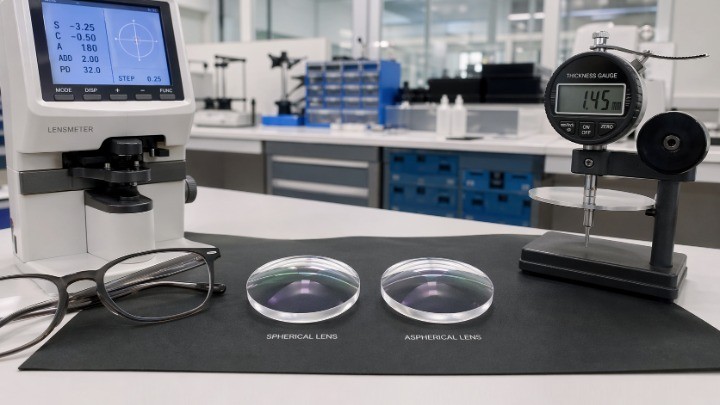
Spherical lenses are lenses with a surface curve based on part of a sphere. Their curvature stays more consistent across the lens surface, which makes them simple, reliable, and widely used in standard prescription eyewear.
In everyday optical products, spherical lenses remain common because they offer a strong balance between cost, production stability, and basic visual correction. They work well for many low to moderate prescriptions, especially when the customer does not need a very flat or thin lens profile.
Eyeglass lenses correct refractive errors by bending light so it focuses properly on the retina. The , including how lenses help light focus correctly on the retina.
 Basic Definition of Spherical Lenses
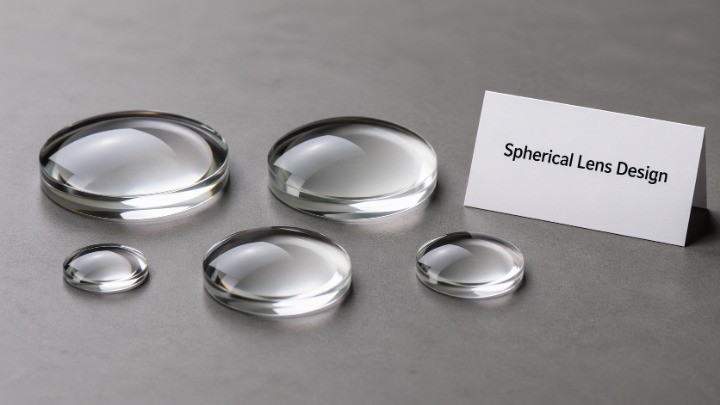
A spherical lens uses a simple curved surface. The surface follows a sphere-like shape, which means the curvature is easier to calculate, produce, and inspect.
This design works for many common prescriptions. It also supports large-volume production because the manufacturing process is more straightforward than complex freeform or aspherical designs.
For many standard single-vision products, spherical lenses give optical channels a dependable entry-level or mid-range option.
How Spherical Lens Curvature Works
A spherical lens bends light through a regular curved surface. This design can correct myopia, hyperopia, and other common refractive errors when the prescription and fitting are correct.
However, a spherical surface does not control peripheral light in the same way as an aspherical surface. In stronger powers, the lens may look thicker or create more noticeable edge distortion.
This issue does not make spherical lenses “bad.” It simply means the design has natural limits.
Why Spherical Lenses Are Still Widely Used
Spherical lenses are still widely used because they are practical. They offer predictable production, affordable pricing, and broad availability.
Many optical chains, wholesalers, and regional distributors still need a stable standard lens line. Spherical lenses fit this role well because they can support:
• Standard prescription programs • Price-sensitive product lines • High-volume wholesale supply • Basic stock lens categories • Markets where affordability is a priority
Spherical lenses remain a smart choice when the prescription is moderate, the frame size is reasonable, and the customer values cost control.
Common Applications of Spherical Lenses
Spherical lenses are common in single-vision stock lenses, standard reading lenses, basic prescription eyewear, and entry-level optical packages.
They also work well in lens programs where the priority is broad availability instead of premium thinness. For example, a wholesale program may use spherical lenses for standard prescriptions and reserve aspherical designs for upgraded packages.
This product structure helps optical companies serve different price levels without confusing the customer.
What Are Aspherical Lenses?
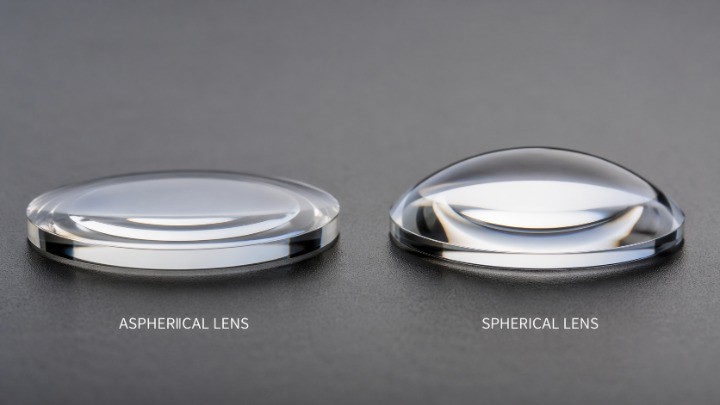 Aspherical lenses are lenses with a surface that does not follow a simple sphere. Their curvature changes from the center toward the edge, which helps improve appearance, reduce distortion, and create a flatter lens profile.
Aspherical lenses are often used when the final lens needs to look thinner, feel lighter, or provide a more premium wearing experience. They are especially useful for stronger prescriptions and modern frame styles.
In optical design, aspheric surfaces can reduce spherical aberration and improve image quality because they control how light rays focus through the lens surface. and why aspheric surfaces can offer stronger optical control than simple spherical surfaces.
Basic Definition of Aspherical Lenses
An aspherical lens has a more complex surface than a traditional spherical lens. Its curve changes gradually across the surface instead of keeping one simple spherical form.
This design gives optical engineers more control over lens shape and performance. In prescription eyewear, that control can improve the cosmetic result and reduce unwanted distortion.
The final result often looks flatter and more refined, especially in stronger powers.
How Aspherical Lens Surfaces Differ from Spherical Surfaces
A spherical lens follows a constant curve. An aspherical lens changes curvature across the surface.
That difference may sound technical, but the practical result is easy to understand. A spherical lens can become more curved and bulky as power increases. An aspherical lens can control the surface profile more carefully.
Because of this, an aspherical lens can often give a better balance between optical correction and lens appearance.
Why Aspherical Lenses Can Look Flatter and Thinner
Aspherical lenses can look flatter because their design reduces unnecessary surface bulge. This matters most for plus lenses, where traditional spherical designs may make the lens center thicker and the wearer’s eyes look enlarged.
For minus prescriptions, aspherical design can also support a cleaner edge profile, especially when combined with suitable frame selection and high-index material.
Aspherical design does not replace good frame selection, but it gives the lens a better starting point.
How Aspherical Lenses Help Reduce Distortion
Aspherical lenses can reduce distortion by controlling how light passes through different areas of the lens. This can improve peripheral clarity and create a more natural visual experience.
The benefit becomes more important as prescription strength increases. It also matters for people who care about appearance, comfort, and premium eyewear quality.
However, the final result depends on manufacturing accuracy, lens power, frame size, fitting position, and coating quality.
Aspherical vs Spherical Lenses: Quick Comparison
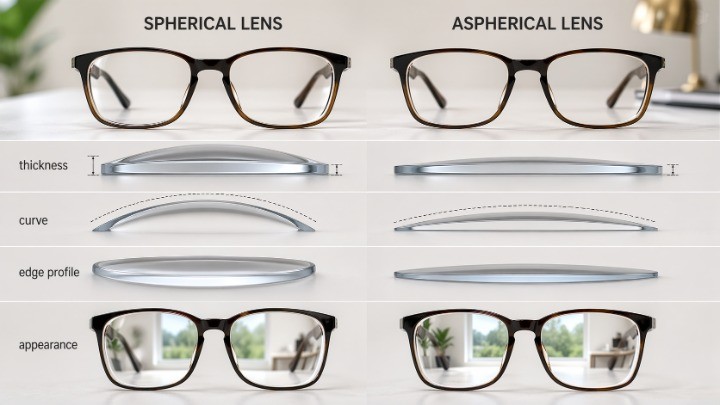 The main difference between aspherical and spherical lenses is surface design. Spherical lenses use a simpler curve, while aspherical lenses use a changing curve to improve lens shape, appearance, and optical performance.
The table below gives a quick comparison before we go deeper.
| Comparison Point | Spherical Lenses | Aspherical Lenses |
|---|---|---|
| Surface design | Constant sphere-like curve | Changing, flatter surface curve |
| Lens appearance | Can look more curved | Usually flatter and slimmer |
| Thickness control | Good for standard powers | Better for stronger prescriptions |
| Distortion control | More limited at the edge | Often better peripheral control |
| Cost | More affordable | Usually higher |
| Production complexity | Easier to manufacture | Requires more precise production |
| Best use case | Standard lens programs | Premium, thinner, higher-value lens lines |
| Suitable prescriptions | Low to moderate prescriptions | Moderate to high prescriptions |
This comparison shows why neither option is always “better.” Each design serves a different purpose.
For a complete lens portfolio, many optical companies use spherical lenses as the standard option and aspherical lenses as an upgrade. This approach keeps the product structure clear and easy to explain.
Key Differences Between Aspherical and Spherical Lenses
The key differences between aspherical and spherical lenses include surface curvature, thickness, weight, peripheral vision, eye appearance, and frame result. These differences become more visible when the prescription is stronger or the frame is larger.
A low prescription in a small frame may not show a dramatic difference. A stronger prescription in a fashion frame can show a very clear difference in thickness and appearance.
Surface Curvature
Surface curvature is the foundation of this comparison. Spherical lenses follow a simple curve. Aspherical lenses use a controlled curve that changes from center to edge.
This changing curve allows aspherical lenses to manage optical performance and appearance more carefully. It also makes the manufacturing process more demanding.
For wholesale and branded lens programs, this means supplier selection matters. A poorly controlled aspherical lens may not deliver the promised benefit.
Lens Thickness and Weight
Lens thickness depends on several factors, including prescription power, lens index, frame size, lens diameter, and design. Aspherical design can help reduce the visible bulk, but it does not work alone.
A high plus spherical lens may look thick in the center. A high minus spherical lens may show thick edges. Aspherical design can help create a flatter and cleaner appearance.
However, a very large frame can still create thick edges in minus prescriptions. This is why lens design and frame selection must work together.
Peripheral Vision and Distortion
Peripheral distortion can become more noticeable in stronger prescriptions. Spherical lens designs may create more distortion away from the optical center.
Aspherical lenses can reduce some of this effect because the surface design controls the way light passes through the lens. This can make the visual field feel more natural.
, where outer lens zones and central zones do not focus light in exactly the same way.
Eye Appearance Behind the Lens
Lens design also affects how the wearer’s eyes look behind the glasses. Strong plus lenses can make the eyes appear larger. Strong minus lenses can make the eyes appear smaller.
Aspherical lenses can reduce this cosmetic effect because they are often flatter and better controlled. This benefit matters for premium eyewear, fashion frames, and customers who care about facial appearance.
For many end users, the visible appearance of the lens matters almost as much as the prescription correction.
Frame Appearance and Fitting Result
The final lens result depends heavily on the frame. A smaller, rounder frame may reduce thickness. A large frame may increase edge thickness, even if the lens uses a good design.
Aspherical lenses often pair well with modern frames because they support a cleaner profile. Still, optical teams should explain that lens design cannot fully cancel the effect of frame size.
A good recommendation should consider prescription, frame shape, frame size, index, and lens design together.
Advantages and Disadvantages of Spherical Lenses
Spherical lenses offer affordability, availability, and production stability. Their main limitation is that they may look thicker and create more distortion in stronger prescriptions.
This makes them a good choice for standard product lines, but not always the best option for premium eyewear.
| Spherical Lens Factor | Practical Meaning |
|---|---|
| Lower cost | Helps support standard and entry-level lens programs |
| Simple production | Easier to keep stable in large quantities |
| Wide availability | Suitable for common prescriptions and stock lenses |
| More curved appearance | May look less refined in strong prescriptions |
| More edge distortion | Can affect comfort in higher powers |
Advantages of Spherical Lenses
Spherical lenses are cost-effective and easy to explain. They work well for many everyday prescriptions and remain a reliable choice for standard optical programs.
They also help optical companies build a clear entry-level lens category. This is useful when a market includes price-sensitive customers or large-volume distribution needs.
Because the design is simpler, production planning and stock management can also be easier.
Disadvantages of Spherical Lenses
Spherical lenses can become less attractive as power increases. Strong plus lenses may look more curved and thick in the center. Strong minus lenses may show heavier edges.
They may also create more noticeable peripheral distortion than well-made aspherical lenses. This can reduce the premium feel of the finished eyewear.
For customers who expect thin, light, and modern-looking glasses, spherical lenses may not always meet the expectation.
When Spherical Lenses Are Still a Good Choice
Spherical lenses are still a good choice when the prescription is low to moderate, the frame size is suitable, and the price level matters.
They also fit well in standard single-vision programs, budget-friendly packages, and high-volume product lines.
A practical lens catalog should not remove spherical lenses. It should position them clearly as the standard option.
Advantages and Disadvantages of Aspherical Lenses
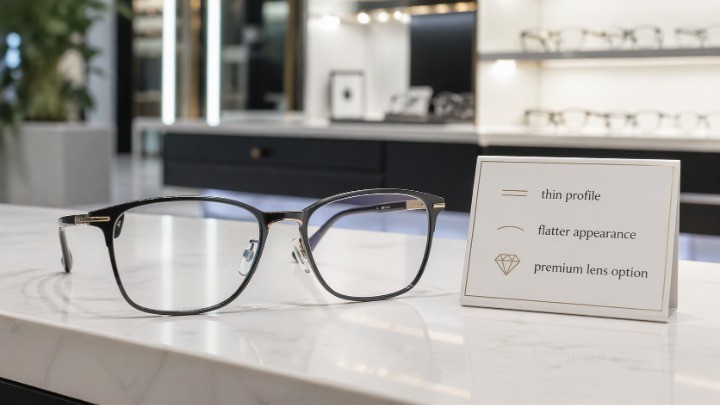 Aspherical lenses offer a flatter appearance, better cosmetic result, and improved distortion control in many cases. Their main limitations are higher cost, tighter fitting requirements, and stronger dependence on manufacturing accuracy.
They are best positioned as an upgraded lens solution, not as a universal replacement for every prescription.
| Aspherical Lens Factor | Practical Meaning |
|---|---|
| Flatter profile | Better appearance in many prescriptions |
| Better distortion control | More comfortable visual experience in selected cases |
| Premium positioning | Useful for higher-value lens packages |
| Higher cost | Needs clear product explanation |
| Precise manufacturing | Requires stronger production and inspection control |
Advantages of Aspherical Lenses
Aspherical lenses can make glasses look thinner and more elegant. This benefit is especially valuable for plus prescriptions, fashion eyewear, and premium retail programs.
They can also reduce distortion and improve the wearer’s visual comfort. The benefit depends on prescription strength and proper fitting.
For optical brands and wholesale programs, aspherical lenses create a natural upgrade path from standard lenses to higher-value products.
Disadvantages of Aspherical Lenses
Aspherical lenses usually cost more because the design and production process are more complex. They also require better quality control to keep the surface accurate and consistent.
Fitting can also become more important. If the optical center, frame selection, or wearing position is poor, the customer may not experience the full benefit.
This is why aspherical lenses should come from a manufacturer that controls surface accuracy, coating quality, and batch consistency.
When Aspherical Lenses Are Worth Choosing
Aspherical lenses are worth choosing when the wearer has a stronger prescription, wants a flatter lens appearance, or prefers a premium eyewear product.
They also make sense when an optical company wants to build a more complete product structure. A simple model can include standard spherical lenses, upgraded aspherical lenses, and high-index aspherical lenses.
This structure helps sales teams explain value without relying only on price.
Which Prescriptions Benefit Most from Aspherical Lenses?
Aspherical lenses usually benefit stronger prescriptions the most. High plus prescriptions often gain the most cosmetic improvement, while high minus prescriptions can gain a cleaner edge profile and improved appearance.
Moderate prescriptions may also benefit when the customer wants thinner and better-looking eyewear. Low prescriptions may not need aspherical design unless the product positioning requires it.
High Plus Prescriptions
High plus prescriptions often create thick centers and a magnified-eye effect. A traditional spherical plus lens may look bulky and make the wearer’s eyes appear larger.
Aspherical plus lenses can reduce this effect. They can create a flatter front surface and a more natural appearance.
This makes them useful for premium plus-power eyewear and for customers who feel uncomfortable with the look of conventional lenses.
High Minus Prescriptions
High minus prescriptions often create thicker edges. Frame size plays a major role here, but lens design still matters.
An aspherical design can help refine the lens profile and improve the overall appearance. The effect becomes stronger when the lens also uses a suitable high-index material.
For strong minus prescriptions, the best result usually comes from three choices working together: smaller frame shape, suitable index, and well-made aspherical design.
Moderate Prescriptions
Moderate prescriptions can benefit from aspherical lenses when the customer wants a better appearance or a more premium product.
For example, a -3.00D or +3.00D prescription may not always require aspherical design, but the design can still improve lens aesthetics in some frames.
This is where product positioning matters. If the lens line targets premium comfort and appearance, aspherical design can make sense even before the prescription becomes very high.
Low Prescriptions
Low prescriptions usually do not need aspherical lenses for technical reasons. A spherical lens can often provide good correction and a clean appearance at a lower cost.
However, a low prescription customer may still choose aspherical lenses if the frame is large, the product package is premium, or the brand wants one consistent upgraded option.
The recommendation should stay honest. Aspherical lenses are useful, but they are not necessary for every low-power prescription.
Presbyopia and Multifocal Users
Presbyopia and multifocal needs make lens design more important because the lens must support different visual zones. Progressive lenses, in particular, require careful design and fitting.
Not every progressive lens is automatically aspherical in the same way. Progressive design involves corridor length, power distribution, peripheral distortion control, and personalized fitting data.
Professional optical teams should evaluate progressive lenses as a separate category instead of assuming “aspherical” explains the whole design.
Are Aspherical Lenses the Same as High-Index Lenses?
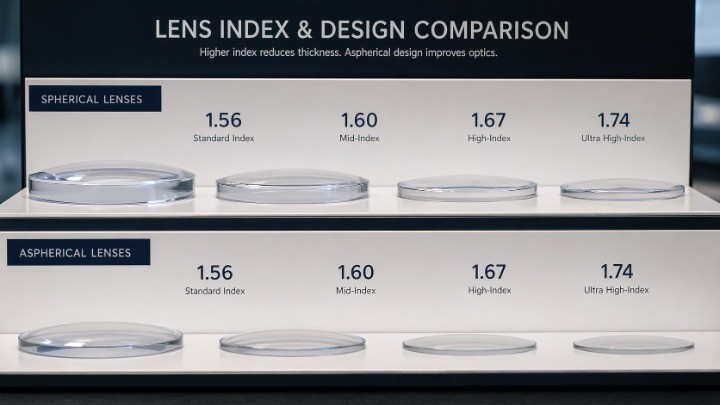 Aspherical lenses are not the same as high-index lenses. Aspherical describes the lens surface design, while high index describes the lens material’s refractive index.
This is one of the most common misunderstandings in lens selection. A lens can be spherical and high-index. It can also be aspherical and standard-index. The two ideas can work together, but they are not the same.
Aspherical Refers to Lens Design
Aspherical design describes the surface shape. It controls how the lens curve changes from center to edge.
This design can improve appearance and reduce certain optical distortions. It can also help create a flatter lens profile.
When people say “aspheric lens,” they are talking about geometry, not material.
High Index Refers to Lens Material
High index describes how efficiently the material bends light. A higher refractive index can make the lens thinner because the material needs less curvature to provide the same prescription power.
Common plastic lens index options include 1.56, 1.60, 1.67, and 1.74, depending on the supplier and market. Higher index materials often support thinner lenses, but they can also cost more.
This means index selection should match prescription strength, product level, and target price.
Why High-Index Aspherical Lenses Can Offer Better Thickness Control
A high-index aspherical lens combines two advantages. The high-index material helps reduce thickness, while the aspherical design helps refine the surface profile.
This combination is often useful for strong prescriptions and premium eyewear. It can improve appearance more effectively than using only one of the two.
However, the final result still depends on frame size, lens diameter, prescription, and production quality.
How to Choose Between 1.56, 1.60, 1.67, and 1.74 Lens Options
The right index depends on the prescription range and product position.
| Lens Index | Typical Positioning | Practical Use |
|---|---|---|
| 1.56 | Standard resin lens | Common daily prescriptions and cost-effective programs |
| 1.60 | Mid-range thinner lens | Better appearance for moderate prescriptions |
| 1.67 | High-index lens | Stronger prescriptions and premium thin-lens packages |
| 1.74 | Ultra-thin lens | Very strong prescriptions and high-end positioning |
A clear product structure helps optical teams avoid confusion. Standard powers can use 1.56 or 1.60. Stronger powers can move toward 1.67 or 1.74, especially when combined with aspherical design.
Aspherical vs Spherical Lenses for Different Lens Types
Aspherical and spherical designs can appear across different lens categories. The value of each design changes depending on whether the lens is single-vision, progressive, bifocal, photochromic, blue light, or high-index.
This section matters because professional optical programs rarely sell only one lens type. They need a complete system.
Single-Vision Lenses
Single-vision lenses are the simplest category. They correct one viewing distance and are widely used for myopia, hyperopia, and astigmatism.
Spherical single-vision lenses work well for standard prescriptions. Aspherical single-vision lenses create a better upgrade option for stronger prescriptions or premium eyewear packages.
This is often the easiest category for introducing aspherical products into a lens catalog.
Progressive Lenses
Progressive lenses require more complex design because they provide distance, intermediate, and near zones in one lens.
Aspherical principles may support better surface control, but progressive performance depends on the full design, not only the aspheric label. Corridor length, unwanted astigmatism, inset, fitting height, and wearing position all matter.
For this category, optical companies should ask for design information, fitting guidance, and sample testing before large-scale promotion.
Bifocal Lenses
Bifocal lenses use two main vision zones. They remain practical in markets where customers prefer a visible near segment or a more traditional solution.
Spherical bifocal lenses can serve standard demand. Aspherical design may improve appearance in selected powers, but the segment design still plays a major role in product acceptance.
The choice should follow local market habits and price expectations.
Photochromic Lenses
Photochromic lenses change from clear indoors to darker outdoors under UV exposure. The design can be spherical or aspherical depending on the product line.
When combining photochromic function with aspherical design, the lens must maintain both optical quality and color-change performance. , including specifications related to how spectacle lenses transmit light.
For professional programs, the key checks include color consistency, darkening speed, fading speed, coating adhesion, and batch stability.
Blue Light Protection Lenses
Blue light protection lenses can also use spherical or aspherical designs. The surface design affects shape and optical performance, while the blue light function depends on material absorption, coating design, or both.
Optical teams should avoid mixing these concepts. A blue light lens is not automatically aspherical, and an aspherical lens is not automatically a blue light lens.
The product description should separate lens design, material, coating, and function.
High-Index Lenses
High-index lenses often pair well with aspherical design because both can support thinner and more refined eyewear.
This combination works well for premium product lines. It also gives optical teams a stronger value story: thinner material, flatter design, improved appearance, and suitable coating options.
For strong prescriptions, high-index aspherical lenses can become a key product category. You can explore related product and customization options through .
Frame Selection: Why Lens Design Alone Is Not Enough
Frame selection strongly affects final lens thickness and appearance. Even a good aspherical lens can look thick if the frame is too large for a strong prescription.
This is why optical teams should connect lens design with frame recommendation. A lens is not finished in theory. It becomes a real product only after edging, fitting, and packaging.
Why Frame Size Affects Final Lens Thickness
Frame size affects how much lens material remains after edging. In minus prescriptions, larger frames often create thicker edges because the lens must extend farther from the optical center.
In plus prescriptions, frame shape and decentration can also affect finished thickness and appearance.
A well-chosen frame can make the same prescription look noticeably better.
Why Small and Medium Frames Often Work Better for Strong Prescriptions
Small and medium frames usually reduce unnecessary lens diameter. This can improve thickness, weight, and appearance.
For strong minus prescriptions, smaller frames can reduce edge thickness. For strong plus prescriptions, a suitable frame can help control center thickness and visual balance.
Frame recommendation is one of the easiest ways to improve customer satisfaction without changing the prescription.
How Large Frames May Reduce the Thickness Advantage
Large frames are popular in fashion eyewear, but they can reduce the benefit of thin-lens designs. Strong prescriptions in oversized frames may still show thick edges.
Aspherical design can help, but it cannot fully overcome poor frame selection.
This is why optical chains and fitting teams should explain the trade-off clearly. Customers can still choose fashion frames, but they should understand the result.
How Optical Chains Can Explain Frame-Lens Matching to Customers
Optical chains can create simple recommendation rules for staff. These rules make lens selection easier and reduce complaints.
For example:
• Low prescription + standard frame: spherical lens may be enough • Moderate prescription + fashion frame: consider aspherical lens • Strong prescription + large frame: recommend smaller frame first • Strong prescription + premium package: consider high-index aspherical lens • Appearance-focused customer: explain eye-size effect and lens profile
This approach helps the customer make a better decision without feeling pushed into a more expensive product.
Cost Comparison: Are Aspherical Lenses Worth It?
Aspherical lenses are worth it when the prescription, frame, and product goal justify the higher cost. They create the most value when they improve appearance, comfort, or premium positioning in a way the customer can understand.
They are not always necessary for low prescriptions or basic packages. A good recommendation should match real need, not only product margin.
Why Aspherical Lenses Usually Cost More
Aspherical lenses usually cost more because the design is more complex. The surface requires better control, more precise tooling or processing, and stricter inspection.
The cost can also increase when aspherical design combines with high-index material, photochromic function, or premium coating.
That higher cost should come with a clear product benefit. Otherwise, the customer may not see the value.
When the Higher Price Creates Real Value
The higher price creates value when the lens looks visibly better or feels more comfortable. This often happens in strong prescriptions, plus lenses, premium frames, and upgraded product packages.
It also creates value when it reduces complaints about thick lenses, heavy glasses, or distorted appearance.
In these cases, the lens does not only correct vision. It improves the final eyewear experience.
When Spherical Lenses Are Still the Smarter Choice
Spherical lenses are still smarter when the prescription is simple, the frame is small, and the customer wants an affordable solution.
They also make sense for large-volume standard programs, where price, availability, and consistency matter most.
A complete product structure should include both choices instead of forcing one design into every situation.
How Professional Purchasing Teams Can Structure Standard, Mid-Range, and Premium Lens Lines
A practical product structure can look like this:
| Product Level | Suggested Lens Design | Typical Positioning |
|---|---|---|
| Standard line | Spherical 1.56 or 1.60 | Affordable daily use |
| Upgraded line | Aspherical 1.56 or 1.60 | Better appearance and comfort |
| Premium line | High-index aspherical 1.67 or 1.74 | Thinner, lighter, premium eyewear |
| Functional line | Aspherical with blue light or photochromic function | Value-added product category |
This structure makes the product easier to sell and easier to manage. It also helps teams explain lens choices clearly.
Sourcing Tips for Aspherical and Spherical Lenses
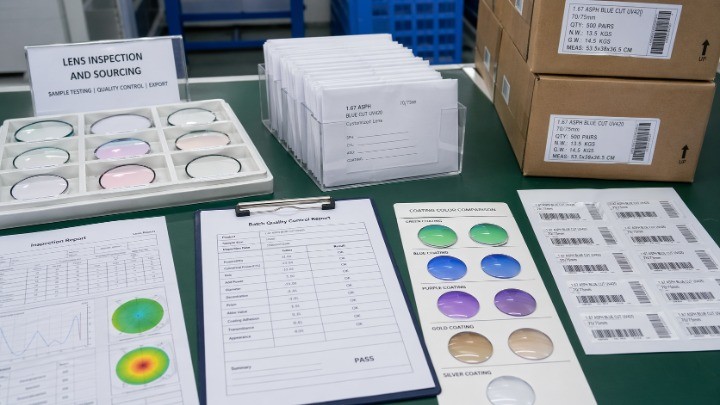 Professional optical teams should source aspherical and spherical lenses based on product positioning, index options, coating compatibility, sample testing, and batch consistency. The best supplier is not only the one with a good sample, but the one that can repeat the same quality over time.
This is especially important for aspherical lenses because the design depends heavily on surface accuracy and process control.
Match Lens Design with Target Market Positioning
A price-sensitive market may need a strong spherical lens program. A premium retail market may need aspherical and high-index options.
Optical teams should match the lens design with the customer group. A catalog that only promotes high-end options may miss volume opportunities. A catalog that only offers basic lenses may lose premium customers.
The best strategy often uses both designs in a clear structure.
Build a Clear Product Structure
A clear product structure reduces confusion. It also helps sales teams explain value.
For example:
• Standard: spherical lenses for everyday prescriptions • Better: aspherical lenses for improved appearance • Premium: high-index aspherical lenses for strong prescriptions • Functional: photochromic, blue light, or progressive lens options
This structure works well for wholesalers, optical chains, and regional distributors. For customized supply, packaging, and coating support, Vena Optics can help develop .
Check Index Options, Diameter, Base Curve, and Power Range
Before placing a large order, teams should confirm technical details. These details affect whether the lens can meet real market demand.
Important items include:
• Available index options • Diameter range • Base curve availability • Sphere and cylinder range • Center thickness control • Edge thickness control • Coating color options • Packaging format
, which makes it a useful reference when teams review power accuracy, lens geometry, and inspection expectations.
Confirm Coating Compatibility
Aspherical design often appears in higher-value products, so coating quality becomes even more important. A premium lens with weak coating will still create complaints.
Teams should check whether the lens supports hard coating, anti-reflective coating, hydrophobic coating, blue light function, UV protection, or photochromic performance.
They should also ask how the manufacturer tests adhesion, abrasion resistance, reflection color consistency, and surface defects.
Test Samples Before Bulk Orders
Sample testing should include more than visual inspection. Teams should check power accuracy, lens appearance, edge profile, coating quality, and packaging accuracy.
For photochromic products, they should test darkening and fading behavior. For blue light products, they should request clear transmission information.
Sample approval should become a reference for future production.
Compare Suppliers by Batch Consistency, Not Only Sample Quality
A good sample is important, but stable production matters more. Many supply problems appear after the first order, especially when volume increases.
Teams should compare suppliers by:
• Repeat order consistency • Defect handling • Inspection records • Coating stability • Delivery reliability • Packaging accuracy • Communication speed
Long-term supply quality depends on process control, not only on the first approved sample.
Quality Control Points Professional Teams Should Check
 Quality control for spherical and aspherical lenses should cover optical power, surface accuracy, thickness, coating performance, reflection consistency, and traceability. For aspherical lenses, surface and curve control deserve extra attention.
Quality problems can damage the final customer experience even when the lens design is correct on paper.
Optical Power Accuracy
Power accuracy is the foundation of prescription lens quality. The lens should match the required sphere, cylinder, axis, and prism values within accepted tolerances.
Optical teams should ask whether the manufacturer checks each production batch and records inspection data.
This matters for both stock lenses and customized programs.
Surface Accuracy and Curve Control
Surface accuracy matters more for aspherical lenses because the design relies on a controlled changing curve.
If the surface deviates too much, the lens may not deliver the expected visual and cosmetic benefit.
Manufacturers should control tooling, curing, polishing, coating, and inspection to keep the design stable.
Center Thickness and Edge Thickness Consistency
Thickness consistency affects appearance, comfort, and product trust. Customers notice if one lens looks different from the other.
Teams should confirm center thickness standards for plus lenses and edge thickness expectations for minus lenses.
They should also check finished lens appearance after edging, especially for strong prescriptions.
Coating Adhesion and Scratch Resistance
Coating problems are among the most visible quality issues. Peeling, scratches, spots, and uneven reflection can create quick complaints.
Professional programs should request coating inspection methods and sample testing. They should also check whether the coating can handle edging, cleaning, storage, and normal daily use.
A premium aspherical lens needs premium coating control.
Left-Right Lens Color and Reflection Consistency
Left-right consistency matters for both clear and coated lenses. If one lens reflects green and the other reflects purple, the final glasses can look unprofessional.
This issue often appears in anti-reflective coating, blue light coating, and photochromic products.
Teams should inspect lens pairs under consistent lighting before approving bulk production.
Batch Traceability and Inspection Records
Traceability helps solve problems faster. A supplier should be able to connect a product issue with a batch, production date, coating process, or inspection record.
For export programs, documentation may also matter. , including questions related to the impact-resistant lens regulation.
Traceability does not replace quality. It makes quality problems easier to identify and improve.
Common Questions About Aspherical vs Spherical Lenses
People often ask whether aspherical lenses are always better, whether they make glasses thinner, and whether they work with other lens functions. The best answer depends on prescription strength, frame selection, material index, and product expectations.
The following questions cover the most common decision points.
Are Aspherical Lenses Always Better Than Spherical Lenses?
No. Aspherical lenses are not always better for every case. They are better when the wearer needs a flatter appearance, lower distortion, or a more premium lens result.
For low prescriptions and basic products, spherical lenses can still be the practical choice.
Do Aspherical Lenses Make Glasses Thinner?
Aspherical lenses can make glasses look thinner, especially in stronger prescriptions. However, thickness also depends on index, frame size, lens diameter, and prescription.
For the best result, combine aspherical design with a suitable frame and material index.
Are All Progressive Lenses Aspherical?
No. Progressive lenses use complex designs, but they are not all the same as standard aspherical single-vision lenses.
A progressive lens should be judged by its full design, including corridor length, visual zones, peripheral distortion control, and fitting requirements.
What Are Double Aspherical Lenses?
Double aspherical lenses use aspherical design on both front and back surfaces. This can provide better optical and cosmetic control in selected products.
They often sit in higher-end lens categories because they require more advanced design and manufacturing control.
Are Aspherical Lenses More Expensive?
Yes, aspherical lenses usually cost more than standard spherical lenses. The higher price comes from more complex design, production, and inspection requirements.
The added cost makes sense when the lens provides a visible or practical benefit.
Can Aspherical Lenses Be Combined with Blue Light or Photochromic Functions?
Yes. Aspherical lenses can be combined with blue light protection, photochromic performance, anti-reflective coating, and high-index materials.
However, each function needs separate quality control. A lens can have a good aspherical design but poor coating, or good coating but weak photochromic consistency.
Final Recommendation: How to Choose Between Aspherical and Spherical Lenses
Choose spherical lenses when the product needs standard correction, stable supply, and cost-effective positioning. Choose aspherical lenses when the product needs a thinner look, better aesthetics, and a more premium wearing experience.
The strongest product strategy uses both designs. Spherical lenses can support daily prescription programs, while aspherical lenses can support upgraded, high-index, and appearance-focused categories. This gives optical brands, wholesalers, distributors, and optical chains a clearer way to serve different markets.
Work with Vena Optics for Optical Lens Manufacturing
Vena Optics supports optical lens manufacturing in Danyang, China, with supply options for spherical, aspherical, high-index, photochromic, blue light, progressive, bifocal, and other functional lenses. Our team can support product selection, coating solutions, private label packaging, quality inspection, and long-term supply planning through .
If you need a stable lens supply partner for standard, upgraded, or premium optical programs, contact Vena Optics to discuss your specifications, target market, packaging needs, and order plan. A clear lens structure can help you improve product value, reduce quality risk, and build a more reliable supply system.