


Choosing the best lenses for outdoor use starts with protection and visual performance.
Many people choose outdoor lenses only by color. That can lead to poor comfort, weak glare control, or even inadequate UV protection. Outdoor environments expose the eyes to sunlight, reflected glare, wind, dust, water, snow, and changing light. A darker lens may feel more comfortable, but darkness alone does not prove safety.
This guide explains how to choose outdoor lenses by UV protection, lens type, material, tint color, coating, prescription needs, and real outdoor activity.
 What Are the Best Lenses for Outdoor Use?
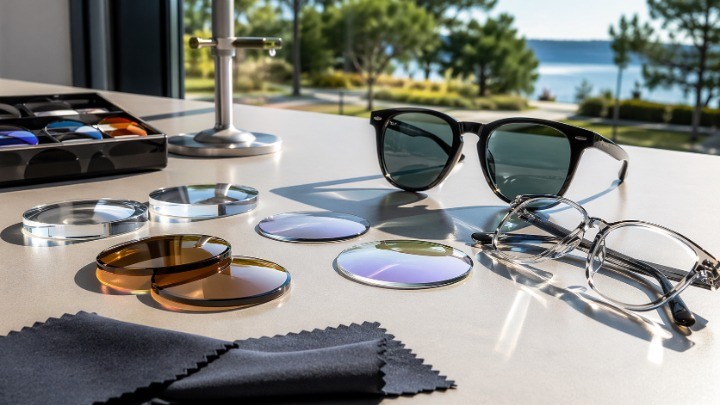
The best lenses for outdoor use are UV-protective lenses matched with the right outdoor function. Photochromic lenses help in changing light. Polarized lenses reduce reflected glare. Tinted lenses control brightness. Polycarbonate lenses work well for sports and impact-related use.
A strong outdoor lens should not rely on one feature only. It should combine UV protection, glare control, visual comfort, suitable material, stable coating, and prescription compatibility.
For optical wholesalers, eyewear brands, and optical chains, the best outdoor lens range usually includes several product groups instead of one universal product.
Outdoor Lens Comparison Table
| Outdoor Need | Recommended Lens Type | Main Benefit | Buyer Note |
|---|---|---|---|
| Daily outdoor wear | UV-protective tinted lenses | Basic sunlight comfort and UV protection | Good entry-level outdoor option |
| Indoor-outdoor movement | Photochromic lenses | Adapts to changing light | Useful for daily prescription eyewear |
| Water, road, or snow glare | Polarized lenses | Reduces reflected glare | Strong option for driving and fishing |
| Sports and safety use | Polycarbonate or Trivex lenses | Lightweight impact resistance | Needs scratch-resistant coating |
| Strong prescription | High-index outdoor lenses | Thinner and lighter lens profile | Suitable for prescription sunglasses |
| Premium outdoor eyewear | Mirror-coated or SHMC lenses | Stronger appearance and surface performance | Good for brand differentiation |
The U.S. Environmental Protection Agency explains that the UV Index measures expected overexposure risk from the sun and uses a scale from 1 to 11+. This is useful for outdoor lens planning because UV exposure changes by location, season, altitude, and weather. You can link the phrase UV Index to the . ()
What Makes a Lens Suitable for Outdoor Use?
A lens is suitable for outdoor use when it protects the eyes from UV rays, controls visible light, reduces glare, supports contrast, and remains durable during daily outdoor wear. Outdoor lens performance depends on the combination of lens type, material, coating, and color.
Many outdoor lenses fail because they solve only one problem. A dark gray lens may reduce brightness, but it may not reduce water glare. A polarized lens may reduce reflected glare, but it may not adapt when the wearer moves indoors.
Professional buyers should evaluate outdoor lenses through practical questions:
• Does the lens provide UVA and UVB protection? • Does it reduce glare or only reduce brightness? • Does the lens color support the target activity? • Does the material match the prescription and frame type? • Does the coating resist scratches, water, sweat, and cleaning? • Can the supplier keep quality stable across repeat orders?
These questions help buyers avoid treating outdoor lenses as simple tinted products. In reality, outdoor lenses are functional optical products designed for changing environments.
UV Protection Comes First: Why Dark Lenses Are Not Always Safer
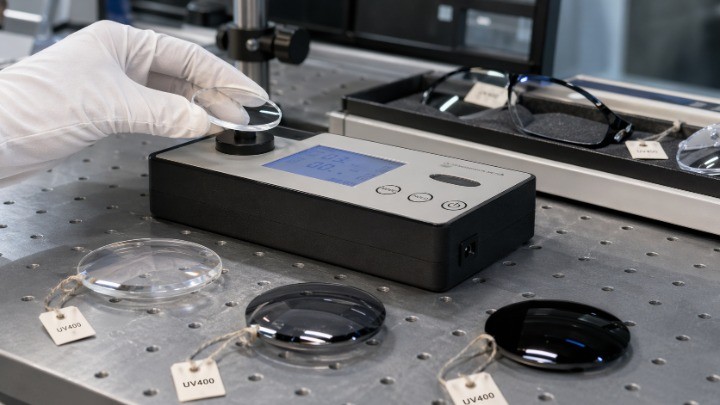 Dark lenses are not automatically safer because tint darkness controls visible light, while UV protection blocks ultraviolet radiation. These two functions are not the same.
This point matters for both consumers and professional buyers. A lens can look dark and still fail to provide enough UV protection. For outdoor eyewear, buyers should check UV claims, test data, and supplier documentation before focusing on color.
The CDC advises wearing sunglasses that block both UVA and UVB rays and notes that wraparound sunglasses work best because they block rays from the side. You can link UVA and UVB protection to the . ()
What UV400 Protection Means for Outdoor Lenses
UV400 means the lens blocks ultraviolet light up to 400 nanometers. In practical outdoor eyewear, UV400 is often used to describe broad UV protection covering UVA and UVB ranges.
For professional buyers, UV400 should not be treated as a decorative claim. It should connect with product testing, batch consistency, packaging information, and market compliance needs.
Why Professional Buyers Should Request UV Protection Data
For wholesalers, optical chains, and eyewear brands, UV claims must remain consistent from sample order to bulk shipment. This matters more when outdoor lenses enter retail markets with stronger labeling or documentation requirements.
A buyer should request:
• UV transmission test data • Product specification sheets • Batch inspection records when available • Lens color and coating descriptions • Clear confirmation of UV protection by product type
A supplier that can explain and document UV protection gives buyers more confidence than one that only says “good UV protection.”
Main Types of Lenses for Outdoor Use
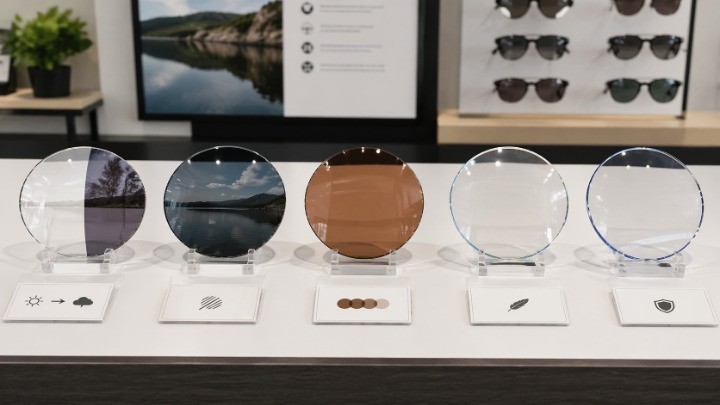 The main types of lenses for outdoor use include photochromic lenses, polarized lenses, tinted lenses, prescription sunglasses lenses, high-index lenses, and polycarbonate lenses. Each type solves a different outdoor vision problem.
A good outdoor lens collection should not force one lens to fit every scenario. It should match the product function with real user needs.
Photochromic Lenses: Best for Indoor-Outdoor Movement
Photochromic lenses darken in sunlight and become clearer indoors. They work well for users who move between indoor and outdoor environments throughout the day.
They are especially practical for prescription eyewear. The wearer does not need to switch between clear glasses and sunglasses as often. For optical businesses, photochromic lenses can create a higher-value daily-use product line.
However, buyers should check activation speed, fading speed, final darkness, color stability, and heat performance. Some photochromic lenses may darken less in high temperatures, so product testing matters.
Polarized Lenses: Best for Water, Snow, Road Glare, and Strong Reflection
Polarized lenses reduce reflected glare from flat surfaces such as water, roads, snow, and glass. This makes them useful for fishing, boating, daytime driving, beach use, and bright outdoor environments.
However, polarized lenses are not always the best choice for every user. They may affect visibility on some LCD screens or digital displays. Optical businesses should position polarized lenses by clear use case instead of selling them as a universal outdoor solution.
Tinted Lenses: Best for Stable Outdoor Lighting
Tinted lenses provide fixed brightness control. They are simple, cost-effective, and easy to customize by color.
They work well for sunglasses, sports eyewear, fashion eyewear, and prescription sunglasses. The key is to choose the tint color based on outdoor activity, not only based on appearance.
Prescription Sunglasses Lenses: Best for Outdoor Vision Correction
Prescription sunglasses lenses combine optical correction with outdoor comfort. They are important for users who cannot rely on plano sunglasses.
Buyers should check index availability, prescription range, tint consistency, coating compatibility, and frame suitability. Strong prescriptions may need high-index materials to reduce thickness and improve appearance.
High-Index Outdoor Lenses: Best for Strong Prescriptions
High-index lenses help reduce lens thickness for stronger prescriptions. They are useful when outdoor eyewear needs to look clean, lightweight, and comfortable.
For example, a high-myopia prescription in a large sunglass frame may look thick in standard-index material. A 1.60 or 1.67 lens can improve appearance and wearing comfort, especially with proper frame selection.
Polycarbonate Lenses: Best for Sports and Safety Applications
Polycarbonate lenses are lightweight and impact-resistant, which makes them suitable for sports eyewear, children’s eyewear, and safety-oriented outdoor frames.
However, polycarbonate lenses need strong surface protection because they can scratch more easily without hard coating. NIOSH recommends polycarbonate or Trivex lenses for prescription safety glasses and also notes that polycarbonate lenses should be hard coated to reduce scratching. You can link polycarbonate and Trivex lenses to the . ()
Photochromic vs Polarized vs Tinted Lenses: Which One Is Better Outdoors?
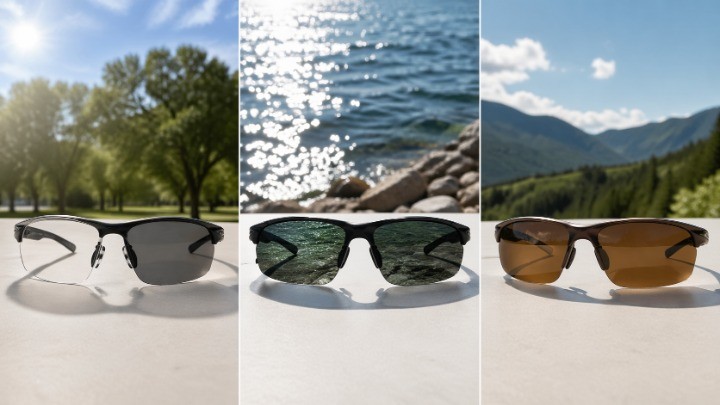 Photochromic, polarized, and tinted lenses all work outdoors, but they solve different problems. Photochromic lenses adapt to sunlight, polarized lenses reduce reflected glare, and tinted lenses provide stable brightness control.
The better option depends on the outdoor environment and user behavior.
| Lens Type | Best For | Main Strength | Main Limitation |
|---|---|---|---|
| Photochromic lenses | Indoor-outdoor movement | Changes with sunlight | May not darken equally behind all windshields |
| Polarized lenses | Water, snow, and road glare | Reduces reflected glare | May affect some screens |
| Tinted lenses | Stable bright conditions | Simple and cost-effective | Does not adapt to light changes |
| Photochromic + tint | Daily prescription outdoor wear | Comfort and convenience | Needs careful product positioning |
| Polarized + mirror coating | Strong sunlight and sports | Glare control and premium look | Higher cost and more coating control needed |
When Photochromic Lenses Are Better
Photochromic lenses are better when the wearer moves between indoor and outdoor spaces often. They suit daily commuters, travelers, outdoor workers, and prescription lens users who want convenience.
For optical businesses, photochromic lenses can improve product value without changing the frame category. The visible light-changing effect also makes the product easier to explain.
When Polarized Lenses Are Better
Polarized lenses are better when reflected glare is the main problem. Fishing, boating, beach use, snow fields, and bright road surfaces create glare that ordinary tinted lenses may not control well.
For markets with strong sunlight, water activities, or driving demand, polarized lenses should be part of the outdoor lens range.
When Fixed Tinted Lenses Are Still Practical
Fixed tinted lenses remain practical because they offer stable color, predictable darkness, flexible pricing, and broad customization.
They are useful when the target market values fast supply, familiar colors, and simple product positioning.
Best Lens Materials for Outdoor Use
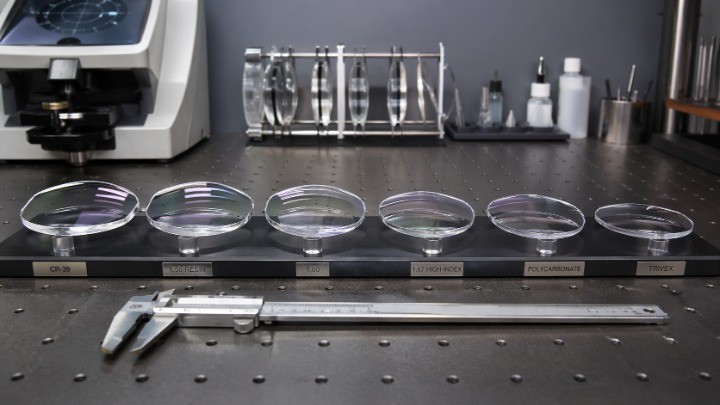 The best lens material for outdoor use depends on prescription strength, frame type, price level, durability, and activity. CR-39, 1.56 resin, 1.60, 1.67, polycarbonate, and Trivex all serve different outdoor needs.
Material choice affects thickness, weight, optical clarity, impact resistance, coating adhesion, and final product cost. It also affects whether the lens fits daily outdoor wear, sports eyewear, prescription sunglasses, or premium high-index products.
| Material | Best Use | Strength | Buyer Consideration |
|---|---|---|---|
| CR-39 resin | Standard sunglasses and prescription lenses | Good optical clarity | Thicker for stronger prescriptions |
| 1.56 resin | Daily prescription outdoor lenses | Cost-effective and versatile | Popular for mid-range markets |
| 1.60 high-index | Thinner prescription sunglasses | Better appearance | Higher cost than 1.56 |
| 1.67 high-index | Stronger prescriptions | Thin and premium | Needs good coating control |
| Polycarbonate | Sports and safety eyewear | Lightweight and impact-resistant | Needs scratch-resistant coating |
| Trivex | Premium sports and safety lenses | Light, strong, and stable | Often positioned at higher price levels |
For wholesale product planning, 1.56 photochromic and tinted lenses can cover daily demand. 1.60 and 1.67 outdoor lenses can serve stronger prescriptions and higher-value orders. Polycarbonate and Trivex can support sports and protective eyewear lines.
Best Lens Colors for Outdoor Use
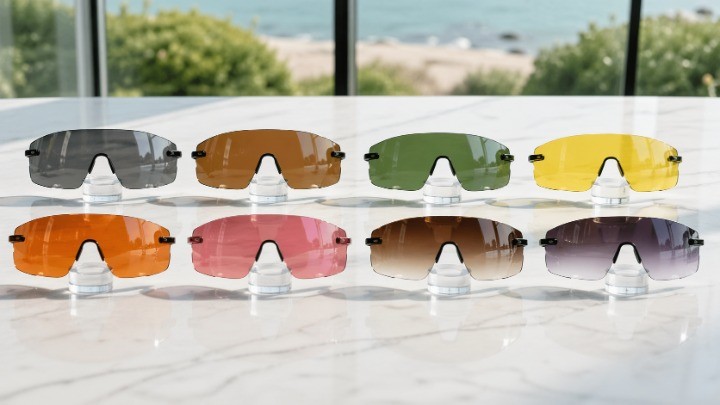 The best lens color for outdoor use depends on sunlight level, contrast needs, color perception, weather, and activity. Gray, brown, green, yellow, amber, copper, rose, and gradient tints each create a different wearing experience.
Lens color should not replace UV protection. Instead, color should improve visual comfort after UV protection has already been confirmed.
Health Canada explains different sunglass categories and notes that special-purpose sunglasses may block very high visible light but are not recommended for driving. This supports an important buying point: darker or more specialized lenses are not always suitable for every outdoor use. You can link sunglass categories and driving suitability to . ()
Gray Lenses
Gray lenses reduce brightness while keeping color perception close to natural. They work well for strong sunlight, daily sunglasses, and driving-oriented outdoor eyewear.
Gray is also easy to position in wholesale collections because many customers understand it quickly.
Brown Lenses
Brown lenses improve contrast and depth perception. They suit daily outdoor use, hiking, travel, driving, and variable sunlight.
For many markets, brown can serve as a practical second color after gray because it feels warmer and more contrast-enhancing.
Green Lenses
Green lenses balance brightness reduction, contrast, and natural color perception. They work well for outdoor leisure, driving, and general sun protection.
Green or G15-style colors can also support classic sunglass positioning.
Yellow, Amber, and Copper Lenses
Yellow lenses can help in low-light or cloudy environments. Amber and copper lenses often improve contrast, which can help with cycling, hiking, field sports, and changing terrain.
However, these colors may change natural color perception more than gray or green. Buyers should match them with clear use cases instead of selling them as universal outdoor lenses.
Rose and Gradient Lenses
Rose lenses can support depth perception and contrast in some outdoor conditions. Gradient lenses work well for driving and lifestyle sunglasses because the upper part blocks more sunlight while the lower part stays lighter.
Gradient tints are also useful when fashion and comfort both matter.
Which Lens Colors Are Better for Wholesale Outdoor Lens Collections?
For wholesale outdoor lens collections, buyers can build a practical color structure:
• Gray for mainstream sunlight protection • Brown for contrast and daily comfort • Green for classic outdoor eyewear • Yellow or amber for low-light and sports applications • Gradient colors for driving and fashion sunglasses • Mirror-coated colors for premium sports or beach eyewear
A strong outdoor lens collection should not offer too many random colors. It should offer clear color logic that sales teams can explain.
Best Outdoor Lenses by Activity
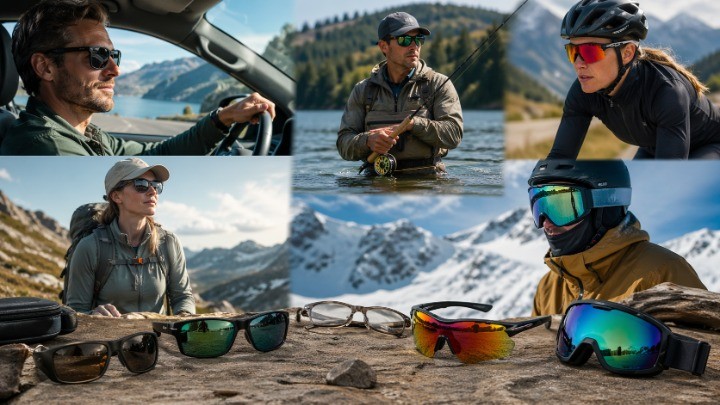 The best outdoor lens changes by activity because each environment creates a different visual problem. Driving requires glare control and color recognition. Fishing requires water-glare reduction. Cycling requires lightweight impact resistance. Snow use requires stronger UV and reflection control.
The most useful way to select outdoor lenses is to start with the activity, then choose lens type, color, material, and coating.
Best Lenses for Driving
For daytime driving, the best lenses usually combine UV protection, glare control, and a comfortable tint. Gray, brown, green, or gradient lenses are common choices.
Polarized lenses can help reduce glare from roads and vehicle surfaces, but buyers should consider screen visibility and local driving requirements. Driving lenses should also support clear traffic signal recognition.
Best Lenses for Fishing and Boating
For fishing and boating, polarized lenses are usually the strongest choice because water creates intense reflected glare.
Gray polarized lenses work well in bright sunlight. Brown or copper polarized lenses can improve contrast in shallow water or variable conditions. Hydrophobic coating also helps because water spray and fingerprints appear often in these environments.
Best Lenses for Hiking and Travel
For hiking and travel, photochromic lenses are useful because light changes quickly between shade, open roads, mountains, and indoor spaces.
Brown, amber, or copper tints can improve contrast on trails. Scratch-resistant and hydrophobic coatings also help because outdoor travel exposes lenses to dust, sweat, and frequent cleaning.
Best Lenses for Cycling and Running
Cycling and running require lightweight lenses, secure frame design, impact resistance, and stable visual contrast. Polycarbonate lenses often work well for these applications.
Yellow, amber, rose, or brown tints can support contrast in changing terrain. Mirror coating can reduce brightness and improve the sports look. For prescription cycling eyewear, buyers should check frame curve and lens design compatibility.
Best Lenses for Golf and Field Sports
Golf and field sports need contrast and depth perception. Brown, copper, amber, or rose lenses can help users read terrain and track objects more clearly.
A lens that is too dark may reduce detail. For this reason, contrast-focused tints often matter more than maximum darkness.
Best Lenses for Snow, Skiing, and High-Altitude Environments
Snow reflects strong light, and high-altitude environments increase UV exposure. Outdoor lenses for snow should focus on UV protection, glare control, contrast, and full coverage.
Environment and Climate Change Canada notes that fresh white snow can reflect over 80% of the sun’s UV rays. This makes UV-protective sunglasses especially important for snowy outdoor environments. You can link snow UV reflection to the . ()
Best Lenses for Daily Outdoor Wear
For daily outdoor wear, photochromic lenses, UV-protective tinted lenses, and lightweight prescription outdoor lenses are practical choices.
Most users want comfort, easy cleaning, reliable UV protection, and good appearance. Optical businesses should offer daily outdoor lenses in popular colors and reliable coatings before adding more specialized sports options.
Outdoor Lens Coatings That Improve Real-World Performance
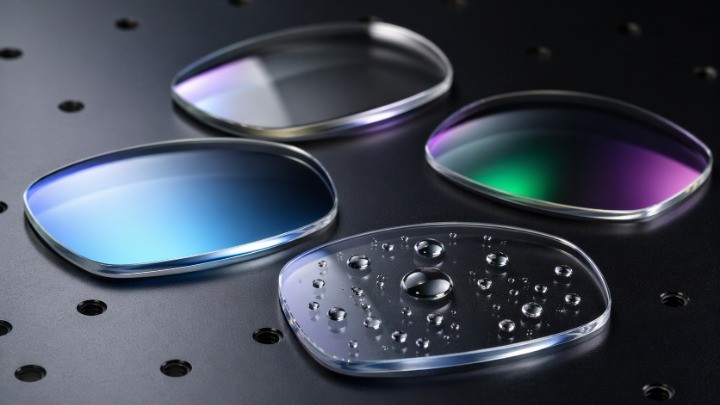 Outdoor lens coatings improve scratch resistance, clarity, water resistance, cleaning convenience, and appearance. A good coating system can decide whether the lens performs well after weeks of real outdoor use, not only when it is new.
Outdoor lenses face sweat, dust, water, fingerprints, cleaning cloths, heat, and frequent handling. Coating durability therefore affects customer satisfaction and repeat orders.
Hard Coating
Hard coating improves scratch resistance. It is especially important for resin and polycarbonate lenses because outdoor users often clean lenses in dusty environments.
For bulk buyers, hard coating consistency matters because scratches are one of the most common after-sales complaints in outdoor eyewear.
Anti-Reflective Coating
Anti-reflective coating reduces surface reflections and improves clarity. It can make prescription outdoor lenses more comfortable, especially when the back surface creates reflections.
For high-index lenses, AR coating becomes even more important because high-index materials usually create more surface reflection than standard materials.
Mirror Coating
Mirror coating reflects strong sunlight and creates a premium outdoor appearance. It is popular for sports sunglasses, beach eyewear, skiing lenses, and fashion sunglasses.
However, mirror coating requires stable color control and adhesion. Poor coating consistency can create visible color differences between batches.
Hydrophobic and Anti-Smudge Coating
Hydrophobic coating helps water move off the lens surface. Anti-smudge coating helps reduce fingerprints and makes cleaning easier.
These coatings are useful for fishing, boating, running, cycling, travel, and daily outdoor wear. They also improve the perceived quality of the finished product.
UV Coating and Material-Level UV Protection
Some lenses block UV through material absorption. Others rely more on coating or treatment. Professional buyers should ask how the UV protection is achieved and whether performance remains stable after coating, tinting, or edging.
How to Choose Outdoor Lenses for Prescription Eyewear
To choose outdoor lenses for prescription eyewear, buyers should match the prescription strength, lens index, frame shape, tint, coating, and outdoor function. The best prescription outdoor lens must correct vision first and improve outdoor comfort second.
A strong outdoor function cannot make up for poor optical fitting. If the prescription, lens curve, or frame design does not work, the wearer may experience discomfort even when the tint looks attractive.
Match Lens Type With Prescription Strength
Mild prescriptions may work well with standard resin or 1.56 lenses. Stronger prescriptions may need 1.60 or 1.67 high-index lenses to reduce thickness.
For prescription sunglasses, the buyer should check whether tint, photochromic function, polarized film, and coating are available across the required prescription range.
Choose the Right Index for Thickness and Comfort
Index choice affects edge thickness, weight, and appearance. A higher-index lens can improve cosmetics for stronger prescriptions, but it also needs good coating and proper frame selection.
For large sunglass frames, edge thickness becomes more visible. A smaller or better-shaped frame may reduce thickness without changing material.
Consider Frame Type and Lens Curve
Outdoor eyewear often uses larger, curved, or wrap-style frames. These frames can create optical challenges if the lens design does not match the curve.
Professional buyers should check base curve, decentration, edge thickness, and fitting requirements before placing bulk orders.
Avoid Choosing Only by Tint Color
Tint color helps comfort, but it does not solve every outdoor need. A buyer should also check UV protection, glare control, prescription compatibility, coating durability, and supplier repeatability.
This is where technical supplier support becomes important.
How Optical Businesses Should Plan an Outdoor Lens Product Range
Optical businesses should plan outdoor lens products by use scenario, not only by color or price. A clear outdoor lens range should include basic UV protection, daily photochromic options, polarized glare-control options, sports materials, and premium coating upgrades.
This structure helps sales teams explain products more clearly. It also helps distributors reduce random inventory and focus on market demand.
Build a Basic Outdoor Lens Line
A basic outdoor lens line can include:
• UV-protective tinted lenses • Gray and brown prescription sunglasses lenses • 1.56 photochromic lenses • Standard hard coating and HMC options • Common stock powers for fast delivery
This line can serve optical shops, entry-level sunglass brands, and everyday outdoor eyewear demand.
Add Premium Outdoor Options
Premium options can include:
• Polarized prescription lenses • Mirror-coated sunglasses lenses • 1.60 and 1.67 high-index outdoor lenses • PC lenses for sports and children’s eyewear • SHMC or hydrophobic coating upgrades • OEM/ODM packaging and private labeling
Segment Products by User Scenario
Outdoor lens planning becomes easier when buyers group products by scenario:
| Scenario | Recommended Product Group | Sales Angle |
|---|---|---|
| Daily outdoor wear | UV-protective tinted or photochromic lenses | Comfort and convenience |
| Driving | Gray, brown, green, or polarized lenses | Glare control and clarity |
| Fishing and boating | Polarized lenses | Water-glare reduction |
| Sports | PC lenses with hard coating | Lightweight protection |
| Travel | Photochromic and scratch-resistant lenses | Adaptability and easy use |
| Premium sunglasses | Mirror-coated or high-index lenses | Appearance and value |
A product range built this way is easier to train, easier to sell, and easier to reorder.
Common Mistakes When Choosing Outdoor Lenses
The most common mistake is choosing outdoor lenses by appearance instead of performance. A lens that looks dark, colorful, or premium may still fail if it lacks UV protection, stable coating, prescription compatibility, or proper material choice.
Buyers should avoid these problems before bulk purchasing.
Choosing Dark Lenses Without Checking UV Protection
Darkness reduces visible light, but it does not prove UV protection. Buyers should check UVA, UVB, or UV400 claims with supplier data.
Assuming Polarized Lenses Are Always the Best Choice
Polarized lenses are excellent for reflected glare, but they are not always needed for every activity. Some users may prefer photochromic or tinted lenses for daily wear.
Ignoring Prescription Compatibility
Some outdoor lens options may not support all prescriptions, indexes, curves, or frame types. Buyers should confirm availability before promoting a product line.
Overlooking Coating Quality
Outdoor lenses experience frequent cleaning and contact with dust, sweat, and water. Poor coating can lead to scratches, peeling, color inconsistency, and customer complaints.
Choosing One Color for Every Outdoor Activity
No single color works best for all outdoor conditions. Gray, brown, green, yellow, amber, rose, and gradient colors all serve different uses.
Buying Without Checking Supplier Consistency
A good sample does not always guarantee stable bulk quality. Buyers should check batch control, inspection reports, lead time, packaging support, and after-sales response.
Outdoor Lens Supplier Checklist for Optical Businesses
A reliable outdoor lens supplier should provide product options, technical documents, stable coating quality, customization support, and repeatable bulk production. For professional buyers, supplier consistency matters as much as lens function.
Before placing bulk orders, use this checklist:
| Supplier Question | Why It Matters |
|---|---|
| Does the supplier provide UV protection data? | Confirms outdoor safety claims |
| Can the supplier offer photochromic, polarized, tinted, and high-index options? | Supports complete product planning |
| Are coating colors and performance levels customizable? | Helps build market differentiation |
| Can the supplier support OEM/ODM packaging? | Supports private label business |
| Is batch quality stable across repeat orders? | Reduces after-sales risk |
| Can the supplier provide samples before bulk purchase? | Helps test market fit |
| Does the supplier have stable production capacity? | Supports seasonal outdoor demand |
For safety-related eyewear, OSHA requires appropriate eye or face protection when workers are exposed to hazards such as flying particles, chemicals, or potentially injurious light radiation. This is relevant when buyers plan outdoor safety eyewear or industrial eyewear categories. You can link eye and face protection requirements to the . ()
Final Recommendation: How to Choose the Best Lenses for Outdoor Use
The best lenses for outdoor use start with UV protection, then add the right function for the environment. Choose photochromic lenses for changing light, polarized lenses for reflected glare, tinted lenses for stable sunlight, high-index lenses for strong prescriptions, and polycarbonate lenses for sports or safety needs.
A practical outdoor lens strategy should also consider color, coating, material, prescription range, frame design, and supplier consistency. For optical businesses, the goal is not to find one perfect lens. The goal is to build a clear product range that fits real outdoor scenarios.
supports outdoor lens product planning with photochromic lenses, tinted lenses, high-index lenses, PC lenses, coating solutions, OEM/ODM packaging, and private label support for eyewear brands, wholesalers, optical chains, and distributors.
If you need stable outdoor lens supply for your market, you can build your range around UV protection, photochromic function, polarized options, tint colors, high-index prescription solutions, and customized coatings.