
If you are comparing a glasses prescription with a contact lens prescription, you are probably trying to answer one practical question: are they the same, and can one replace the other?
This topic confuses many people because both prescriptions correct the same eyes, but they do not work in the same way. A glasses prescription is written for lenses that sit in front of the eye. A contact lens prescription is written for lenses that sit directly on the eye, so it must address fit as well as power. The explains that refractive errors are the most common type of vision problem, which is one reason this comparison matters to so many readers.
This guide explains what each prescription does, why the numbers can differ, when conversion is only partial, and what to check before you buy or reorder lenses. By the end, you should know why you often need both prescriptions, not just one.
 The Quick Answer
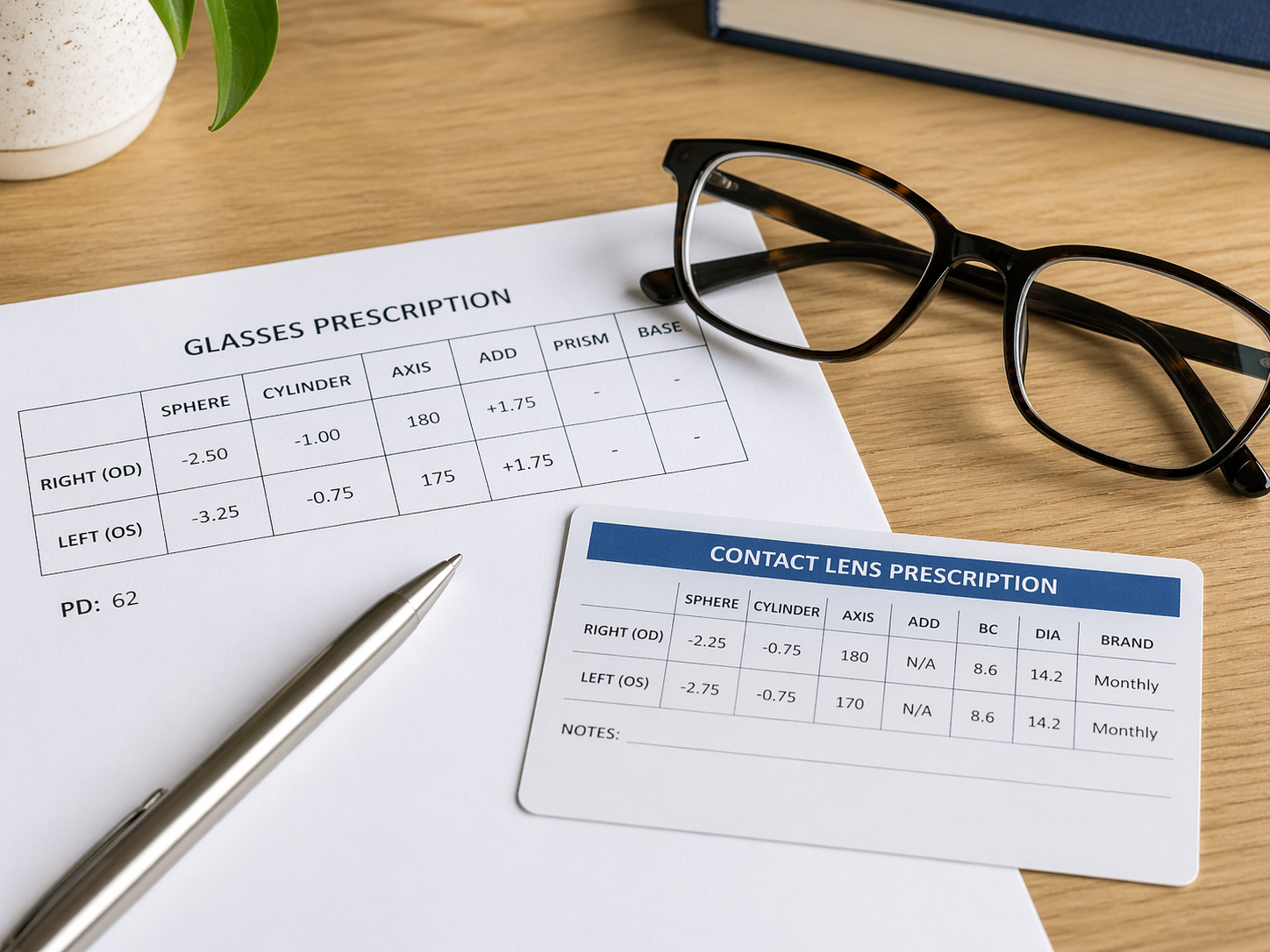
No, glasses and contact lens prescriptions are not the same. A glasses prescription tells a lab how to make lenses for a frame. A contact lens prescription includes lens power too, but it also includes fit-related details such as base curve, diameter, and the prescribed product information. The makes this difference clear.
That short answer matters because many people compare only the SPH number and stop there. In practice, that is where mistakes begin. Similar numbers do not mean the two prescriptions are interchangeable.
A better rule is simple: glasses prescriptions correct vision through a frame, while contact lens prescriptions correct vision and confirm that a specific lens can be worn on the eye.
What Glasses Prescriptions and Contact Lens Prescriptions Are Designed to Do
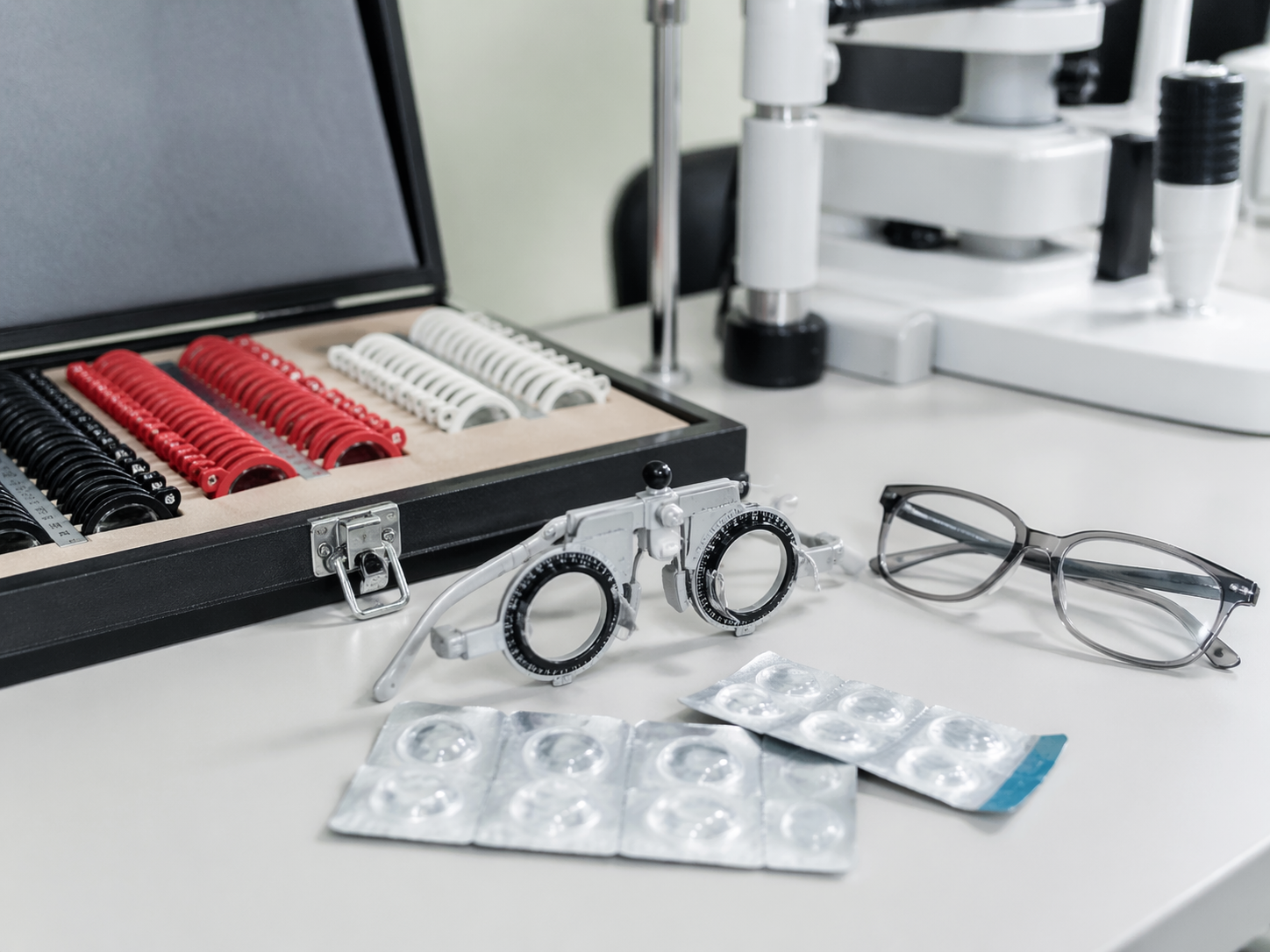
A glasses prescription is designed for spectacle lenses. A contact lens prescription is designed for a lens that touches the tear film and corneal surface. That is why the second document needs more than refractive power alone. The explains the main types of refractive error, and the explains that a valid contact lens prescription must include lens-specific details such as base curve, diameter, and manufacturer or material.
What a glasses prescription measures
A glasses prescription focuses on optical correction. It tells the lab how much lens power you need to see clearly through spectacle lenses.
It usually includes some combination of:
-
SPH for sphere power
-
CYL for astigmatism power
-
AXIS for astigmatism direction
-
ADD for near support
-
PRISM in selected alignment cases
In practical terms, a glasses prescription answers one main question: what lens power should sit in front of the eye to sharpen vision?
What a contact lens prescription measures beyond vision correction
A contact lens prescription starts with refractive correction, but it goes further. It must also reflect how a specific lens design sits on the eye.
That is why a contact lens prescription may include:
-
SPH, CYL, AXIS, or ADD
-
BC for base curve
-
DIA for diameter
-
The specific brand or lens type
-
Issue date and expiration date
This added information is not there for formality. It is there because contacts are worn on the eye, not in front of it.
Why one focuses on vision correction and the other also includes fit
A glasses lens works through a frame. A contact lens works through direct interaction with the cornea and tear film.
So even when both prescriptions serve the same person, they do not answer the same question. One asks, “What power should the lens have?” The other asks, “What power and what lens design will work safely and comfortably on this eye?”
Glasses Prescription vs Contact Lens Prescription: A Side-by-Side Comparison
 The overlap between the two prescriptions is real, but their purpose is different. One focuses mainly on refractive correction. The other combines refractive correction with lens fit and product selection. The explains the meaning of common spectacle fields such as sphere, cylinder, axis, and add, while the outlines the required elements of a contact lens prescription.
| Prescription Item | Glasses Prescription | Contact Lens Prescription | Why It Matters |
|---|---|---|---|
| SPH | Usually included | Usually included | Corrects nearsightedness or farsightedness |
| CYL | Included when needed | Included when needed | Corrects astigmatism |
| AXIS | Included when CYL appears | Included when CYL appears | Sets cylinder orientation |
| ADD | Often included for near support | May be included for multifocal contacts | Helps with presbyopia |
| PRISM | May appear | Less common | Used for some alignment issues |
| BC | Not standard | Usually included | Helps define fit on the eye |
| DIA | Not standard | Usually included | Helps define lens size and fit |
| Brand / Lens Type | Usually not required | Often required | Contacts are prescribed as specific products |
| Expiration | Varies by practice and local rules | Tied to contact lens prescribing rules | Affects refill and ordering validity |
At a glance, the biggest difference is clear. A glasses prescription is mostly about refractive numbers. A contact lens prescription is about refractive numbers plus lens fit plus product identity.
Why the Numbers Can Be Different
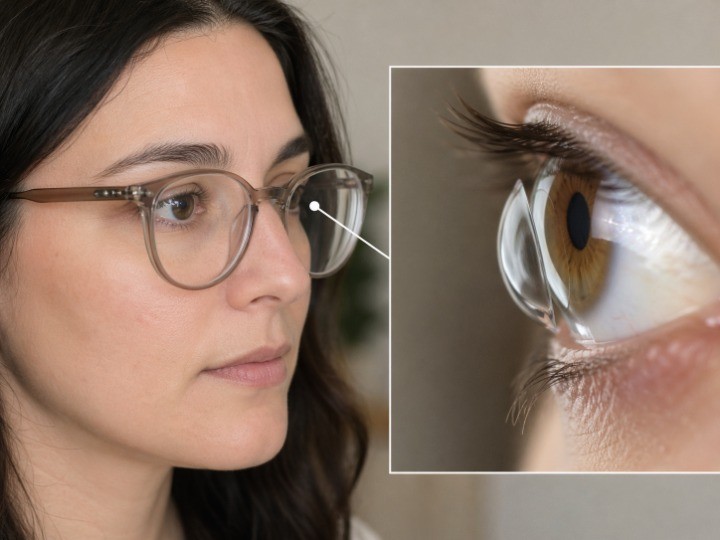 The numbers can differ because glasses and contacts sit in different positions. Glasses sit a short distance in front of the eye, while contact lenses rest directly on it. That change affects effective lens power, especially in stronger prescriptions. The notes that a contact lens prescription differs from an eyeglass prescription because a contact lens sits directly on the eye.
Vertex distance explained in plain English
In plain language, the lens works from a different location, so the math does not always stay identical. That is why a contact lens prescription can look weaker or stronger in one field even when the visual goal is the same.
Why contact lenses need fit-based adjustments
Power is not the only variable with contacts. A lens also has to center well, move appropriately, and stay comfortable across real wear.
That is why two lenses with similar power can still produce different real-world results. One may feel stable and clear. Another may feel dry, shift too much, or never give the same visual comfort.
Why stronger prescriptions often show more noticeable differences
This is where many people get confused. They compare a stronger glasses prescription to a weaker-looking contact lens number and assume something is wrong.
In many cases, nothing is wrong. The effective lens power changes because the lens position changes. That is why direct one-to-one comparison is often misleading.
Why two prescriptions can look similar but still not be interchangeable
Sometimes the sphere numbers look close enough to tempt someone into treating them as the same prescription.
That shortcut breaks down fast. Even if the power looks similar, the contact lens still needs the right base curve, diameter, product design, and wear approval. Close is not the same as correct.
Can You Convert a Glasses Prescription into a Contact Lens Prescription?
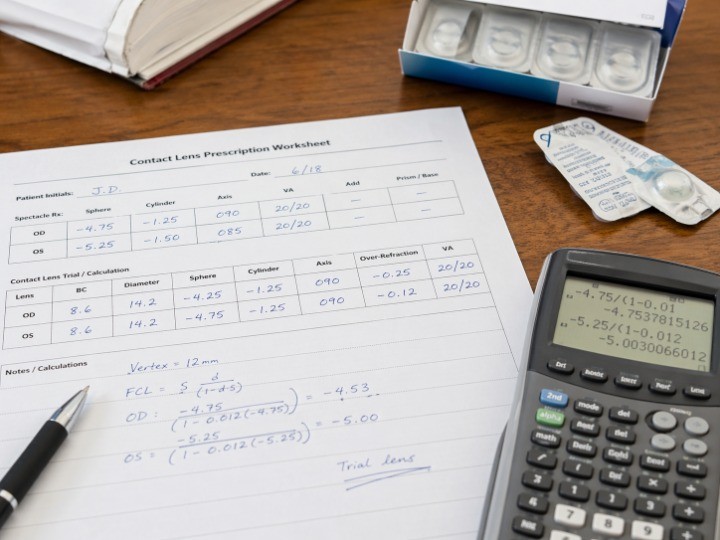 You can estimate part of a contact lens prescription from a glasses prescription, but you cannot create a complete and valid contact lens prescription from it alone. The requires product-specific details such as base curve, diameter, and manufacturer or material, and the explains that a contact lens prescription is released after the fitting is complete, not simply after a general vision exam.
That is the key limitation of online conversion tools. They may estimate sphere power. They do not evaluate fit, lens movement, comfort, tear film behavior, or brand-specific performance.
A practical way to think about conversion is:
-
A glasses prescription can provide a useful starting point.
-
A clinician may use it to estimate contact lens power.
-
The fitting process determines whether that estimate actually works.
-
The final prescription depends on more than the numbers alone.
So the honest answer is not “yes” and not “never.” The honest answer is: partial estimation is possible, but full prescription conversion is not enough for safe wear.
Contact Lens Fitting: The Step Many Articles Do Not Explain Well
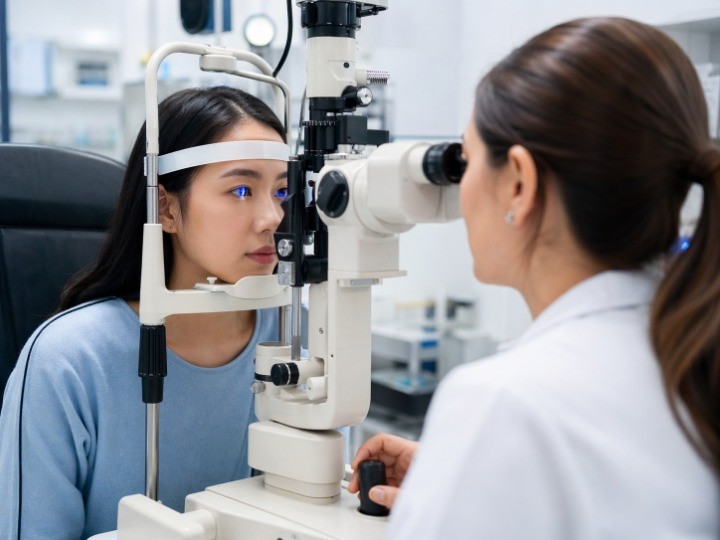 A contact lens fitting is the step that turns an estimate into a usable prescription. The states that a contact lens prescription is issued after a contact lens fitting, and the explains that the fitting may take more than one visit because the prescription is not complete until the fit is finalized.
During a fitting, the clinician looks beyond the numbers. They assess how the lens sits, how it moves, whether it centers properly, and how stable the vision feels during real wear.
That matters because fit affects all of the following:
-
comfort during wear
-
visual stability
-
lens movement and centration
-
tear film interaction
-
long-term tolerance
Brand and lens design matter here too. Two products may share a similar power range, but they may not behave the same way on the eye.
This is why changing brands on your own is risky. A contact lens is not a generic optical disc. It is a specific medical product with its own material, shape, diameter, and design behavior.
Image placeholder: Contact lens fitting exam with slit-lamp evaluation Alt text: clinician evaluating contact lens fit during eye exam
Common Mistakes People Make When Ordering Contacts
 The most common mistake is treating contact lenses like miniature glasses. The states that contact lenses are medical devices and warns that failure to wear, clean, and store them as directed can increase the risk of eye problems. The also advises people to use a valid prescription when ordering contact lenses.
The biggest errors usually fall into five patterns:
-
Assuming SPH is all that matters
-
Ignoring BC, DIA, and brand
-
Ordering with an expired prescription
-
Switching brands too casually
-
Choosing price before checking fit and wear suitability
These problems often start with a simple misunderstanding. People think they already know their lens power, so they believe the rest is minor. In reality, the missing information is often the most important part of the contact lens decision.
This is why contact lens ordering should not be treated as a quick refill unless the prescription is current and complete.
How to Read Each Prescription Correctly
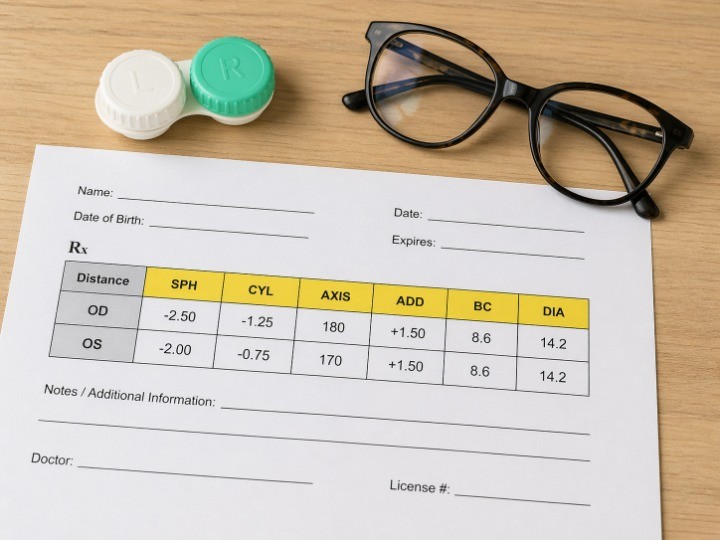 You should read a glasses prescription and a contact lens prescription differently because they answer different questions. The explains common fields such as SPH, CYL, AXIS, and ADD. The makes it clear that a contact lens prescription also includes lens-specific details such as base curve, diameter, and manufacturer or material.
How to read a glasses prescription
On a glasses prescription, the most common fields are:
-
SPH: basic lens power
-
CYL: astigmatism power
-
AXIS: direction of astigmatism correction
-
ADD: extra near power for multifocal use
-
PRISM: alignment support in selected cases
When you read a glasses prescription, the main goal is to understand the optical correction required through a frame.
How to read a contact lens prescription
On a contact lens prescription, you may see some of the same refractive fields. However, you also need to look for:
-
BC: base curve
-
DIA: diameter
-
brand or lens type
-
expiration date
-
prescriber details
When you read a contact lens prescription, the goal is broader. You are checking both correction and product suitability.
Abbreviations that confuse most readers
| Term | Meaning | More Common On |
|---|---|---|
| SPH | Sphere power | Both |
| CYL | Cylinder power | Both when needed |
| AXIS | Cylinder orientation | Both when needed |
| ADD | Near addition power | Both in multifocal use |
| PRISM | Alignment support | Mostly glasses |
| BC | Base curve | Contacts |
| DIA | Diameter | Contacts |
A useful rule is simple: if the field helps describe how a lens fits on the eye, it belongs on the contact lens side of the conversation.
Glasses vs Contacts: Which Option Makes More Sense for Different Needs?
 Neither option is better for everyone. The better choice depends on routine, comfort, eye health, and how much flexibility you want in daily wear. The describes both glasses and contact lenses as correction options for refractive errors, while the emphasizes that contact lenses require proper wear and care.
Glasses often make more sense when:
-
you want the simplest daily routine
-
you spend long hours at a desk
-
your eyes get dry easily
-
you want an easy backup solution
-
you do not want daily lens care steps
Contacts often make more sense when:
-
you want a wider open field of view
-
you play sports
-
you wear helmets or sunglasses often
-
you dislike frame weight or fogging
-
you prefer a lens that moves with the eye
For many people, the best answer is not one or the other. It is both. Glasses provide simplicity and backup. Contact lenses provide flexibility when the fit and wear routine are right.
How Long Prescriptions Stay Valid and When You Should Update Them
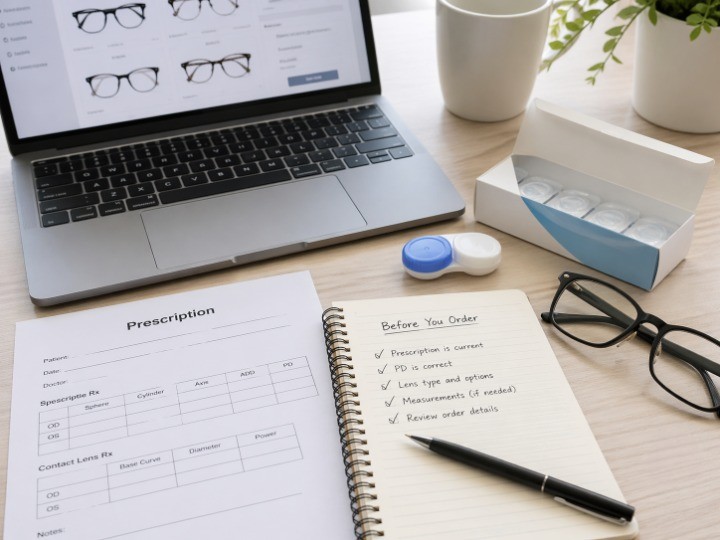 A prescription should not be treated like a permanent document. It reflects a point-in-time decision about correction and, in the case of contacts, lens fit.
In practical use, you should update sooner if:
-
your vision feels less sharp
-
near work becomes harder
-
your contacts feel less comfortable
-
the lens dries out faster than before
-
the product no longer performs the same way
A prescription can become outdated in more than one way. Sometimes the power changes. Sometimes the fit changes. Sometimes your eyes simply tolerate a product differently than before.
That is why stretching the life of an old prescription can create more problems than it saves.
What to Know Before Ordering Glasses or Contacts Online
Before ordering online, make sure you know which prescription you actually have. The explains that you are entitled to your glasses and contact lens prescriptions, but the timing differs: glasses prescriptions are released after an exam with refraction, while contact lens prescriptions are released after the fitting is complete. The also makes it clear that contacts should be purchased only with a valid prescription that includes the required product details.
Before ordering glasses online, check:
-
your current spectacle prescription
-
lens type choices
-
any extra measurements the seller may require
Before ordering contact lenses online, check:
-
exact power
-
exact brand or lens type
-
BC and DIA
-
expiration date
-
whether the prescription is still current
This is also where many delays begin. People often think they have one complete prescription for everything, when they actually have only the glasses version.
Image placeholder: Online ordering checklist for glasses and contact lenses Alt text: checklist before ordering glasses or contact lenses online
Glasses Prescription vs Contact Lens Prescription: FAQs
Can I use my glasses prescription to buy contacts?
Not by itself. A glasses prescription may help estimate a starting point, but a valid contact lens prescription also needs fitting and product-specific details.
Why is my contact lens power different from my glasses prescription?
Because the lenses sit in different positions. Glasses sit in front of the eye, while contacts sit directly on the eye, so the effective power relationship can change.
Do I need a separate prescription for contact lenses?
In normal practice, yes. A contact lens prescription is tied to fit and product selection, not just refractive numbers.
Can I switch contact lens brands with the same prescription numbers?
You should not assume that you can. Similar numbers do not guarantee the same fit, comfort, or performance.
Glasses prescription vs contact lens prescription is not a minor wording issue. It is a real practical difference. Glasses prescriptions are written for lenses in a frame. Contact lens prescriptions are written for lenses on the eye. That is why the numbers can differ, why conversion is only partial, and why fitting matters before ordering contacts.