


If you want to understand how optical lenses are manufactured, you need more than a quick factory summary. You need to see how materials, surfacing, coating, and inspection work together to shape the finished lens.
That matters because two lenses can look similar on a quotation sheet and still differ in optical accuracy, coating stability, and batch consistency. The World Health Organization notes that uncorrected refractive error remains the leading cause of vision impairment in both children and adults, which makes lens manufacturing quality highly relevant to global vision correction. ()
This guide explains the full workflow from raw materials to finished lenses. It also shows how each step affects quality, cost, lead time, and supplier reliability, so you can read the topic from both a technical and a wholesale sourcing perspective.
 How Are Optical Lenses Manufactured?
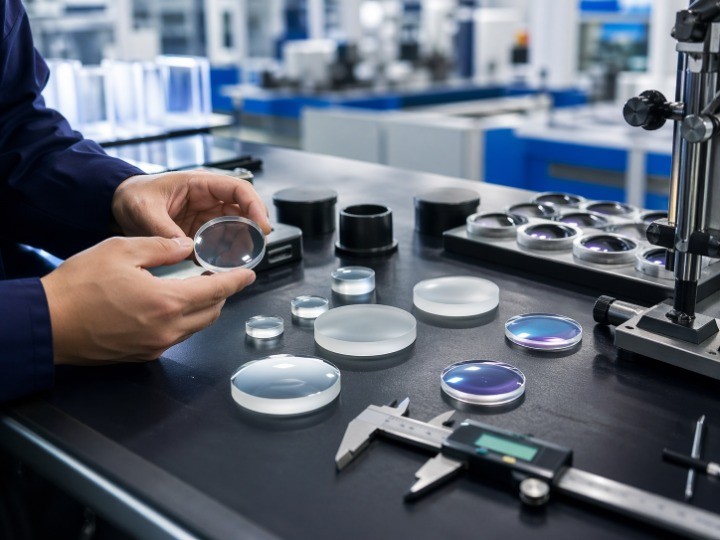
Optical lenses are manufactured by forming lens blanks, shaping them to the required optical design, refining the surfaces, applying coatings, and then verifying the finished result.
In practice, the process usually starts with blank production. The factory forms stock or semi-finished lenses from optical materials such as resin, polycarbonate, high-index materials, or glass. Then the processor selects the right blank, blocks it, generates the prescription surface, polishes it, cleans it, coats it, inspects it, and finally edges or glazes it for use.
That short answer covers the workflow, but it does not explain the real business issue. Each stage affects optical precision, scratch resistance, cosmetic appearance, remake rate, and shipment consistency. A strong manufacturer does not prove capability with one sample. It proves capability through repeatable output across many orders.
If you want to see more about our manufacturing mindset and lens categories, you can also explore , our , and our page.
What Optical Lens Manufacturing Really Means
 Optical lens manufacturing means controlled production, not simple shaping.
A finished spectacle lens must deliver the right optical effect, acceptable appearance, stable coating performance, and practical handling quality at the same time. That means the factory must control more than the visible shape of the product. It must control raw material quality, geometry, surface condition, cleaning, coating, inspection, and packaging discipline.
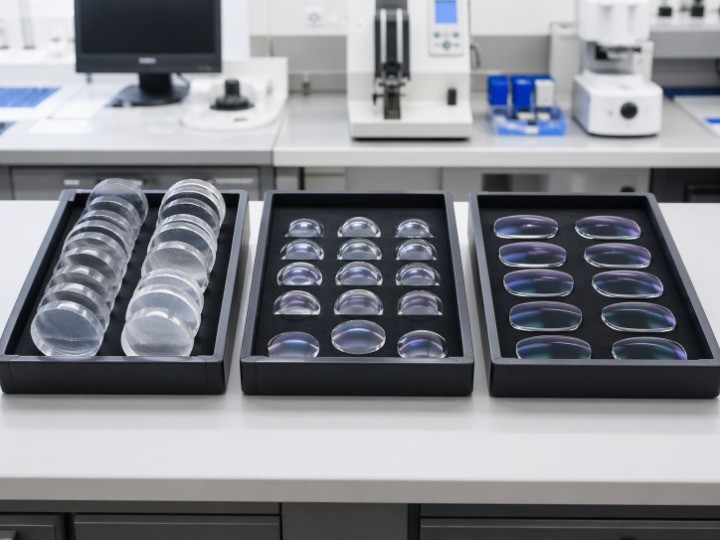
A useful starting point is the difference between stock lenses, semi-finished lenses, and prescription-finished lenses. Stock lenses are standard finished lenses in common powers. Semi-finished lenses already have one surface prepared and leave the other side available for later surfacing. Prescription-finished lenses are customized products that result from processing that second side.
This distinction matters because different customers depend on different supply models. A buyer who mainly needs large-volume single vision stock lenses should evaluate a factory differently from a lab that needs semi-finished blanks for progressive processing. Manufacturing capability is never one-size-fits-all. It depends on the product type, the process route, and the consistency requirements behind the order.
| Lens Type | What It Means | Main Use | Main Production Focus |
|---|---|---|---|
| Stock lens | Standard finished lens in common powers | Fast-moving inventory | Stable blank production, coating, and QC |
| Semi-finished lens | One surface prepared, one left for later Rx work | Labs and customized processing | Blank quality, base curve control, thickness planning |
| Prescription-finished lens | Fully customized lens | Final wearer correction | Data handling, surfacing, polishing, coating, verification |
Raw Materials Used in Optical Lens Production
 The material is one of the earliest decisions that shapes the full manufacturing route.
Most modern spectacle lenses use plastic materials, but the material family still changes thickness, weight, impact behavior, tint response, coating compatibility, and processing conditions. Standard resin materials remain widely used because they balance cost and usability well. Polycarbonate is valued for impact resistance. Higher-index materials help reduce lens thickness. Glass is less common in mainstream eyewear today, but it still appears in technical and regulatory discussions.
From a manufacturing point of view, the material affects more than product positioning. It influences how a lens behaves during surfacing, polishing, and coating. A material that helps reduce thickness may demand tighter control in another part of the process. A material that resists impact well may behave differently in tinting or cosmetic inspection.
For procurement teams, material selection should answer a few practical questions:
• How thin does the lens need to be at the target power? • How much impact resistance does the program require? • How important are coating performance and color consistency? • Does the target market care more about price, lightness, or premium appearance? • Can the chosen material stay stable in repeated production?
These questions matter because a quotation can hide important trade-offs. Two suppliers may both offer a 1.56 or 1.67 lens, but the real difference often appears in coating yield, thickness control, and long-term repeatability.
How Stock and Semi-Finished Lenses Are Made
 Stock and semi-finished lenses usually begin as molded blanks.
In plastic lens production, the manufacturer forms blanks with controlled front-surface geometry and defined dimensions. It then cures, stabilizes, and prepares them for later use as stock finished lenses or as semi-finished lenses for prescription surfacing. This first stage may look simple, but it strongly affects what happens later in processing.
Semi-finished lens quality matters because it defines the starting condition for custom work. If blank thickness varies, later thickness planning becomes harder. If the curve is unstable, downstream surfacing and fitting become less predictable. If the blank surface is not clean and uniform, polishing and coating yield can suffer.
That is why serious buyers should never judge semi-finished quality by appearance alone. A blank can look acceptable in a tray and still create problems during machining, polishing, or coating. A stable blank reduces risk before the lens reaches the lab, the coating line, or the shipping box.
Step-by-Step Optical Lens Manufacturing Process
The standard prescription lens process moves from data to blank selection, then to blocking, generating, polishing, cleaning, coating, and final inspection.
Step 1: Prescription Data Processing and Production Planning
The process begins with data. The factory or lab converts the order into production instructions that define power, cylinder, axis, add power, prism if needed, material, design, diameter, and coating choices. Accurate data handling is essential because every later step depends on it.
In real production, this is where many avoidable mistakes begin or end. If the wrong design, wrong material, or wrong thickness target enters the system, later processing may still produce a lens, but not the right lens.
Step 2: Lens Blank Selection
The next step is choosing the right stock or semi-finished blank. This decision affects center thickness, edge thickness, surfacing room, diameter efficiency, and final appearance.
This step is often underestimated. A poor blank choice may still allow production to continue, yet it can make later thickness control, cosmetic acceptance, or fitting much harder. Good manufacturing starts with choosing a blank that gives the process enough room to succeed.
Step 3: Blocking
Blocking secures the lens so the machines can process it accurately. The lens must be held in the correct position, because a weak or inaccurate block can introduce later problems in prism, axis, or geometry.
In practical terms, blocking is about stability and alignment. A strong machine cannot fix a lens that entered the process with the wrong reference.
Step 4: Generating
Generating creates the rough prescription surface by removing material according to the target optical design. At this stage, the lens moves closer to the required prescription, but the surface is not yet optically finished.
This is where geometry takes shape. However, the lens still needs later refinement before it can deliver clear and stable visual performance.
Step 5: Polishing
Polishing refines the generated surface to optical clarity. It smooths the surface and prepares it for reliable coating.
This step affects more than transparency. A poorly polished surface may reduce coating yield, weaken cosmetic quality, and increase the risk of later complaints. In repeat wholesale supply, that means polishing quality influences both optics and after-sales cost.
 Step 6: De-blocking and Cleaning
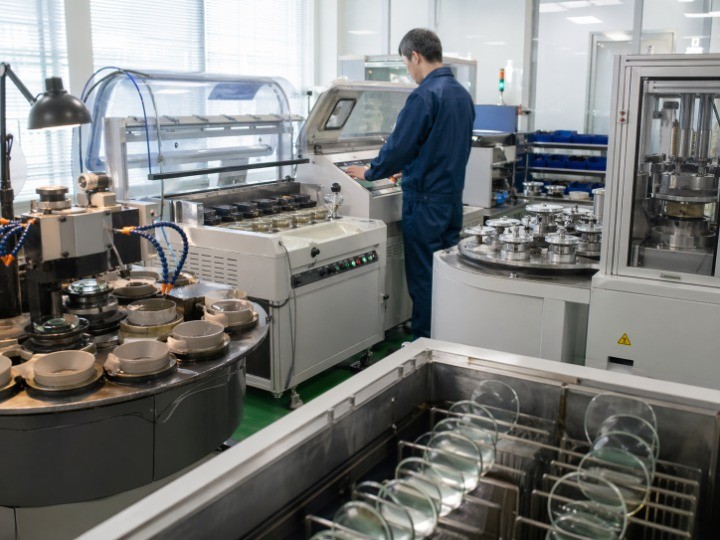
After surfacing and polishing, the lens is removed from the block and cleaned thoroughly. This step matters because residues from blocking materials, polishing compounds, or handling can interfere with coating quality.
Many factories talk about coating performance, but the real result often depends on cleaning discipline before the coating stage begins.
Step 7: Engraving and Marking
Some lenses, especially progressive and more customized designs, require precise markings for identification, fitting, and later verification. These references support both lab processing and product traceability.
Step 8: Tinting When Required
Tinting is added when the lens needs cosmetic color, sunwear function, or a specific transmission target. Color consistency matters because visible variation is easy for customers to notice and difficult for brands to defend.
Step 9: Coating Preparation and Application
The lens then moves into hard coating, anti-reflective coating, or other specified surface treatments. This stage improves durability, reduces unwanted reflections, and adds functional performance such as easier cleaning or reduced fogging.
Step 10: Final Inspection, Edging, and Glazing
The last stage verifies power, appearance, dimensions, and coating quality before the lens is edged and inserted into a frame or packed for shipment. This is the point where the process proves whether earlier control was strong enough.
How the Process Changes for Different Lens Types
 The main workflow stays similar, but different lens types create different manufacturing demands.
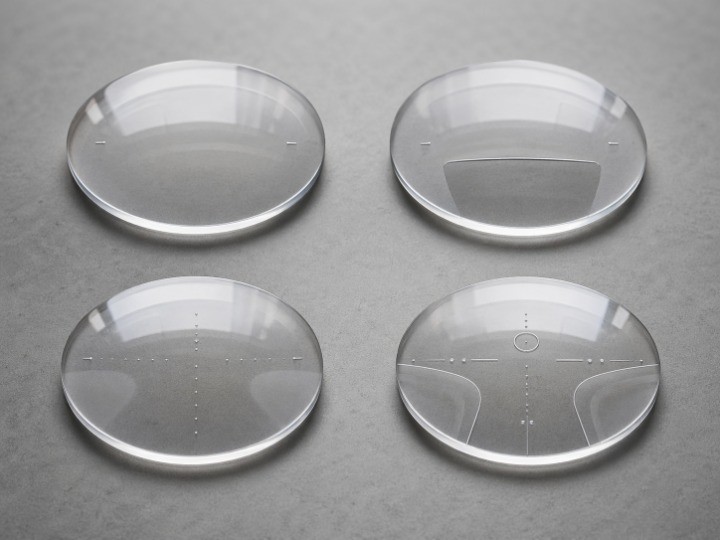
Single vision lenses are easier to standardize, especially in stock programs. Bifocal lenses require additional design control. Progressive lenses require tighter control of geometry, markings, fitting logic, and localized optical behavior. Freeform and customized lenses raise the bar further because they depend heavily on precise data transfer and advanced surfacing logic.
This is one reason buyers should compare suppliers by product category, not by broad catalog claims. A factory that performs well in standard single vision stock lenses may still struggle with premium progressive designs, short-corridor programs, or highly customized private-label projects.
That difference matters commercially. If your business depends on stable progressive adaptation, consistent fitting references, or a low remake rate in customized orders, the supplier’s capability in that exact category matters more than its overall product list.
Lens Coating Processes and Why They Matter
 Coatings turn a processed lens into a market-ready lens.
Hard coating improves surface protection. Anti-reflective coating reduces reflection and often improves both appearance and visual comfort. Top coats such as hydrophobic, oleophobic, and anti-fog layers can improve cleaning and day-to-day handling. ISO 8980-1 and related spectacle-lens standards exist because finished lenses need defined optical and geometrical quality rather than visual approximation alone. ()
From a wholesale point of view, coating quality is one of the clearest separators between strong factories and weak ones. A lens may meet its basic power target and still fail in the market because of unstable reflection color, poor adhesion, weak scratch resistance, or visible defects after shipping and handling.
That is why coating discussions should move beyond marketing names. Buyers should ask how lenses are cleaned before coating, how the factory controls surface preparation, how it evaluates adhesion, and how it handles cosmetic inspection under production pressure. Coating performance is not only a feature. It is part of product reliability.
Where Manufacturing Quality Is Determined
Manufacturing quality is determined throughout the process, not only at final inspection.
A final inspection table can catch certain defects, but it cannot fully recover a weak process. Power accuracy depends on data handling, blocking, and surfacing. Surface smoothness depends on generating and polishing. Coating yield depends on cleaning and preparation. Cosmetic quality depends on handling discipline as well as technical control.
Four quality areas usually deserve the closest attention:
| Quality Area | What It Affects | Why It Matters |
|---|---|---|
| Power accuracy | Vision performance | Reduces remake risk and wearer complaints |
| Surface finish | Clarity and coating yield | Supports optics and durability |
| Coating adhesion | Long-term use | Prevents peeling and claim costs |
| Cosmetic inspection | Appearance and retail acceptance | Protects brand image |
This is why mature factories build quality into the workflow rather than testing quality only at the end. Process quality always appears in product quality sooner or later.
Common Problems in Optical Lens Manufacturing
Most recurring manufacturing problems come from unstable data, process variation, contamination, or poor handling control.
Common issues include scratches, pits, coating peel, reflection inconsistency, tint variation, prescription deviation, and warpage. These defects rarely appear without a cause. They usually point back to a weak step earlier in the process.
For example, poor cleaning before coating can reduce coating yield. Weak blocking can influence prism and axis control. Inconsistent blank quality can make polishing and thickness planning less stable. Weak packaging discipline can damage a technically acceptable product before it reaches the customer.
A useful defect framework looks like this:
-
Data problem
-
Material problem
-
Process problem
-
Handling or packaging problem
This approach helps buyers move from complaint language to root-cause language. That shift matters because better supplier discussions start with diagnosis, not with blame.
What Buyers Should Look for in a Lens Manufacturer
 Buyers should look for repeatable output, not just a wide catalog or an attractive opening price.
In real sourcing work, batch consistency, traceability, packaging accuracy, communication quality, and corrective-action discipline usually matter more than a small unit-price difference. A supplier that can explain its process clearly and show stable control often protects margin better over time than a supplier that wins only on quotation speed.
A practical supplier checklist includes:
• product range and category fit • batch consistency across repeat orders • clear QC and inspection logic • traceability and lot management • packaging accuracy and export readiness • reliable communication and claim handling • support for OEM, ODM, and private-label execution
These points become even more important when orders involve customized packaging, mixed cartons, specific coating requirements, or replenishment planning across many SKUs.
How Manufacturing Capability Affects Cost, Lead Time, and Supply Reliability
Lower price does not always mean lower total cost.
A cheaper lens may create more remakes, weaker coating yield, slower claim cycles, packaging errors, or unstable replenishment. Once those hidden costs enter the picture, the initial quotation advantage often disappears.
Manufacturing maturity improves yield and consistency because it reduces avoidable variation. Better blank quality, stronger blocking accuracy, cleaner pre-coating preparation, more disciplined QC, and more organized packaging all support smoother production and more predictable delivery.
Compliance readiness matters as well. In the United States, FDA guidance states that spectacle lenses and sunglasses sold in the market must comply with impact-resistant lens requirements, and the agency also outlines certification and lot-entry expectations for products seeking entry into the U.S. market. ()
For professional buyers, the lesson is clear. The most competitive supplier is often the one that controls process risk well enough to protect delivery, not the one that simply quotes the lowest starting number.
Sustainability and Efficiency in Optical Lens Manufacturing
Sustainability in optical lens manufacturing is increasingly linked to efficiency and process discipline.
Factories reduce waste most effectively when they reduce errors, remakes, contamination, and packaging mistakes. Cleaner workflows usually save both material and time. Better traceability also reduces confusion during rework, returns, and mixed-order handling.
This topic is becoming more relevant in global sourcing because buyers are no longer looking only at output volume. They are also asking whether suppliers can maintain stable processes, reduce waste, and support longer-term operational reliability.
In practical terms, sustainability becomes stronger when a factory improves repeatability. Fewer failed lots, fewer damaged coatings, and fewer repacked shipments usually mean both better economics and better environmental performance.
How to Evaluate an Optical Lens Manufacturer
The best way to evaluate an optical lens manufacturer is to review product fit, process stability, coating performance, traceability, and supply support together.
Looking at only one factor usually leads to the wrong conclusion. A supplier may be strong in product range but weak in repeatability. Another may have good coating results but weak packaging discipline. A third may perform well technically but communicate too slowly for demanding wholesale programs.
Use this framework when comparing suppliers:
| Evaluation Point | What to Ask | What Good Looks Like |
|---|---|---|
| Product capability | Which categories are strongest in mass production? | Clear focus and realistic answers |
| Process stability | How do you control repeatability by lot? | Defined checkpoints and traceability |
| Coating performance | How do you verify adhesion and appearance? | Practical test logic and cosmetic standards |
| QC discipline | How do you manage power, appearance, and packaging checks? | Structured inspection, not informal review |
| Supply support | Can you support mixed orders and customization? | Organized execution and responsive follow-up |
A capable manufacturer should answer these questions directly. It should also explain limits honestly. A supplier that says yes to everything often creates more risk than one that defines boundaries clearly.
Conclusion
Understanding how optical lenses are manufactured
If your goal is not only to buy lenses, but to buy them more intelligently, manufacturing knowledge gives you a clear advantage. The best supplier is usually the one that can repeat good results reliably, not the one that only offers the lowest first quote.
Contact a Professional Optical Lens Manufacturing Partner
At Vena Optics, we support large-scale optical lens programs with a manufacturing-first approach. We focus on product consistency, coating performance, traceability, OEM and ODM execution, and practical support for brands, wholesalers, labs, and optical channels.