


what is a blue light blocking lens, and what does it really do?
That confusion makes sense. Marketing often mixes blue light filtering, anti-reflective coatings, computer glasses, and prescription lenses into one vague promise. At the same time, long screen hours, digital eye strain, and poor evening screen habits have made people more aware of eye comfort and sleep quality. Current expert guidance draws a clear line between what blue light lenses may help with and what they do not clearly solve. ()
This article gives you a practical answer. You will learn what a blue light blocking lens is, how it works, where it may help, where its limits are, and how to choose the right option for real daily use or product planning.
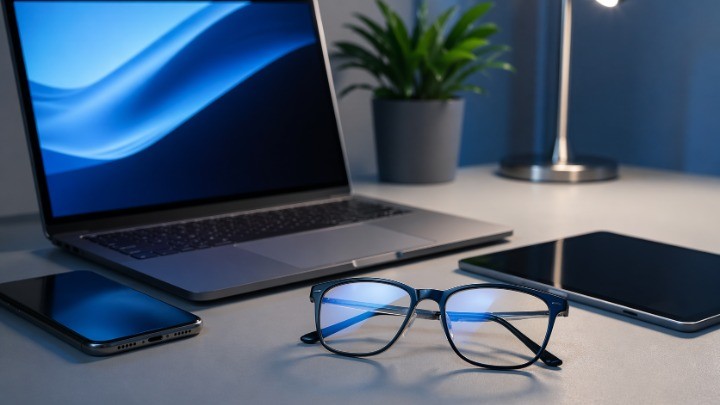 Blue Light Blocking Lens: The Quick Answer
A blue light blocking lens is an eyeglass lens that filters part of the shorter visible wavelengths commonly described as blue light. It may do that through a surface coating, the lens material itself, or a combination of both. Blue light blocking lenses can be prescription or non-prescription, clear or slightly tinted, and mild or more aggressive in how much short-wavelength light they reduce.
In plain terms, this type of lens is designed to reduce some blue light exposure from everyday sources such as screens, LED lighting, and ambient artificial light. However, not all blue light lenses are built the same way, and not all claims around them are supported equally well. Harvard notes that commercial blue-light filtering products are not standardized, which is one reason user expectations and real-world performance vary so much.
For most readers, the short answer is simple: blue light blocking lenses are a lens option for screen-heavy lifestyles, but they are not a cure-all for eye strain, and they are not automatically necessary for eye health. The strongest value usually comes from matching the lens type to the right use case instead of buying one based on marketing language alone.
| Lens type | Typical look | Common use case | Main trade-off |
|---|---|---|---|
| Clear blue light lens | Nearly clear or lightly reflective | All-day office or school use | Usually milder filtering |
| Lightly tinted blue light lens | Soft yellow or warm tone | Long screen sessions | Slight color shift |
| Amber or orange lens | Strong warm tint | Evening or late-night device use | Strongest change in color perception |
What Is Blue Light?
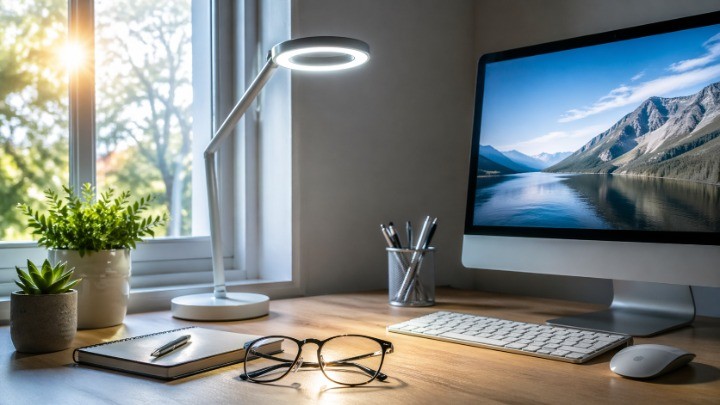 Blue light is part of the visible light spectrum, and it sits on the shorter-wavelength, higher-energy side of visible light. Harvard Health describes visible light as roughly 400 to 700 nanometers, with blue light falling at about 450 to 495 nanometers. Sunlight contains blue light across the visible range, and modern LEDs and digital screens also emit it.
This matters because blue light is not automatically “bad.” During the day, blue-enriched light helps support alertness and helps keep the body’s circadian clock aligned with the day-night cycle. Harvard also notes that melanopsin-containing retinal cells are especially sensitive near 480 nanometers, which is one reason blue-green light has a strong link to wakefulness and timing signals.
That is also why screen-related blue light gets so much attention. Screens are not the biggest source of blue light. The sun is. But screens are close to the eyes, they are used for long periods, and they are often used late in the day. Cleveland Clinic points out that sunlight produces far more blue light than everyday digital devices, even though screen habits can still affect comfort and sleep routines.
The practical takeaway is this: blue light has a normal role in daily life, but the timing and context of exposure matter. Daytime exposure and evening exposure do not affect the body in exactly the same way.
What Is a Blue Light Blocking Lens?
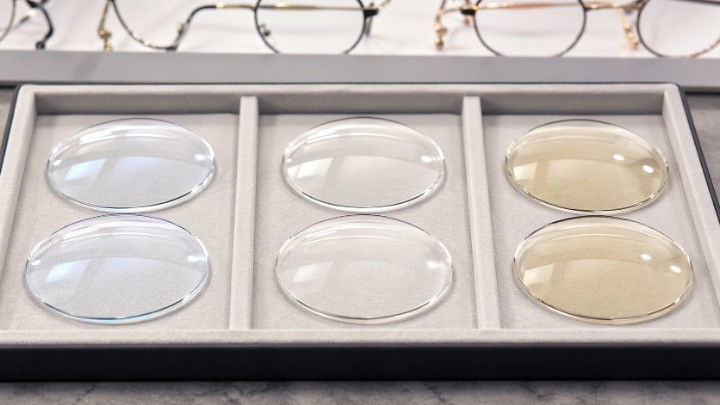 A blue light blocking lens is a lens designed to reduce transmission of part of the blue-light range before that light reaches the eye. Some products are sold as blue light glasses, some as blue cut lenses, and some as prescription lenses with blue light filtering built in. In function, they all belong to the same broad category, even though the exact filtering method may differ.
This is where terminology often causes confusion. A blue light blocking lens is not always the same thing as an anti-reflective lens, and it is not always the same thing as a dedicated computer lens. A blue light feature refers to wavelength filtering. Anti-reflective treatment refers to reducing reflections and glare. Computer glasses refer to a lens design or prescription setup optimized for screen distance. One product can combine all three, but they are not interchangeable terms.
Blue light filtering is available in both prescription and non-prescription formats. That makes it easy to integrate into single-vision office glasses, everyday prescription eyewear, plano screen glasses, or more specialized lens programs. For many users, the key question is not whether the category exists. The key question is which version fits daily use without introducing unnecessary tint, color distortion, or unrealistic expectations.
How Does a Blue Light Blocking Lens Work?
 Blue light blocking lenses work by selectively reducing transmission of shorter visible wavelengths, but the exact method varies from product to product. Some lenses rely on a coating. Others rely on dye or material design. Many modern products combine several optical treatments, which is why two lenses marketed with similar language can perform very differently in practice.
Coating-based filtering is common in clear everyday eyewear. This route often aims to preserve lens transparency while reflecting or absorbing part of the blue-violet range. Material-based filtering may use built-in absorbers or tinting to reduce more short-wavelength light through the lens body itself. In general, stronger visible filtering often creates a more noticeable color cast. That is why amber and orange lenses usually look warmer than clear blue light lenses.
Not every product blocks the same wavelengths. Harvard points out that commercial products are not standardized, so consumers often do not know exactly which wavelengths are being reduced or how much. That matters because different parts of the blue range relate differently to visual appearance, color perception, and circadian signaling.
For that reason, clear blue light lenses and amber nighttime lenses should not be treated as the same product. One is often built for all-day wear and modest filtering. The other is often built for stronger evening light reduction, with a much bigger visual effect.
Do Blue Light Blocking Lenses Really Work?
 For digital eye strain, the strongest current evidence does not show a clear short-term advantage of blue-light filtering lenses over non-blue-light filtering lenses. A 2023 Cochrane review concluded that blue-light filtering lenses may not reduce short-term eyestrain from computer use compared with non-blue-light filtering lenses, and the related Cochrane summary stated that these products probably make little or no difference for eye strain, eye health, or sleep quality based on the available randomized trials.
That does not mean every user feels no benefit. Some people report better comfort when using them. Cleveland Clinic notes that perceived improvement may come from tint, anti-reflective performance, reduced glare, updated prescription accuracy, or even personal preference rather than from blue-light filtering alone. In other words, a user can feel better without blue light filtering being the main reason.
Sleep is more nuanced. Harvard explains that evening blue-light exposure can stimulate melanopsin-containing cells and make the brain behave as if it is still daytime, which can make it harder to fall asleep. At the same time, Harvard also says the evidence around commercial blue-light glasses and sleep is not yet clean or standardized, and product differences remain a major issue. Cleveland Clinic adds that nighttime filtering may help some people, but good sleep habits still matter just as much, if not more.
So the realistic answer is this: blue light blocking lenses are not a proven fix for everyday digital eye strain, but evening light reduction may still be relevant for some users who spend a lot of time on bright screens before bed. That is a more accurate position than either extreme claim.
Why People Choose Blue Light Blocking Lenses
Most people choose blue light blocking lenses because they spend long hours on digital devices and want a lens option that feels more screen-friendly. That motivation is understandable. Screen use is often tied to dry eye symptoms, visual fatigue, headaches, and reduced blinking, especially during long near-work sessions. Reviews of digital eye strain describe common symptoms such as dryness, burning, blurred vision, and headache, while the American Optometric Association continues to recommend the 20-20-20 rule for relief. ()
Office workers often choose them because they sit in front of multiple monitors for much of the day. Students and gamers often choose them because they switch between phones, tablets, laptops, and larger displays. Prescription wearers often prefer them because they want one lens that handles both correction and screen-related concerns without needing a separate pair.
Another common group includes people who use devices late at night. For them, the choice is often less about eye health marketing and more about evening routine management. They may want a lens that fits screen-heavy nights, travel schedules, or irregular work hours. That does not guarantee a measurable benefit in every case, but it explains why the category remains commercially strong.
Potential Benefits of Blue Light Blocking Lenses
The most realistic benefits of blue light blocking lenses are comfort-related and routine-related, not miracle-level health protection. That distinction is important. When users say a lens “works,” they may mean it feels better during screen use, reduces perceived glare, fits their daily prescription setup, or helps them manage late-evening device habits more consciously.
Potential benefits may include:
-
Better subjective comfort during long screen sessions.
-
Reduced perceived glare in some lens designs.
-
Simpler all-day wear when blue light filtering is combined with prescription correction.
-
Stronger evening routine control when the lens is used along with lower brightness and less bedtime screen exposure.
Cleveland Clinic specifically notes that any reduction in glare may relate more to tint and anti-reflective performance than to the blue-light filtering effect itself. That is still useful in practice, but buyers should understand what part of the product is doing the work.
For product planners, this is a useful commercial lesson. A blue light lens sells best when it is positioned honestly: as a comfort-oriented option within a broader lens design and coating strategy, not as a universal answer to screen fatigue.
Limits, Myths, and Common Misunderstandings
Blue light is not the only reason eyes feel tired after screen use, and in many cases it is not the main reason. Cleveland Clinic explains that reduced blinking, prolonged near focus, dry ocular surface, and long uninterrupted screen sessions are more plausible drivers of digital eye strain than blue light itself.
That is why one of the biggest myths in this category is the idea that blue light lenses replace healthy visual habits. They do not. The AOA still recommends the 20-20-20 rule, and Cleveland Clinic emphasizes blinking more often, increasing screen distance, adjusting font size, checking prescriptions, and cutting back on late-night screen use when needed. (
Another common misunderstanding is that a stronger tint always means a better product. In reality, stronger filtering often changes color perception more obviously and may not suit all-day work, design tasks, retail environments, or general wear. The right lens depends on the time of use, the prescription format, and the user’s tolerance for warmth or tint.
Marketing also creates confusion by treating eye strain, retinal protection, glare, and sleep as if one lens feature solves them all. A better way to think about blue light blocking lenses is to separate four issues: visual comfort, glare management, bedtime light exposure, and prescription accuracy. They overlap, but they are not identical problems.
Blue Light Blocking Lens vs Other Solutions
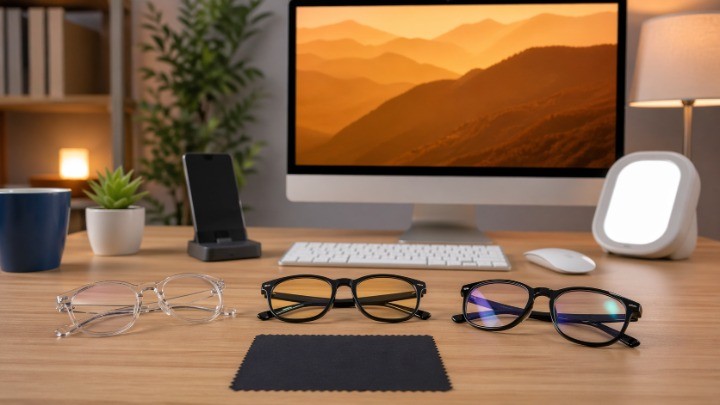 Blue light blocking lenses are only one option in a larger screen-comfort toolkit. In many cases, habits, ergonomics, prescription accuracy, and surface treatments matter as much as, or more than, blue-light filtering alone.
| Option | What it mainly helps with | Best fit | Main limit |
|---|---|---|---|
| Blue light blocking lens | Filtering part of short-wavelength light | Screen-heavy users, especially evening users | Evidence for eye strain relief is limited |
| Anti-reflective coating | Surface reflections and perceived glare | Office and indoor wear | Does not replace screen breaks |
| Computer glasses | Focus support at screen distance | Long desktop work | Use-specific, not always all-day wear |
| Night mode / warm display | Reduces short-wavelength output from device | Evening device use | Depends on consistent device settings |
| Screen habits and ergonomics | Dryness, focus fatigue, comfort | Almost everyone | Requires routine discipline |
Anti-reflective coating often improves visual comfort by reducing reflections on the lens surface. Computer glasses can improve comfort by matching the lens prescription to the typical monitor distance. The AAO notes that computer-specific prescription glasses are often designed around intermediate viewing distances of roughly 20 to 26 inches.
Screen habits still matter the most in many real cases. Cleveland Clinic recommends the 20-20-20 rule, more frequent blinking, artificial tears when needed, larger text, an arm’s-length viewing distance, and less screen exposure before bed. These are low-cost, high-impact adjustments that many users overlook while searching for a special lens solution.
How to Choose the Right Blue Light Blocking Lens
 The right blue light blocking lens depends on when you use screens, how sensitive you are to tint, and whether you need prescription correction. That is the decision framework that matters most.
If you need an all-day office lens, a clear or nearly clear design usually makes more sense than a stronger amber product. If your main concern is heavy screen use late at night, a warmer and more visibly filtering option may be more relevant. If you already wear prescription glasses, combining blue light filtering with the right lens material, prescription accuracy, and anti-reflective treatment usually matters more than choosing a blue light feature alone.
Use this short checklist before buying:
-
What is the main use case? Office work, school, gaming, or late-night device use?
-
Do you need prescription correction? If yes, get the base prescription right first.
-
How much tint can you tolerate? Clear, lightly warm, or strongly amber?
-
Do you also need glare reduction? Consider anti-reflective treatment.
-
Will color perception matter? Important for design, retail, and visual-critical work.
-
Do you want one pair or task-specific pairs? One daily lens does not suit every routine.
For B-end buyers, the same logic applies at product level. Choose lens programs by audience, not by trend language. A mass-market office lens line should not be built like a nighttime recovery lens line. Clear positioning leads to better product-market fit.
Are Blue Light Blocking Lenses Worth It?
Blue light blocking lenses are worth it when the product matches a real use case and the buyer understands its limits. They can make sense for users who want a screen-oriented lens option, a convenient prescription upgrade, or an evening-use lens strategy that fits their routine.
They are less compelling when the buyer expects them to solve all digital eye strain symptoms by themselves. If dryness, glare, old prescriptions, nonstop screen use, poor posture, and late-night scrolling remain unchanged, the lens alone is unlikely to transform the experience. The Cochrane review is especially useful here because it pulls the conversation back to measured outcomes instead of marketing claims. ()
A practical rule works well: if your goal is comfort, buy with realistic expectations; if your goal is better sleep, fix evening screen habits first; if your goal is product strategy, segment by use case and tint tolerance.
What Buyers, Brands, and Optical Retailers Should Check Before Choosing a Blue Light Lens Supplier
 For buyers, the real question is not whether a blue light lens exists. The real question is whether the product claim, visual appearance, and batch consistency all match the target market.
Start with filtering claims. Ask for transmission data, not slogans. A supplier should be able to explain what part of the short-wavelength range the lens is designed to reduce, how the result is measured, and whether the filtering comes from coating, material, or both. Harvard’s point about limited standardization makes this especially important. ()
Then review visible appearance. Some markets prefer lenses that stay almost clear. Others accept warmer residual tint. That affects merchandising, consumer acceptance, and perceived quality. Also check blue residual reflectance, yellowness, and color neutrality under indoor lighting.
Next, review surface quality and batch stability. A blue light program that looks fine in one sample but shifts visually across production lots can create avoidable complaints. Buyers should also confirm:
-
coating uniformity
-
cosmetic cleanliness
-
compatibility with prescription ranges
-
material options such as 1.56, 1.60, 1.67, or PC
-
packaging and private-label flexibility
-
claim language suitable for local market compliance
For brands and distributors, honest positioning usually converts better over time than overstated promise language. A product described as a comfort-oriented lens for screen-heavy lifestyles is easier to defend than one framed as a guaranteed health shield.
Common Questions About Blue Light Blocking Lenses
Can you wear blue light blocking lenses all day? Yes, many clear blue light lenses are designed for all-day wear. The key issue is comfort, appearance, and how much tint the user can tolerate, not whether the category must be limited to short sessions.
Are blue light blocking lenses suitable for children? They can be used in children’s eyewear, but parents should not treat them as the main answer to screen-related discomfort or sleep problems. Breaks, blinking, prescription accuracy, and bedtime screen limits still matter.
Do blue light lenses affect color perception? They can. The stronger the visible filtering and tint, the more noticeable the warm shift may become. Clear products usually change color perception less than amber or orange lenses.
Can blue light filtering be added to prescription lenses? Yes. Blue light filtering is commonly available in prescription lens programs, often combined with anti-reflective treatment or other coatings.
Do clear blue light lenses work the same way as yellow lenses?** No. Both may reduce part of the blue range, but clear lenses usually aim for milder all-day filtering, while yellow or amber lenses usually create stronger visible change and stronger filtering.
Final Thoughts
A blue light blocking lens is best understood as a specialized lens option, not a universal fix. It may fit screen-heavy routines, all-day prescription wear, or evening device use, but the lens works best when expectations stay realistic and the product matches the use case.
If you want the strongest result, combine the lens with the basics that still matter most: accurate prescription, sensible screen distance, regular breaks, more blinking, better glare control, and less bright screen exposure before bed. That combination is far more effective than relying on blue light marketing alone.
Blue Light Lens Solutions for Brands, Retailers, and Distributors
If you are building a blue light lens program for the market, focus on segmentation first. Clear everyday office lenses, prescription blue light products, and stronger nighttime-use lens options should not be sold as if they are the same product. A stronger product line starts with a clearer use-case story.