


What is an aspherical lens, and why do so many buyers ask about it?
Many people compare aspherical lenses with standard lenses because they want thinner glasses, a flatter front look, and better comfort. The confusion starts when lens design, lens material, and coating get mixed together. An aspherical lens is a design choice, not the same thing as high-index material, and that difference matters when you decide where to spend more.
This guide will give you a direct answer first, then help you compare aspherical and spherical lenses, judge when the upgrade is worth it, and understand how frame size, coating, and material affect the final result. ()
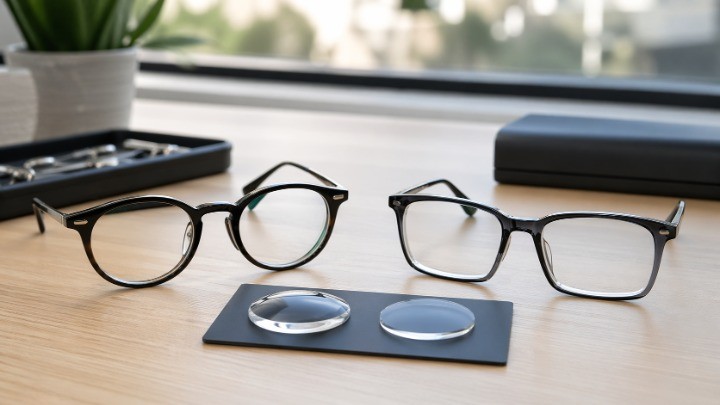 Aspherical Lenses: The Quick Answer
An aspherical lens is an eyeglass lens whose surface curvature changes from the center to the edge instead of staying the same across the whole surface. That design lets manufacturers create a flatter lens profile and gives them more control over optical performance than a simple spherical surface. In optics, aspheric surfaces are widely used because they can reduce spherical aberration compared with conventional spherical surfaces.
For everyday eyewear, the practical meaning is simple. Aspherical lenses often look slimmer and flatter, and they usually make more sense when prescription strength, frame size, or appearance concerns make standard lenses look too bulky. They are not always necessary for low prescriptions, but they become more valuable when the lens has to do more work.
If you want one buying rule, use this one: choose aspherical design when you want a more refined lens shape, and choose high-index material when you need stronger thickness reduction. In many real prescriptions, the best result comes from combining both.
What Is an Aspherical Lens?
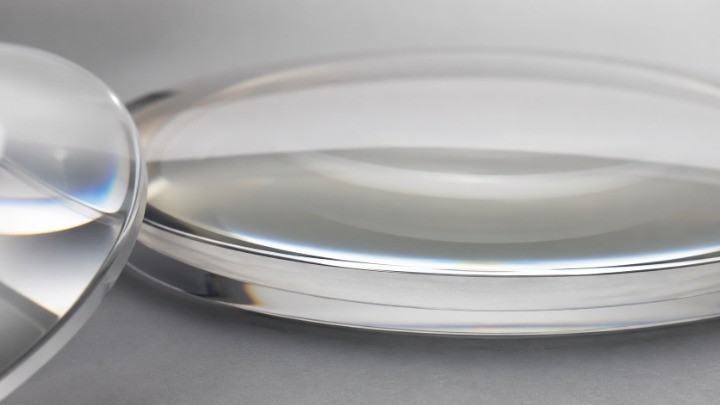 An aspherical lens is a lens with a non-spherical surface geometry. A spherical lens keeps one constant radius of curvature. An aspherical lens changes curvature as you move outward from the optical center. That is the technical definition, and it is the core reason the lens can be flatter than a standard spherical design.
This matters because glasses correct refractive errors by bending light so it focuses properly on the retina. The National Eye Institute describes four common refractive errors as myopia, hyperopia, astigmatism, and presbyopia. The World Health Organization also explains that refractive error happens when the shape or length of the eye prevents light from focusing correctly on the retina. ()
So, when you ask what an aspherical lens is, the better question is really this: what does a more advanced surface shape help the lens do? The answer is that it helps manage lens form more efficiently. It can reduce the excessive curvature that makes many standard lenses look rounder, thicker, or less refined in the frame.
That does not mean every aspherical lens is automatically premium in every other way. Material quality, coating performance, edging quality, and fitting accuracy still matter. But the design itself is real, practical, and relevant to how the finished glasses look and wear.
Aspherical vs. Spherical Lenses: What Is the Real Difference?
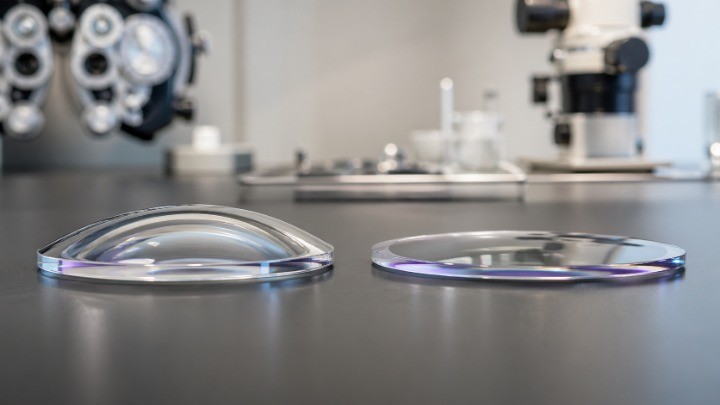 The real difference is the lens surface shape. A spherical lens uses one continuous curve. An aspherical lens changes curvature across the surface. That single design change affects thickness appearance, front profile, and the amount of design control the manufacturer has.
In practical eyewear terms, spherical lenses often look more curved. That stronger curve can make the lens appear bulkier, especially in stronger prescriptions or larger frames. Aspherical lenses can keep the front curve flatter, which usually creates a cleaner look and can improve comfort by reducing visible bulk.
In optical engineering, aspheric surfaces are also important because they can reduce spherical aberration more effectively than simple spherical surfaces. That does not mean every wearer will describe the difference in scientific terms. Most people first notice the shape, the thickness impression, and the way the lenses sit in the frame.
| Feature | Spherical Lens | Aspherical Lens |
|---|---|---|
| Surface form | Constant curvature | Curvature changes from center to edge |
| Front profile | More rounded | Flatter |
| Cosmetic impression | Often bulkier | Often slimmer |
| Design flexibility | More limited | Greater optical control |
| Best fit | Budget-focused basic jobs | Premium-looking or more demanding jobs |
If your goal is to understand the difference quickly, think of spherical as simpler and rounder, and aspherical as more advanced and flatter. That summary is not complete, but it is accurate enough for purchasing logic.
What Are the Main Benefits of Aspherical Lenses?
 The biggest benefits are a flatter lens profile, lower apparent bulk, and a more refined final look. Those advantages matter because most wearers do not judge lenses in a lab. They judge them on the face, in daily wear, and in comparison with older glasses that felt thicker or looked heavier.
A flatter profile often helps the lens look more balanced in modern frames. This becomes especially useful in larger acetate frames, style-driven shapes, and prescriptions where a standard lens might appear too rounded. Even when the actual millimeter difference is modest, the visual difference can still matter because front appearance strongly influences user satisfaction.
Aspherical design also supports better optical control than a simple spherical surface. In technical optics, that matters because aspheric surfaces can reduce spherical aberration. In everyday glasses, the wearer usually experiences that advantage as a more polished premium lens design rather than as a technical specification.
Other practical benefits include:
-
A flatter, less bulging lens appearance
-
Better compatibility with style-focused frames
-
A more premium visual finish
-
A better platform for stronger prescriptions when combined with the right material
Who Should Consider Aspherical Lenses Most?
Aspherical lenses usually make the most sense for wearers who care about thickness, profile, and appearance, especially when the prescription is no longer very low. They are also a strong option when the chosen frame is large enough to make lens bulk more obvious.
People with plus prescriptions often benefit because flatter geometry can help control the strong front curvature that these lenses may show. People with moderate to stronger minus prescriptions may also benefit because they often want a cleaner lens look, especially in larger frames where edge thickness becomes more noticeable.
This category also includes buyers who are building a premium lens offer. If you sell eyewear, manage a lens program, or source for a wholesale channel, aspherical design is useful because it is easier to explain than some hidden technical upgrades. End users can often understand “flatter and better-looking” faster than a longer discussion about material index or transmittance.
A simple way to judge fit is to ask three questions:
-
Does the prescription create visible bulk?
-
Is the frame large or fashion-oriented?
-
Does the wearer care about lens appearance?
If the answer is yes to two or more, aspherical design often deserves serious consideration.
When Aspherical Lenses May Not Be Necessary
Aspherical lenses are not mandatory for every prescription. If the prescription is low, the frame is compact, and the wearer mainly wants a reliable budget solution, a standard spherical lens can still be the right answer.
This is where many articles become too promotional. They describe the upgrade as if every buyer needs it. In real practice, the value of any lens upgrade depends on whether the wearer will actually notice the result. If the lens already starts thin and the frame is small, the extra spend may deliver only a small visible gain.
There is also a budget question. Money spent on aspherical design may have less impact than money spent on a better coating package, a better frame, or a material upgrade. That is why the right lens is not always the most premium lens on paper. It is the lens package that solves the wearer’s biggest real problem. ()
So, when may aspherical be optional?
-
Low prescriptions
-
Small frame sizes
-
Budget-first purchases
-
Casual or backup glasses
That does not make spherical lenses old-fashioned. It makes them appropriate in the right cases.
Aspherical Lens vs. High-Index Lens: They Are Not the Same Thing
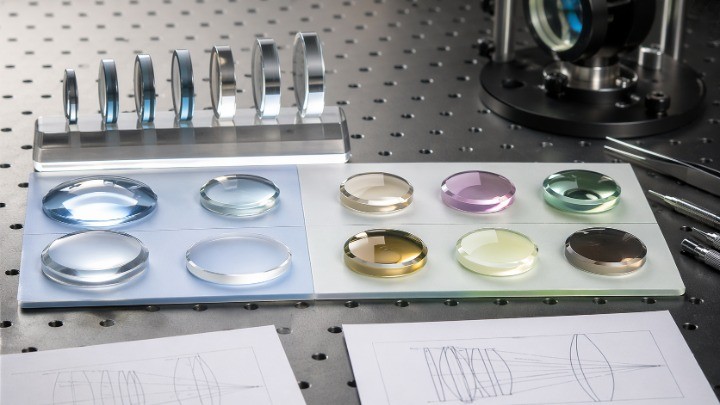 Aspherical is a design term. High-index is a material term. This distinction is one of the most important points in lens buying because many consumers and even some sellers mix them together.
A high-index lens reduces thickness by using a material that bends light more efficiently. An aspherical lens changes the surface form so the lens profile can stay flatter and more controlled. Because they solve different parts of the problem, they are not direct substitutes. ()
In many stronger prescriptions, the best result comes from combining both. Material helps reduce overall thickness. Surface design helps improve shape and front appearance. That combination is often what gives premium lenses their most noticeable advantage.
| Question | Aspherical Lens | High-Index Lens |
|---|---|---|
| What is it? | Surface design | Lens material |
| Main job | Flatter profile and design control | Thinner lens at a given power |
| Best reason to choose | Appearance and shape | Stronger thickness reduction |
| Can it be combined with the other? | Yes | Yes |
If you remember only one sentence from this section, remember this one: aspherical and high-index often work best together, not against each other.
Why Two Aspherical Lenses Can Still Perform Differently
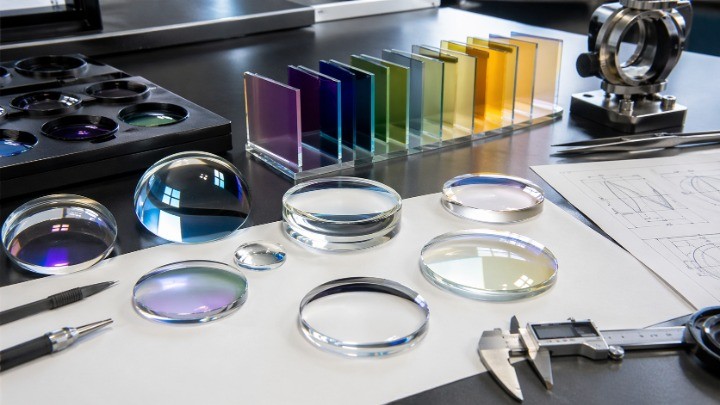 Two lenses can both be labeled aspherical and still deliver different results. That happens because the final experience depends on more than one variable. Design matters, but material, coating, frame geometry, and fitting quality all affect the finished job.
Material is the first factor. A CR-39 lens, a polycarbonate lens, and a high-index lens do not behave the same way in thickness, weight, reflection level, or coating demands. So even when the surface design is similar, the finished lens may not feel or look the same.
Prescription strength is the second factor. The stronger the prescription, the more influence lens design usually has on perceived bulk and profile. Frame size is the third factor. A larger finished diameter can cancel some of the cosmetic advantage the buyer expected from the upgrade.
Finally, fitting quality matters. A premium lens design cannot fully compensate for poor centration, weak measurement, or frame choices that force unnecessary thickness. That is why premium design and good dispensing need to work together. ()
Frame Selection Matters More Than Many Buyers Realize
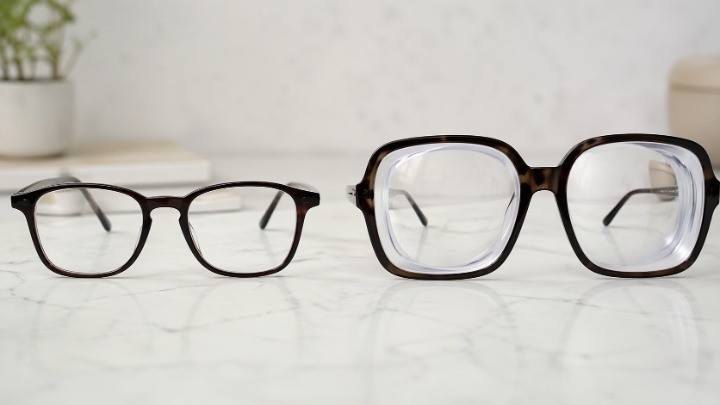 Frame choice has a direct effect on how thick a finished lens looks. A large frame usually needs a larger finished lens blank, and that often means more visible thickness at the edge or more overall visual bulk.
That is why an excellent aspherical lens can still disappoint in the wrong frame. If the eye size is oversized, the bridge fit is poor, or the pupil position sits far from the geometric center, the lab may need more diameter to edge the lens correctly. That can reduce the cosmetic benefit the wearer expected.
For buyers, the better approach is to evaluate frame and lens together. In many successful premium jobs, three choices align well:
-
A sensible frame size
-
A material that matches the prescription
-
An aspherical design that improves profile
When those three work together, the result is more predictable. When they do not, the wearer may blame the lens even though the frame was part of the problem.
[Image placeholder: Show the same prescription in a compact frame and an oversized frame.] Alt text: frame size effect on finished lens thickness
Do Aspherical Lenses Have Any Downsides?
Yes. The first downside is cost. Aspherical lenses usually cost more because they require more advanced design and manufacturing control. That higher price can be justified, but it should still match the wearer’s real needs.
The second downside is that the benefit can be wasted in the wrong case. If the prescription is low and the frame is compact, the improvement may be small. In those situations, the buyer may pay more without feeling much difference in daily wear.
The third downside is that premium lenses often deserve better coating decisions. ISO 8980-4 specifies optical and non-optical requirements and test methods for anti-reflective coatings on spectacle lenses, which shows that AR performance is treated as a formal technical subject in ophthalmic optics, not just a retail add-on.
AR value also has clinical support. PubMed-indexed studies reported that AR-coated spectacle lenses reduced unwanted reflections and glare, and one study measured improved contrast sensitivity under glare conditions. So, while AR is not mandatory in every case, it is often strongly recommended when you are already paying for a premium lens platform. ()
How Aspherical Design Is Used in Different Lens Types
Aspherical design is most commonly discussed in single-vision lenses, but the idea of advanced lens design is broader than one product category. What changes from category to category is not the importance of design, but the number of variables involved.
In single-vision lenses, the comparison is easier. Buyers often look at standard versus premium, spherical versus aspherical, and basic material versus high-index. In progressive and other more complex lenses, surface design still matters, but fitting height, corridor design, and adaptation also become important parts of the conversation.
The broader industry trend supports this design-first view. The FDA now classifies spectacle lenses that use additional physical optical design elements for myopia management as a distinct device type, which shows how much lens design has expanded beyond simple power correction alone. ()
So, the better way to think about this section is not “Is aspherical good for all lenses?” The better question is: how much does surface design contribute to the total value of this specific lens type? In single vision, the answer is often very direct. In progressive or specialty lenses, it is still important, but it becomes one part of a larger design system.
How to Decide If Aspherical Lenses Are Worth It for You
The best way to decide is to match the upgrade to the problem you actually want to solve. If you want a flatter lens, a cleaner front appearance, or a better result in a larger frame, aspherical design often makes sense. If you mainly want the lowest possible cost in a simple prescription, it may be optional.
Ask these questions before you upgrade:
-
Is the prescription moderate or strong?
-
Is the frame large or style-focused?
-
Do you care about how bulky the lenses look?
-
Are you already considering high-index material?
-
Will you wear the glasses every day?
If several answers are yes, the upgrade usually has a stronger case. If most answers are no, the lens may still be nice to have, but not essential. That is a more useful framework than simply asking whether the lens is “better.”
| Situation | Aspherical usually makes sense | Aspherical may be optional |
|---|---|---|
| Moderate or strong prescription | Yes | |
| Large or fashion frame | Yes | |
| Low prescription in small frame | Yes | |
| Appearance-sensitive wearer | Yes | |
| Budget-first purchase | Often | |
| High-index already under review | Often yes |
Good lens buying is not about choosing the fanciest feature list. It is about choosing the most useful combination of design, material, coating, and frame fit.
Frequently Asked Questions About Aspherical Lenses
Do aspherical lenses make glasses thinner?
They often do, or at least they make the finished lens look flatter and less bulky. The visible result depends on prescription, material, frame size, and edging quality.
Are aspherical lenses worth it for low prescriptions?
Sometimes, but not always. If the prescription is low and the frame is compact, the improvement may be subtle. In those cases, the upgrade is more about preference than necessity.
Do aspherical lenses improve vision or mainly appearance?
They can support both. Technically, aspheric surfaces help optical designers reduce spherical aberration. In everyday wear, many users first notice the flatter look and more refined lens shape.
Do aspherical lenses reduce the big-eye or small-eye effect?
They can help create a more natural front appearance because the lens profile is flatter. The final result still depends on prescription strength, material, and frame size.
Are aspherical lenses better for strong prescriptions?
In many cases, yes. Stronger prescriptions usually benefit more from advanced design because lens shape and bulk become more visible as power increases.
Do aspherical lenses need anti-reflective coating?
Not in every case, but AR is often a very smart companion upgrade. It reduces reflections, and PubMed-indexed studies found lower unwanted reflections and less glare with AR-coated spectacle lenses.
Can aspherical lenses be part of a standards-based lens program?
Yes. In regulated markets, lens programs still have to meet formal requirements. In the United States, spectacle and sunglass lenses must comply with impact-resistance rules under 21 CFR 801.410, and the FDA states that lots entering the U.S. should be accompanied by a compliance certificate. At the standards level, ISO 14889:2025 covers fundamental requirements for uncut finished spectacle lenses, and ISO 8980-3:2022 covers transmittance requirements and test methods. ()
Final Thoughts: Are Aspherical Lenses Worth It?
Aspherical lenses are worth it when they solve a visible or wearable problem. They are especially useful when the wearer wants a flatter lens profile, a cleaner look in the frame, or a more refined result in a prescription where standard lenses start to look bulky. If the prescription is low and the frame is small, the gain may be smaller, and a standard spherical lens may still be the smarter buy.
This decision also sits inside a bigger eye-care reality. The WHO states that uncorrected refractive error remains the leading cause of vision impairment in children and adults, and it estimates that two out of three people in low-income countries who need spectacles still do not have access to them. That is why lens choice is not only a cosmetic issue. Good lens decisions help people accept, wear, and trust the correction they need. ()
 Need Help Choosing the Right Aspherical Lens Solution?
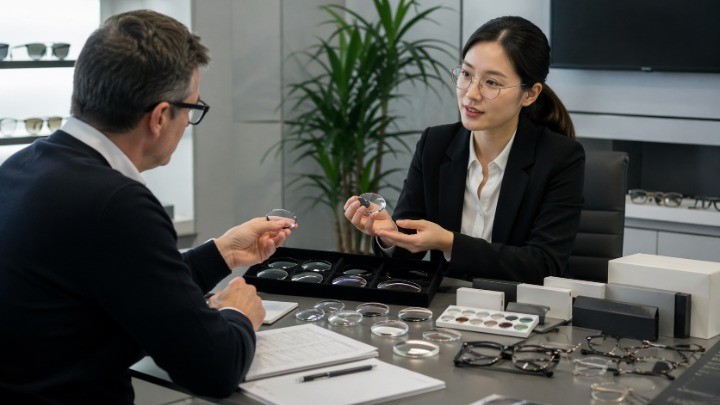
If you are sourcing for a brand, distributor, lab, or retail channel, the best question is not just whether a factory offers aspherical lenses. The better question is how that factory combines lens design, material, coating, frame compatibility, and quality control to produce a reliable finished result.
At