


An ophthalmic lens is a lens designed to correct vision or support specific visual tasks. Most readers who search this topic want a clear answer, not a vague definition.
The confusion starts when lens type, lens material, and lens coating get mixed together. That confusion affects end users, but it also affects procurement teams who must compare specifications, control remake risk, and choose the right product mix for different markets.
What Is an Ophthalmic Lens?
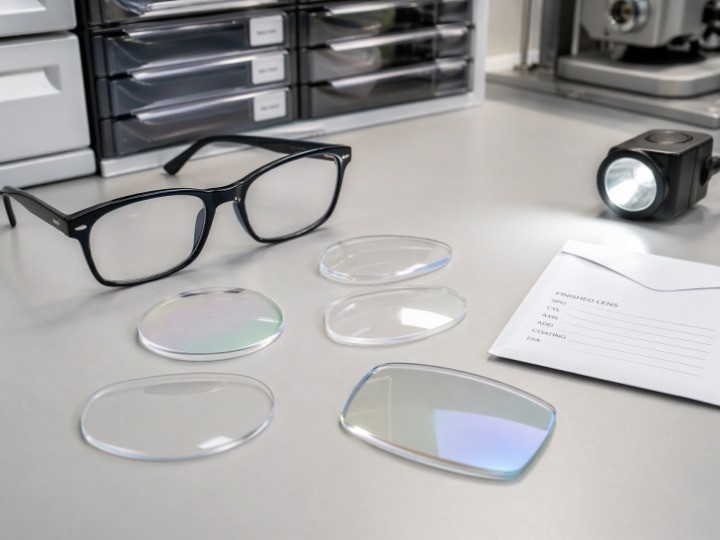
An ophthalmic lens is a lens used in eyewear to correct refractive error, improve vision, or provide a specific visual function. In practical terms, it is the working part of eyeglasses that bends light so the image focuses more accurately on the retina. The National Eye Institute identifies the main refractive errors as myopia, hyperopia, astigmatism, and presbyopia. ()
That definition sounds simple, but the term covers a wide category. It includes single vision lenses, multifocal lenses, progressive lenses, and functional options such as photochromic or impact-resistant lenses. In wholesale work, the term also extends to lens blanks, coating programs, power ranges, and market-specific packaging.
An ophthalmic lens is not just “a piece of plastic in a frame.” It is a performance product with optical, mechanical, cosmetic, and commercial requirements. That is why serious buyers compare not only prescription function, but also thickness, clarity, coating stability, traceability, and remake control.
Ophthalmic lens definition in simple terms
The easiest way to explain it is this: an ophthalmic lens changes the path of light so the wearer can see more clearly. Some lenses solve one problem, such as distance blur. Others support multiple distances or add functional protection.
For wholesale readers, that means the term “ophthalmic lens” should never be treated as a single SKU category. It is a product family with different performance layers.
What makes an ophthalmic lens different from a non-corrective lens
A non-corrective lens may still sit inside eyewear, but it does not actively correct refractive error. An ophthalmic lens does. That difference matters because optical power, tolerance, centration, and surfacing quality directly affect visual outcomes.
In supply terms, this is where buyers move from fashion accessory sourcing to optical product sourcing. Once visual correction is involved, accuracy and consistency matter far more than appearance alone.
Is an ophthalmic lens the same as an eyeglass lens?
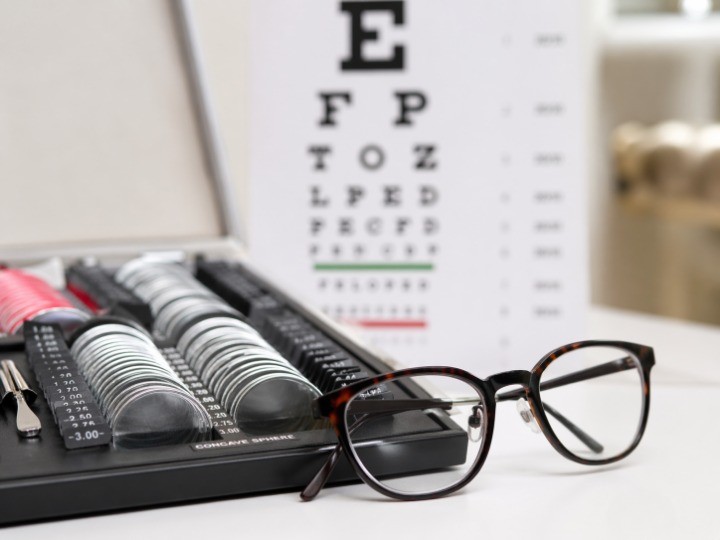
In everyday language, many people use the terms as if they mean the same thing. In most retail conversations, that shortcut is acceptable. In technical or sourcing discussions, however, “ophthalmic lens” is broader and more precise because it includes design, material, coating, and performance requirements, not just the fact that the lens goes into glasses.
What Does an Ophthalmic Lens Do?
An ophthalmic lens changes how light enters the eye so the wearer can see more clearly at one or more distances. That is its core job. The exact design depends on the visual problem being corrected and the use scenario. ()
At a clinical level, refractive errors happen when the shape of the eye prevents light from focusing correctly on the retina. Myopia blurs distance vision, hyperopia affects near vision, astigmatism can distort vision at multiple distances, and presbyopia makes near tasks harder with age. Ophthalmic lenses compensate for those focusing problems. ()
At a product level, the same function can be delivered in different ways. A buyer may solve a strong prescription with a high-index lens, reduce glare with AR coating, or support presbyopia with a progressive design. The underlying goal stays the same: clear, usable vision with acceptable comfort and appearance.
How ophthalmic lenses correct refractive errors
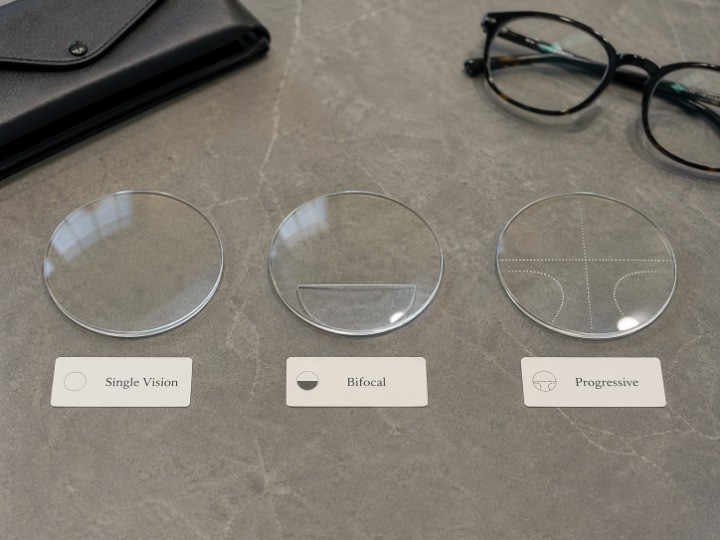
Single vision lenses use one prescription power across the lens. Bifocals use distinct zones. Progressive lenses create a gradual change in power across the lens. Each design changes how light is focused, but each also changes adaptation, corridor behavior, and wearer expectations.
That is why product selection should never begin with price alone. A low-cost lens that creates adaptation trouble or cosmetic complaints can cost more in remakes, complaints, and lost trust.
Common vision problems they address: myopia, hyperopia, astigmatism, and presbyopia
The National Eye Institute’s refractive error framework is still the clearest starting point for this topic. It also shows why buyers need a broad lens range. A market with strong demand for children’s myopia correction does not need the same product mix as a market driven by presbyopia and office-lens upgrades. ()
How lens design affects clarity, comfort, and daily vision
Lens design affects more than prescription correction. It also affects peripheral clarity, head movement, adaptation time, near-work comfort, and the wearer’s perception of easy vision. That is especially true in progressive and occupational designs.
Image suggestion: Finished ophthalmic lenses arranged by type on a workbench next to a frame and inspection light. Alt text: ophthalmic lens types single vision bifocal progressive photochromic on workbench
What Are the Main Types of Ophthalmic Lenses?
The main ophthalmic lens types are single vision, bifocal or trifocal, progressive, and functional or specialty designs built for specific use cases. Each type solves a different vision problem, so the best option depends on prescription, age, task distance, and user expectations. ()
Many competing articles stop at category labels. That is not enough for a decision-maker. Buyers need to know which type fits which user group, where adaptation risk appears, and how category choices shape margin and complaint rate.
| Lens Type | Main Function | Best Fit | Common Challenge |
|---|---|---|---|
| Single vision | One prescription power | Myopia, hyperopia, basic astigmatism | No support for multiple distances |
| Bifocal / trifocal | Separate zones for distance and near | Presbyopia, cost-sensitive users | Visible segment lines |
| Progressive | Smooth multi-distance vision | Presbyopia, premium everyday wear | Adaptation and corridor preference |
| Functional lenses | Add specific features | Digital use, outdoors, protection | Marketing claims vary |
| Specialty lenses | Task-specific performance | Sports, safety, occupational work | Narrower use case |
Single vision lenses
Single vision lenses remain the volume core in many markets. They are simple to explain, easy to stock, and suitable for large prescription segments. This is a natural place to add an internal link to your Single Vision Lenses page and your Lens Parameters & Custom Specs page.
Bifocal and trifocal lenses
Bifocal and trifocal lenses still matter in many commercial markets, especially where cost control and quick user recognition matter more than seamless aesthetics. They are not as modern as progressives, but they remain relevant.
Progressive lenses
Progressive lenses support distance, intermediate, and near vision without visible segment lines. They often carry higher value, but they also require stronger fitting discipline and better wearer communication. This section should point naturally to your Progressive Lenses page.
Functional ophthalmic lenses
This group includes products such as photochromic lenses, blue light filtering options, and impact-oriented lens programs. These are not separate from prescription needs. Instead, they add performance layers around lifestyle and environment.
Specialty ophthalmic lenses for different use cases
Some products are built for very specific needs: occupational lenses for screen work, sports lenses for impact-heavy environments, or safety programs where material choice matters as much as prescription. Those cases usually need stronger consultation and better product labeling.
Lens Type vs Lens Material vs Lens Coating: What Is the Difference?
Lens type, lens material, and lens coating are not the same thing. Lens type decides how vision is corrected. Lens material affects thickness, weight, and impact behavior. Lens coating changes surface performance, glare control, cleanability, and durability. Mixing these layers together is one of the most common sources of buyer confusion. ()
This distinction is critical in SEO and in sales. Many users search “best ophthalmic lens” when they actually mean three different questions: what design do I need, what material should I use, and what coating gives the right performance-to-cost balance.
| Element | What It Changes | Typical Buyer Question |
|---|---|---|
| Lens type | Vision correction method | Do I need single vision or progressive? |
| Lens material | Thickness, weight, impact behavior | Should I use polycarbonate or high-index? |
| Lens coating | Reflection, surface feel, cleanability, protection | Do I need AR, scratch resistance, or UV support? |
Lens type determines how vision is corrected
If a user cannot see near and far comfortably, the first question is lens design, not material. A progressive lens solves a different problem than a single vision lens, even if both use the same material.
Lens material affects thickness, weight, and durability
The American Academy of Ophthalmology describes high-index lenses as thin, lightweight plastic lenses often used for stronger correction. That makes material choice especially important in high-prescription work, frame compatibility, and cosmetic acceptance. ()
Lens coating affects glare control, protection, and maintenance
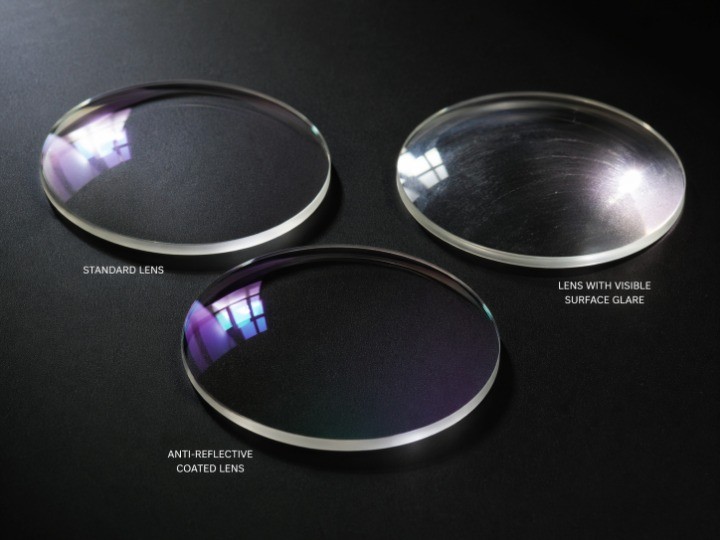
AR coating reduces bright-light reflections. AAO guidance notes that anti-reflective coatings reduce glare and distracting reflections on the surface of glasses. That is why coating is not a minor add-on. In many markets, it is a core part of the final value proposition. ()
Common Ophthalmic Lens Materials Explained
The most common ophthalmic lens materials today are standard plastic, polycarbonate, Trivex, and high-index plastics. The right material depends on prescription strength, frame style, safety needs, edge thickness tolerance, and budget. ()
Many buyers make a material decision too early. They choose the thinnest option for cosmetic reasons or the cheapest option for cost reasons without asking how the lens will actually be worn. A better process starts with use case, then prescription range, then material.
Standard plastic lenses
Standard plastic remains a practical option for many mild to moderate prescriptions. It usually works well in routine everyday eyewear where cost control matters.
For procurement teams, standard plastic often supports strong turnover because it balances price and broad applicability. It is also easier to position in entry and mid-level product lines.
Polycarbonate lenses
Polycarbonate is widely used when impact resistance matters. In the United States, the FDA requires impact-resistant lenses for eyeglasses and sunglasses under 21 CFR 801.410, except in limited written-exception cases. That is why polycarbonate remains a strong option for children’s eyewear, sports eyewear, and other use cases where safety matters. ()
That does not mean polycarbonate is always the best answer. It means it should be considered seriously for children’s eyewear, sports, safety applications, and active lifestyles where breakage risk matters.
Trivex lenses
Trivex usually enters the conversation when buyers want a balance of light weight, impact-oriented performance, and premium positioning. In practice, it often competes with polycarbonate in more specialized or upgraded programs.
If your market values optical comfort and lightweight wear, Trivex may deserve a place in your premium matrix. If your market is price-driven, it may remain a smaller share item.
High-index lenses
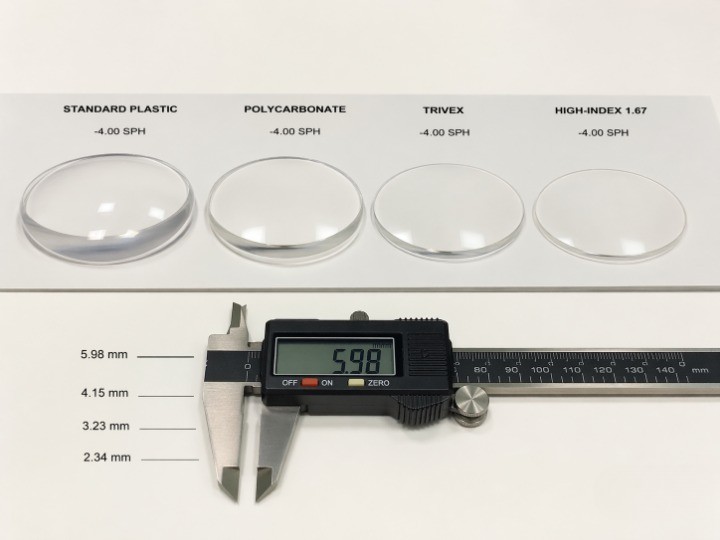
High-index lenses are particularly relevant for stronger prescriptions because they can reduce bulk and improve wearer acceptance. AAO guidance highlights high-index lenses as thin, lightweight lenses for stronger correction. ()
That matters commercially. A lens that performs optically but looks too thick can still fail at the counter. High-index products often solve a sales problem as much as a visual problem.
How to compare materials based on prescription, safety, and cost
A useful comparison framework looks like this:
-
Choose standard plastic for routine volume work and cost control.
-
Choose polycarbonate when impact resistance is a major factor.
-
Consider Trivex for upgraded comfort or specialty positioning.
-
Consider high-index when thickness and lens appearance become major concerns.
Common Ophthalmic Lens Coatings and Add-Ons
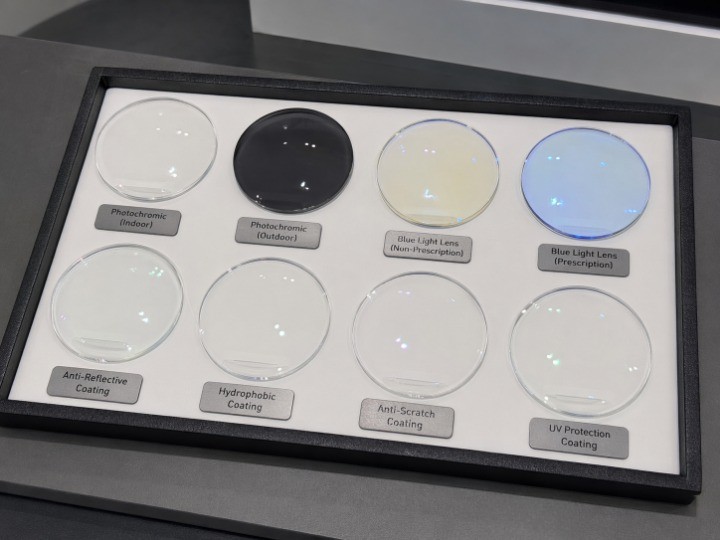
Coatings change how the lens surface behaves in daily use. They can reduce reflections, improve cleanability, add scratch resistance, support UV protection, or provide a specific marketing position such as anti-fog or digital comfort. ()
This is where many products look similar on a basic specification sheet but perform very differently in real life. Coating quality affects cosmetic appearance, after-sales stability, and perceived product value.
Anti-reflective coating
AR coating remains one of the most commercially important upgrades because users notice reduced reflection quickly. AAO guidance notes that anti-reflective coatings reduce reflections from bright sources and distracting surface glare. That helps explain why AR upgrades are often easier to sell than abstract optical claims. ()
Scratch-resistant coating
Scratch resistance supports durability, but buyers should stay careful with marketing language. No coated lens is truly scratch-proof. The better framing is improved surface durability under normal use, plus better care guidance.
UV protection
UV protection remains an important lens feature, especially for outdoor use and long-term eye comfort. In product positioning, it is better to describe UV protection clearly and practically, rather than treating it as a vague premium label.
Blue light filtering options
Blue light filtering remains popular in the market, but evidence claims need careful wording. A 2023 Cochrane review of 17 randomized controlled trials found that blue-light filtering spectacle lenses probably make no difference to short-term eye strain and may make little or no difference to several other reported outcomes. Buyers should therefore avoid exaggerated promises. ()
Photochromic performance and practical benefits
Photochromic lenses change with light conditions and can create strong value in outdoor and mixed-use environments. This section is a good place to add internal links to your Photochromic Lenses page and your Coatings page.
How to Choose the Right Ophthalmic Lens for Different Needs
The right ophthalmic lens depends on the user’s prescription, task distance, environment, and tolerance for thickness, weight, and adaptation. There is no single best lens for every wearer or every product line. ()
A strong buying process starts with the end use. After that, you match the design, material, and coating to the commercial target.
Best options for everyday wear
Single vision lenses with a reliable hard coat and AR program often cover the biggest everyday volume. They are easy to explain and easy to standardize.
Best options for strong prescriptions
High-index materials deserve strong consideration here because lens bulk becomes harder to sell as prescription strength increases. Frame choice also matters because size can make thickness more visible. ()
Best options for screen use and office work
Screen-related lens selection should focus on task distance, glare control, prescription design, and overall visual comfort. Buyers should avoid relying on blue-light claims alone and instead position these products around practical use conditions. ()
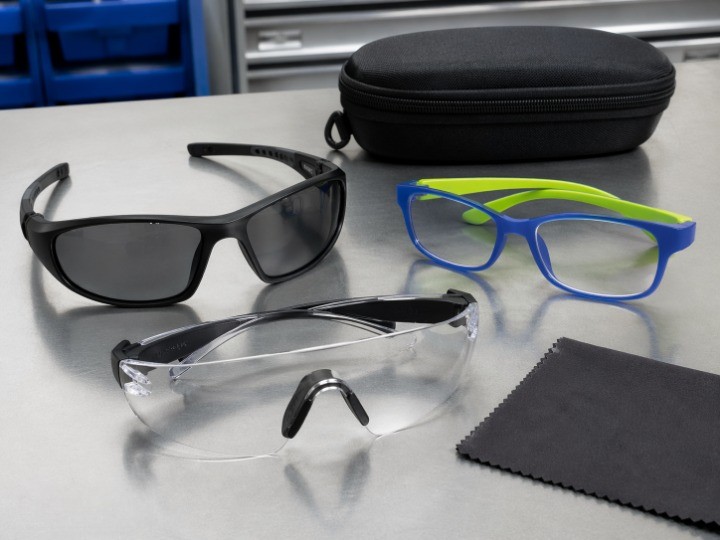
Best options for children, sports, and impact resistance
This is where impact behavior becomes a lead factor. Polycarbonate often becomes a strong option because safety and durability matter more than thinness alone. FDA impact-resistance requirements reinforce why this category deserves stricter product control. ()
Best options for presbyopia and multi-distance vision
Progressives usually offer the best modern everyday solution for multi-distance wear, but adaptation matters. Bifocals may still be preferred when price, fast recognition, or user habit outweigh cosmetic concerns.
Common Problems People Face with Ophthalmic Lenses
Most ophthalmic lens complaints come from a mismatch between product choice and real use conditions. Glare, thickness, adaptation issues, surface wear, and frame mismatch usually point back to an early selection error, not just a manufacturing defect.
That is why good sourcing reduces problems before the order is placed. Good after-sales begins with better specification discipline.
Glare, reflections, and eye strain
Glare complaints often improve when AR coating is selected properly and when screen ergonomics are addressed at the same time. Better viewing habits, better lighting, and more suitable lens design usually work better than relying on one feature alone. ()
Thick edges, weight, and cosmetic concerns
This problem usually appears when prescription strength, frame size, and material are not matched carefully. High-index material can help, but the frame shape still matters.
Progressive adaptation issues
Progressive dissatisfaction does not always mean the product is poor. It may mean the corridor, fitting height, or wearer expectation was wrong. Buyers who sell progressives need clearer fitting rules and better user guidance.
Scratches, coating wear, and cleaning mistakes
Many wear problems come from cleaning habits. A lens that is wiped while dusty or handled with rough fabric can develop fine scratches much faster than expected. That is why cleaning guidance should be treated as part of product delivery, not an afterthought.
Choosing the wrong lens for the frame or application
This remains one of the most expensive avoidable mistakes. A lens that works in a moderate full-rim frame may not look good in a large fashion frame. A cost-driven material may also fail in a sports or safety setting.
Are Ophthalmic Lenses Subject to Standards?
Yes. Ophthalmic lenses are subject to standards and regulatory requirements, but the exact framework depends on the market and product category. In the United States, the FDA requires impact-resistant lenses for eyeglasses and sunglasses under 21 CFR 801.410. ()
For buyers, the practical point is simple: do not treat standards as paperwork that appears at the end. Standards should shape product design, testing, lot control, labeling, and importer documentation from the start.
Why standards matter for optical performance and safety
Standards protect users and reduce commercial risk. If an importer cannot show compliance or if a lot fails impact or quality review, the cost is not only regulatory. It can also become a customer-trust problem.
What buyers should know about prescription tolerance, power accuracy, and consistency
Even when a lens technically falls inside a broad category, market acceptance still depends on consistency. Buyers should ask how power is checked, how lots are tracked, and how remake claims are handled.
Why standards matter in professional and wholesale sourcing
For brands, wholesalers, and labs, standards are part of supplier selection. This section should point naturally to your Quality Control & Inspection Reports, Lens Parameters & Custom Specs, and OEM/ODM & Private Label pages.
How to Care for Ophthalmic Lenses Properly
Good lens care protects optical performance, coating life, and the overall customer experience. Proper cleaning is simple, but many users still damage lenses by wiping dust across the surface or using the wrong cloth.
Care advice also matters commercially. A lens can be made well and still generate complaints if the user receives poor handling guidance.
Daily cleaning best practices
A practical routine includes:
-
Wash your hands first.
-
Rinse lenses under lukewarm water.
-
Use a small amount of mild soap.
-
Gently clean with your fingertips.
-
Dry with a clean microfiber cloth.
What to avoid during use and storage
Avoid dry wiping dusty lenses, rough fabrics, and poor storage habits. Those mistakes can create fine scratches and shorten coating life.
How proper care helps extend lens life
Care instructions do more than reduce service problems. They also protect the value of premium coatings, especially AR and hydrophobic top coats.
 How wholesale Buyers Should Evaluate Ophthalmic Lenses
procurement teams should evaluate ophthalmic lenses as a supply program, not as an isolated sample. A good sample matters, but repeatability, documentation, and category fit matter more over time.
Your own site already supports this positioning well. You can use internal links here to send readers to Single Vision, Progressive Lenses, Blue Light Lenses, Coatings, OEM/ODM & Private Label, Lens Parameters & Custom Specs, Quality Control & Inspection Reports, and Packaging & Shipping Support.
What procurement teams should evaluate before placing an ophthalmic lens order
Use this checklist early:
-
Product range fit for your target market
-
Stable coating performance across repeat batches
-
Power range and prescription consistency
-
MOQ and replenishment logic
-
Labeling, packaging, and brand customization support
-
Quality records and inspection response process
Why material, coating, and power consistency matter
One good batch does not build a business. A stable supplier does. That is why professional buyers should evaluate not only samples, but also repeatability, documentation quality, and claim control across multiple orders.
Questions to ask an ophthalmic lens manufacturer or supplier
Ask direct questions such as:
-
How do you control power tolerance and lot variation?
-
Which coatings remain stable across your main index range?
-
What is your remake handling process?
-
Can you support custom packaging and private label?
-
What documents can you provide for import review or customer audits?
How OEM/ODM and private-label requirements affect lens selection
Private-label programs usually change the decision process. Packaging, engraving, barcode logic, claim wording, and compliance paperwork all become part of the product. That is why OEM/ODM sourcing should begin earlier than many buyers expect.
Frequently Asked Questions About Ophthalmic Lenses
What is the difference between an ophthalmic lens and a contact lens?
An ophthalmic lens usually refers to a lens used in eyewear. A contact lens sits directly on the eye. Both can correct refractive error, but they involve different materials, fitting requirements, and care systems. ()
Are all ophthalmic lenses prescription lenses?
No. Many are prescription lenses, but some are plano protective or functional lenses used for tasks such as impact protection, glare control, or environmental adaptation.
Which ophthalmic lens is best for high prescriptions?
There is no universal answer, but high-index lenses often make sense when thickness and weight become major concerns. The right answer still depends on frame size, wearer sensitivity, and budget. ()
Which ophthalmic lens is best for digital device use?
The best approach usually combines proper prescription support, glare control, task-distance optimization, and healthier screen habits. The current evidence base does not support overstating blue-light filtering as a universal solution for digital eye strain. ()
How long do ophthalmic lenses usually last?
That depends on material, coating quality, prescription changes, and care habits. In commercial terms, durability is not only a material issue. It is also a cleaning, handling, and coating-stability issue.
Final Thoughts
An ophthalmic lens is not just a vision product. It is a design, material, and coating decision that affects clarity, comfort, durability, and commercial success. If you separate those layers clearly, the topic becomes much easier to understand and much easier to sell.
The strongest buying decisions start with the real use case, then match lens type, material, and coating to that need. That approach reduces confusion, improves product-market fit, and helps both users and buyers make better long-term choices.
Need Help Choosing the Right Ophthalmic Lens for Your Market?
If you serve brands, wholesalers, distributors, or optical labs, move readers from this article to your Single Vision, Progressive Lenses, Blue Light Lenses, Coatings, OEM/ODM & Private Label, Lens Parameters & Custom Specs, and Quality Control & Inspection Reports pages. Those internal links match the next questions serious buyers usually ask.
Vena Optics can position this final section around large-scale manufacturing capability, OEM/ODM support, batch traceability, and quote support for professional buyers. That makes a direct quote invitation feel natural instead of forced.