


Choosing the best lenses for driving sounds simple, but it is not a one-answer topic. The right choice depends on when you drive, how much glare bothers you, what prescription you wear, and whether you want maximum performance or everyday convenience.
Many drivers start with the wrong question. They ask which lens is “best” in general. In real life, daytime sun glare, wet-road reflection, night headlight glare, dashboard viewing, and prescription needs are different problems. AAA notes that sun glare can make it much harder to see the road ahead and potential hazards. The National Institute on Aging also points out that glare from oncoming headlights or streetlights can become a problem, especially at night. ()
This guide gives you a practical answer. It explains which lenses work best for bright daytime driving, which ones make more sense at night, where photochromic lenses help, and why some popular “night driving glasses” claims do not hold up well. It also shows where to add the right internal links and image placements for SEO and reading flow. ()
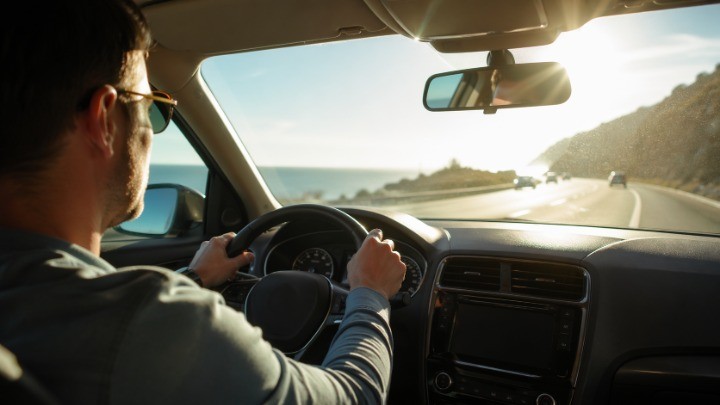
Best Lenses for Driving: A Quick Answer
For bright daytime driving, polarized lenses are often the best choice. For night driving, clear lenses with an accurate prescription and anti-reflective coating are usually the better option. AAA recommends polarized sunglasses to help reduce glare when driving into the sun, while the American Optometric Association recommends anti-reflection coating to reduce distracting light from dashboards, street lamps, and other vehicles during night driving. ()
If you want the short version, use this rule:
-
Daytime glare: polarized lenses or prescription polarized sunglasses
-
Night driving: clear lenses with anti-reflective coating
-
Mixed all-day use: photochromic lenses can be convenient, but they are often a compromise in the car
-
Drivers with presbyopia: a well-designed progressive lens may be more practical than switching pairs all day
That answer works because daytime glare and nighttime glare are not the same issue. Daytime glare comes from strong light and reflection. Night driving problems usually come from low light, scatter, halos, and slower recovery from bright headlights. Once you separate those two use cases, the lens decision becomes much easier. ()
Why the Right Lenses Matter for Driving
The right lenses matter because glare changes what you can see, not just how comfortable your eyes feel. Strong sun glare can wash out lane markings, road edges, and cars ahead. Headlight glare can reduce contrast and make it harder to judge distance, speed, and movement.
This gets more noticeable with age, but it does not affect older drivers only. Dry eyes, astigmatism, scratched lenses, and small prescription changes can all make driving feel more tiring than it should. The National Institute on Aging notes that at night, people may have more trouble seeing clearly and may struggle more with glare from headlights or streetlights. ()
That is why ordinary everyday glasses are not always enough. A lens that feels fine indoors or on short errands may still struggle with low sun, reflected road glare, or night scatter. Driving puts more pressure on contrast, clarity, and reaction time than most other daily tasks.
What Makes a Lens Good for Driving?
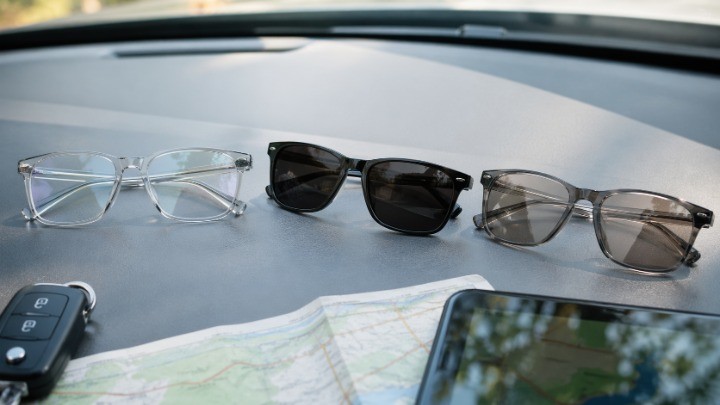 A good driving lens keeps distance vision clear, reduces glare, preserves useful contrast, and stays practical in the conditions you face most often. If one of those parts fails, the lens may still look appealing on paper but feel disappointing on the road.
In real use, the best driving lenses help with problems like:
-
harsh sunlight reflecting off pavement, glass, or wet roads
-
headlight glare during night driving
-
low-contrast conditions in rain or haze
-
repeated shifts between road, mirrors, dashboard, and navigation
-
eye fatigue during long commutes
That is why a good driving lens is usually a sensible lens, not a gimmicky one. Polarization helps when reflected daylight glare is the problem. Anti-reflective coating helps when distracting light at night is the problem. A current prescription keeps signs, lane markings, and vehicles sharper. Those basics matter more than marketing language.
Driving Lenses vs Regular Glasses
Regular glasses are enough when your prescription is current, your lenses are clean and clear, and your driving conditions are not especially demanding. If you mostly drive in daylight, rarely face strong sun glare, and do not complain about halos or reflections, you may not need a separate driving pair.
Driving glasses become worth it when the same problem keeps returning. That usually means harsh afternoon glare, night discomfort, long-commute fatigue, or frustration with an all-in-one lens that never feels quite right. When driving starts to feel like extra effort, the lens setup deserves attention.
For many readers, the real decision is not “regular glasses or driving glasses.” It is one-pair convenience versus two-pair performance. One pair is easier to manage. Two pairs often work better because daytime and nighttime driving reward different lens strategies.
The Best Types of Lenses for Driving
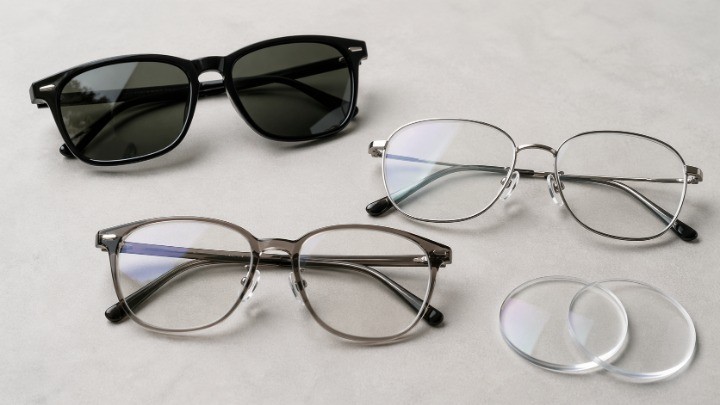 The best lens type depends on the problem you want to solve first. If daylight glare is the main issue, polarized lenses usually lead. If headlight glare is the bigger issue, clear lenses with anti-reflective coating are a better starting point. If convenience matters most, photochromic lenses still have a place.
| Lens type | Best for | Main strength | Main limit |
|---|---|---|---|
| Polarized sunglasses | Bright daytime driving | Cuts reflected glare well | Not for night driving |
| Prescription polarized sunglasses | Drivers who need correction in sun | Combines correction and glare control | Usually needs a separate night pair |
| Clear lenses with AR coating | Night driving | Reduces distracting reflections | No sunlight protection |
| Standard photochromic lenses | Mixed daily wear | Convenient indoor-outdoor use | Usually weak in the car |
| Progressive lenses | Drivers with presbyopia | Handles distance and dashboard use in one pair | Design and adaptation matter |
This is also the best place to add internal links that support the topic naturally. On your site, the most relevant supporting pages are , , , and . Those pages help reinforce topical authority around driving lenses.
Image placeholder: Side-by-side comparison of clear AR lenses, polarized sunglasses, and photochromic lenses on a car dashboard. Alt text: best types of lenses for driving comparison
Best Lenses for Different Driving Conditions
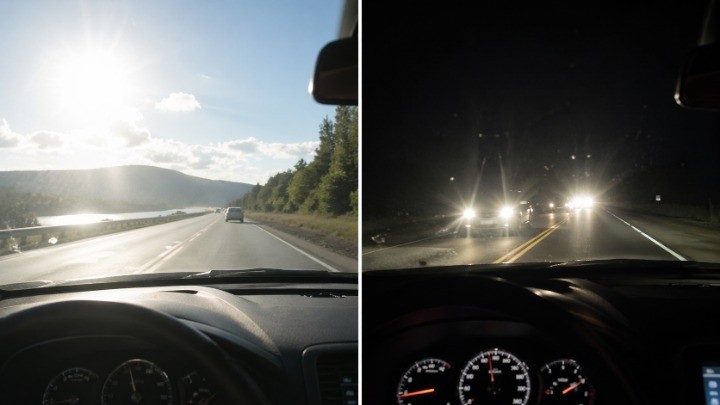 Sunny daytime driving usually favors polarized lenses. AAA specifically recommends polarized sunglasses to help reduce glare when driving into the sun. That makes them the strongest general starting point for daytime drivers who deal with reflected light off roads, windshields, and nearby vehicles. ()
Night driving usually favors clear lenses with anti-reflective coating. The AOA recommends anti-reflection coating on prescription lenses to reduce reflections from dashboard lights, street lamps, and headlights. This makes much more sense than adding dark tint to a low-light situation. ()
Rain, haze, and long highway drives add another layer. Here, comfort matters almost as much as light control. A stable frame fit, a clean lens surface, and enough lens coverage can all reduce small but constant distractions. These details sound minor, but they matter more the longer you stay on the road.
City driving creates a different pattern. You do not only look far ahead. You move between traffic lights, pedestrians, mirrors, dashboard displays, and navigation. That makes prescription accuracy, lens design, and fast visual adaptation more important than dramatic tint claims.
Lens Color Guide for Driving
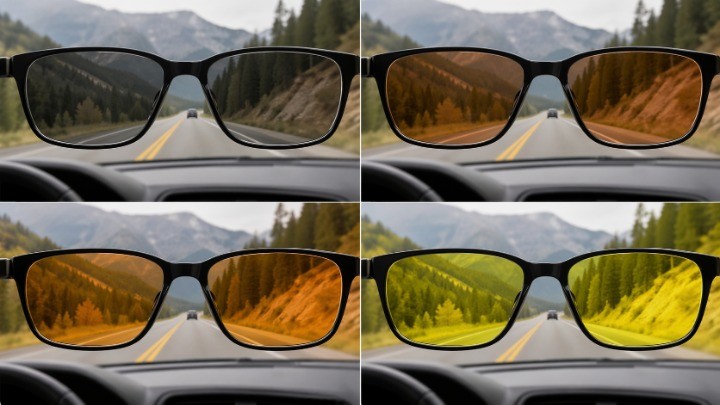 Gray is usually the safest all-around tint starting point for daytime driving. It keeps the view natural and usually makes color recognition easier. That matters because traffic signals, brake lights, road signs, and lane markings all depend on clear color recognition.
Brown and amber tints can still work well for some drivers. Some people like the warmer view and the slightly stronger sense of contrast. Still, these are better treated as preference-based options than universal answers. If your goal is a neutral, easy-to-read road view, gray remains the cleaner default choice.
Yellow lenses need a direct answer because this is where many articles become vague. Yellow night-driving glasses are not a proven solution for safer night driving. A study in JAMA Ophthalmology found that yellow-lens night-driving glasses did not improve nighttime pedestrian detection and did not reduce the negative effect of headlight glare. ()
That matters because subjective brightness and real driving performance are not the same thing. A yellow lens may feel bright or comforting to some users, but feeling brighter is not the same as seeing hazards earlier or more clearly.
Lens Coatings and Features That Matter
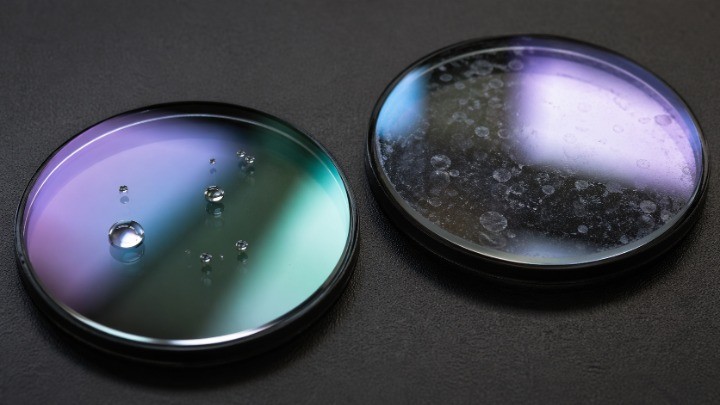 If you drive often at night, anti-reflective coating is one of the most useful upgrades you can make. The AOA’s night-driving guidance specifically recommends anti-reflection coating to reduce distracting light from common nighttime sources. ()
Coating quality matters in daytime use too. Hydrophobic, oleophobic, and easy-clean top coats help the lens stay cleaner in daily driving. A technically good lens stops feeling good very quickly if it is always smeared, dusty, or hard to clean.
UV protection matters, but buyers should not confuse UV protection with polarization. One protects your eyes from ultraviolet exposure. The other reduces reflected glare. A strong driving sun lens usually needs both.
This section is a natural place to add an internal link to because that article supports the technical side of the coating decision without breaking the flow of the driving topic.
Problems and Limitations Many Drivers Overlook
 The biggest mistake is expecting one lens technology to solve every driving problem. It does not. Polarized lenses are excellent for bright reflected glare, but they are not the right answer for night driving.
The second mistake is expecting standard photochromic lenses to behave like true driving sunglasses in the car. RNIB explains that photochromic lenses darken in response to light exposure, and some versions respond mainly to UV. Because car windshields reduce UV exposure, many standard photochromic lenses do not darken enough to behave like a dedicated sunglass lens in the car. ()
The third mistake is trusting yellow-lens marketing. This is where evidence matters most. The JAMA Ophthalmology study did not support recommending yellow night-driving glasses because they did not improve pedestrian detection or overcome headlight glare in a meaningful way. ()
The fourth mistake is ignoring the prescription itself. Many people shop tints and coatings first, then find out later that the real issue was an outdated prescription, unresolved astigmatism, or age-related vision change. A premium coating cannot rescue the wrong prescription. The National Institute on Aging’s guidance supports this bigger point by stressing the importance of vision checks and awareness of visual changes that affect driving. ()
How to Choose the Best Driving Lenses for Your Vision Needs
If you have astigmatism, start with accurate correction before you think about tint. Even small prescription errors can feel worse at night, when glare and low contrast already make road details harder to process.
If you have presbyopia, the real decision is convenience versus specialization. A good progressive lens can manage distance vision, dashboard viewing, and brief near tasks in one pair. Some drivers, though, prefer a dedicated driving progressive or a second pair for long trips if their everyday progressives feel too busy.
If you mainly drive during the day, prescription polarized sunglasses often give the cleanest answer. If you mainly drive at night, a clear AR-coated prescription usually gives better value. If you do both and want to reduce lens swapping, photochromic lenses may still fit your routine, but they should be chosen as convenience solutions, not perfect all-condition solutions.
This section also supports internal links well. If the article goes deeper into prescription structure, link to and .
What to Look for Beyond the Lenses
Frames matter more than many articles admit. A stable fit keeps the optical center where it should be and reduces the need for constant adjustment during long drives. A great lens can still become annoying if the frame slips or forces you to tilt your head for a clear view.
Lens size and coverage matter too. Better coverage can cut stray light from the top and sides, which becomes more useful in sunrise, sunset, and open-road conditions. This is one reason wrap and lens shape sometimes matter more than buyers expect.
That does not mean every driver needs a sporty frame. It means the whole setup should work together. A driving lens should reduce management, not create another small problem while you are on the road.
Common Mistakes People Make When Choosing Driving Lenses
Do not choose by tint alone. A dark lens without the right prescription, coating, or use-case match can still perform poorly.
Do not assume polarized is always best. It is often best for bright daytime glare, but not for night driving.
Do not believe yellow lenses solve night glare. The best clinical evidence on this point does not support that claim. ()
Do not ignore prescription updates. If signs, headlights, lane markings, or contrast feel harder than they used to, the first fix may be an eye exam rather than a new tint.
How to Choose the Right Driving Lenses Step by Step
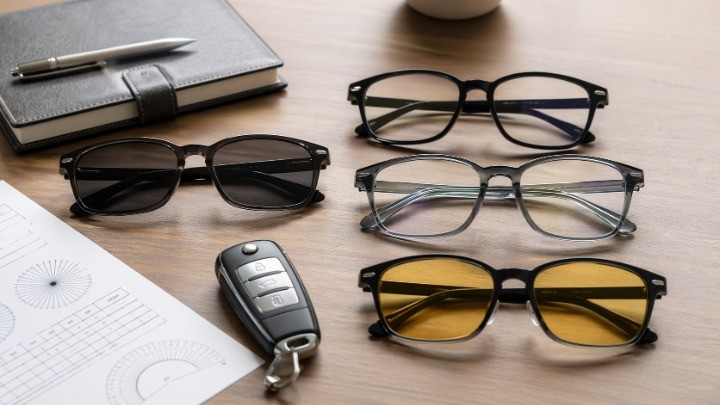 Start by naming the real problem. Do not begin with “What is the best driving lens?” Begin with “What makes driving harder for me right now?” That one shift will make the decision faster and more accurate.
Use this simple process:
-
Identify when you drive most: daytime, night, or both
-
Decide whether glare, low light, or fatigue is the bigger issue
-
Check whether your prescription is current
-
Choose between one-pair convenience and two-pair performance
-
Match tint, coating, and lens design to the actual task
In practical terms, that often means:
-
daytime commuter → polarized prescription sunglasses
-
frequent night driver → clear prescription lenses with AR coating
-
all-day convenience wearer → photochromic lenses, with realistic car-use expectations
-
presbyopic driver → progressive or driving-oriented progressive design
-
driver struggling in all conditions → eye exam first, lens choice second
Frequently Asked Questions
What are the best lenses for driving during the day?
Polarized lenses are usually the best daytime starting point because they reduce reflected glare well. Prescription polarized sunglasses are even better if you need correction.
What are the best lenses for night driving?
Clear lenses with an accurate prescription and anti-reflective coating are usually the better starting point.
Are photochromic lenses good for driving?
They can be useful for convenience, but many standard photochromic lenses do not darken enough in the car to replace proper sunglasses. ()
Are progressive lenses good for driving?
They can be, especially for drivers with presbyopia who need distance and dashboard vision in one pair. Fit, design, and adaptation still matter.
Are yellow lenses good for night driving?
The best current clinical evidence says no. They did not improve nighttime pedestrian detection or reduce the negative effect of headlight glare in the cited study. ()
Conclusion
The best lenses for driving are not the darkest lenses, the most aggressively marketed lenses, or the most expensive lenses by default. They are the lenses that match your real driving conditions. For most drivers, that means polarized lenses for bright daytime glare, clear AR-coated lenses for night driving, and a realistic choice between one-pair convenience and two-pair performance. ()
If you remember one idea from this guide, remember this: daytime glare and nighttime glare are different problems. Once you separate them, the best lenses for driving become much easier to choose, explain, and recommend.